


Chinese Trade Reinvents Itself in Malaga
The change in habits and the rise of online sales force these entrepreneurs to adapt to new needs and diversify their businesses.
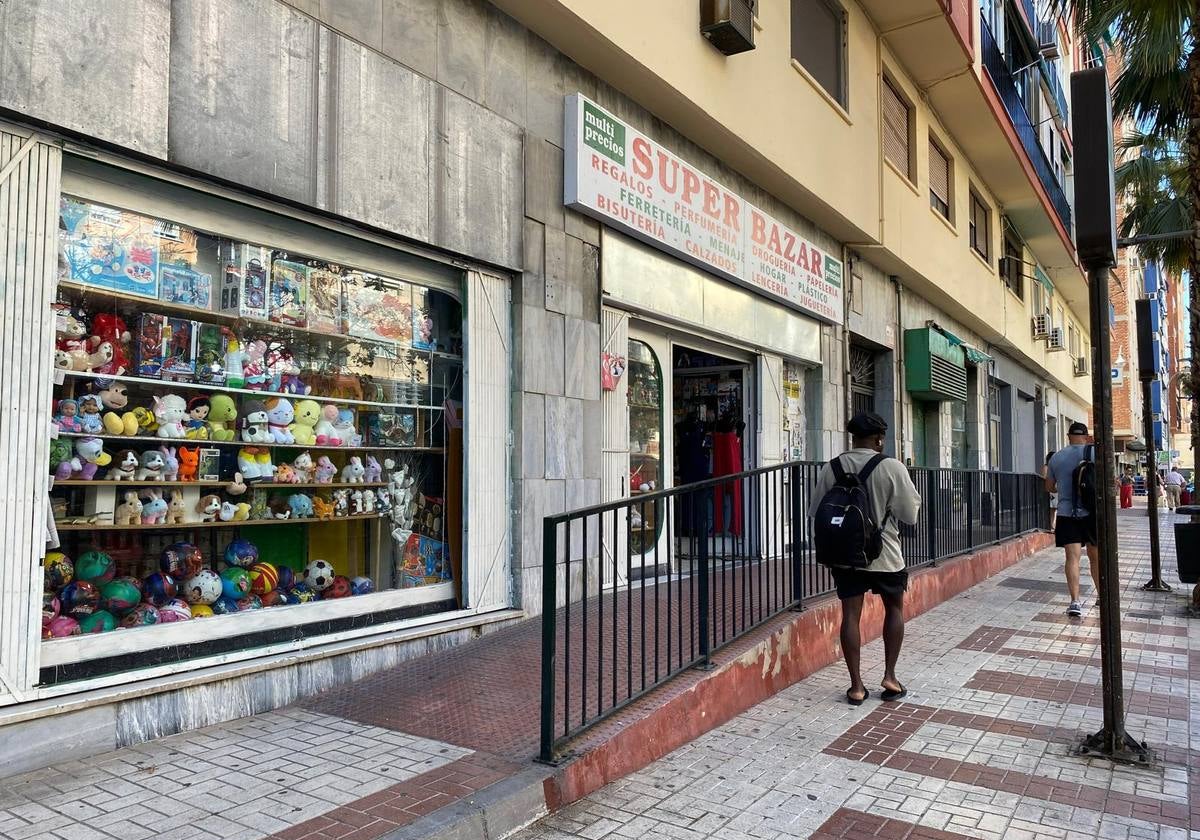

From sewing needles, through tools, decorations, kitchen items, toys, to mobile chargers or any basic utensil for the home or office. In the late 90s, Chinese bazaars proliferated in Malaga thanks to a trade that offered a variety of products at economical prices, which could be purchased almost any time of the day.
Two decades later, changes in societal habits, competition from large retailers, and the rise of e-commerce platforms like Amazon, Aliexpress, Temu, or Shein have impacted these entrepreneurs, who are looking for alternatives to adapt to new times. What used to be solved by going down to the local 'Chinese shop' is now done even faster and more comfortably with a click from the sofa, and what was once found at a negligible price has become more expensive due to inflation, higher rents, and soaring water and electricity bills.
Chinese bazaars and restaurants are no longer as attractive or competitive as before; even Chinese restaurants, to stay afloat, now include Asian and even Japanese dishes in their menus to attract customers who were wary of these more exotic flavors twenty years ago.
In the midst of reinvention, new business models break with the stereotype these entrepreneurs had accustomed us to, but they continue to claim their role in the local economy with new ventures: tapas bars, nail salons, hairdressers, and clothing stores. In hindsight, Ge, a Chinese entrepreneur, was a visionary 15 years ago when he decided to open a fashion store on Pelayo street. "There were no similar businesses in the area and I thought it could work."
He arrived in Spain 24 years ago and after spending eight in Barcelona, he moved to Malaga attracted by family. Since then he has been running Lencería Mabi. He's doing well, he assures. "It could be worse, because people are shopping more and more online. The good thing is that my store is in a neighborhood where many older people live who still like to come, touch the clothes, and try them on," he explains in basic Spanish. Despite the difficulties, he assures it was a "wise decision."
Susana (as she prefers to be called), who landed in Malaga ten years ago from Shanghai, holds out with her bazaar in front of the Civil Hospital thanks to the loyalty of customers who continue to frequent this business, especially now, at the start of the school year. "Families come to buy things for school and along the way, they pick up other items," she summarizes the essence of the business that remains profitable, but leaves a smaller profit margin: "If I want people to keep coming, I have to set lower prices," explains this entrepreneur who does not consider switching to another type of business.
The entrepreneurial spirit of this nationality (in the province of Malaga, there are 8,237 Chinese registered, of which 3,342 are in the capital, according to INE data updated to 2024) is reflected in the data provided by the Union of Professional and Self-Employed Workers (UPTA), as they are the most predominant in this regime, specifically, 14% of the foreign affiliates to RETA in Spain are of Chinese origin (66,515). Moreover, more than half of the Chinese citizens of working age (55%) are entrepreneurs, compared to 45% who are employed by others in the general regime, being the only community that has more self-employed workers than employees in Spain.
Eduardo Abad, president of UPTA, recognizes the ability of these entrepreneurs to readapt and reinvent themselves, who instead of continuing with the same formula, "have known how to direct their efforts towards the service sector, which is now the main area where new economic activities are consolidating," he declares.
This is the case of Kelly, who before summer opened her beauty business on Esperanto street: Nails Arte, joining the boom of manicures and pedicures in a highly competitive area. "We meet a demand with a service that distinguishes us," says this 35-year-old entrepreneur, who arrived in Spain two decades ago from Zhejiang to reunite with her parents, who at that time ran a Chinese restaurant. "Now they have added more Asian products to their menu, although they keep the classic Chinese dishes. It's understandable because customers have become accustomed to new flavors. It's like when I arrived in Spain and my mother gave me a serrano ham sandwich. I didn't like it at all; now I love it," she expresses.

Latest news





Upcoming events
12
Nov
El Desembarco, la traición de Viriato at La Caja Blanca
12
Nov
HOMER El Mero Mero at Sala Trinchera Málaga
13
Nov
Marbella Startup Lab – Innovate & Collaborate
13
Nov
Candlelight: Coldplay & Imagine Dragons at Sala Fundación Unicaja María Cristina
13
Nov
Candlelight: Tribute to Ludovico Einaudi at Anantara Villa Padierna
Similar News

Málaga Airport Makes History with More Than Three Million Passengers in One Month
Málaga

Port of Málaga looks beyond its docks to support future growth
Málaga

Guide to the Virgen del Carmen Processions in Málaga and the Province
Málaga
