


This town in Málaga transports you to the past with its mix of cultures and splendor, its streets are like something out of a movie and its surroundings are magical.
Andalusian heritage and dreamlike landscapes in the heart of the Genal ValleySteep streets, historic fountains, and balconies with centuries of history in BenarrabáNatural viewpoints, lush riverbanks, and unique spots to disconnect
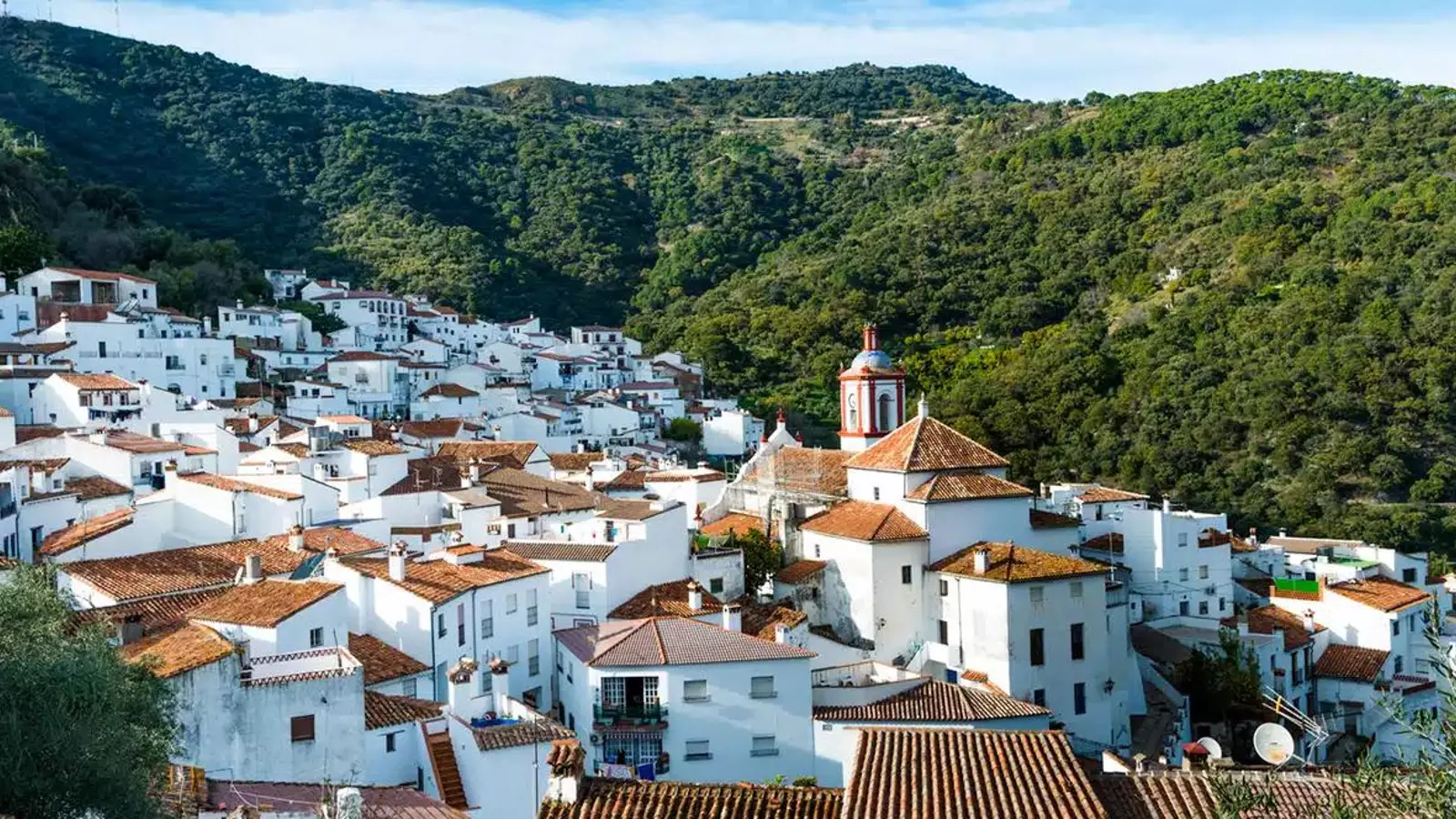

In the heart of the Genal Valley, south of the Serranía de Ronda, lies Benarrabá, a small village in Málaga whose name, derived from the Arabic Bann Rabbah, Sons of Rabbah, is a direct invitation to dive into the Andalusian heritage. Its narrow streets, fountains, and urban layout recall the Islamic era, when this enclave was a strategic point in the defense of the valley. Located between rivers and mountains, this village combines history, architecture, and nature in a setting of great landscape diversity, and is also part of the National Network of Welcoming Villages.
The origin of Benarrabá dates back to the Muslim era, when the descendants of the Berber tribe of Bann Rabbah built a fortress on Mount Porón to dominate the views towards Gaucín, Algatocín, Genalguacil and Jubrique. After the Christian conquest, it passed into the hands of the House of Medina Sidonia, a lineage that left its mark on local memory. In 1636, the ninth duke crossed the municipality with a retinue that was recorded as a notable event in its history.
This past is reflected today in its urbanism: acequias, wells, and fountains appear everywhere, evoking the symbolism of water as a purifying element in Islamic culture. The streets, with steep slopes reaching gradients of 70%, retain corners with a medieval air, while spaces like the Plaza de la Veracruz provide breadth to the urban fabric.
Notable Monuments
The most outstanding monument in Benarrabá is the parish church of San Sebastián, erected at the beginning of the 18th century. Its interior, divided into three naves separated by semicircular arches, houses polychrome plasterwork with scenes of the Assumption and the martyrdom of San Sebastián. Its main facade features a lobed arch that ends in a triangle, and in the tower, a roof covered with glazed blue ceramic, which has become one of the temple's most recognizable features.
The town also has the hermitage of Cristo de la Vera Cruz, built in the 17th century and later renovated. This building, with a single nave, retains an 18th-century polychrome wooden altarpiece and features a single-hole belfry on its facade. Walking through the Saucal, Baja, Estación, and Sol streets, one discovers 18th-century buildings with eighteenth-century facades, wrought iron balustrades, and large windows. Among them stands out Casa Lola, an original construction with symbols and decorative details, some of Celtic tradition, which have come to light after removing layers of lime.
Nature and Landscape Environment
Benarrabá is situated on a mountainous territory bathed by the Guadiaro and Genal rivers. Its landscapes range from the lush banks of the Genal, with swimming areas like Los Lobos, Los Pepes, El Reventón, or La Peña, to Mediterranean forests of holm oaks, cork oaks, and gall oaks. Lookouts like those on Mount Porón, El Peñón, or the Sierra de Frontales offer panoramic views over the valley.
Powered by WikilocOne of the most unique natural resources is the Cañón de las Buitreras, declared a Natural Monument in 2003. This gorge of the Guadiaro River is formed by two rocky walls over 100 meters deep joined by the Puente de los Alemanes, recently discussed. Its crevices are nesting sites for the griffon vulture, giving the place its name and making it a unique spot for bird watching and climbing.
Tradition and Festivities
Benarrabá keeps its traditions alive through a festive calendar that reflects its identity. Every January 5th, children and youth of the municipality perform a Sacramental Play that recreates the journey of the Magi, with carols and itinerant scenes around various corners of the village. The festivities of San Sebastián (January 20) and San Miguel (September 29) are the most significant of the year, while in summer the pilgrimage of San Juan to the banks of the Genal, the August fair, and an intense cultural week are celebrated.
In fact, this very weekend, until Monday the 29th, they celebrate their Fair of San Miguel with an extensive program.

Latest news





Upcoming events
12
Nov
El Desembarco, la traición de Viriato at La Caja Blanca
12
Nov
HOMER El Mero Mero at Sala Trinchera Málaga
13
Nov
Marbella Startup Lab – Innovate & Collaborate
13
Nov
Candlelight: Coldplay & Imagine Dragons at Sala Fundación Unicaja María Cristina
13
Nov
Candlelight: Tribute to Ludovico Einaudi at Anantara Villa Padierna
Similar News

Málaga Airport Makes History with More Than Three Million Passengers in One Month
Málaga

Port of Málaga looks beyond its docks to support future growth
Málaga

Guide to the Virgen del Carmen Processions in Málaga and the Province
Málaga
