


Malaga begins to fine with cameras for running red lights at problematic intersections: up to 200 euros and four points less
"We aim to prevent tragedies, protect pedestrians, cyclists, and drivers. I always say that respecting a traffic light is respecting life," states Trinidad Hernández, the Councilor for Mobility.
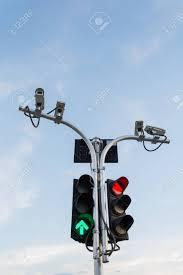

It is called the red-light camera system and it has been operational since this Monday in Málaga city. Until now, penalizing drivers who ran a red light depended on catching them red-handed. From now on, at four highly trafficked and accident-prone intersections, cameras can now certify fines. The penalties are 200 euros (100 for early payment) and a deduction of 4 points from the driver's license.
Málaga thus joins the cities that already have or have had this system implemented to prevent traffic accidents. These include Madrid, Barcelona, Bilbao, Palencia, Segovia, Burgos, Oviedo, León, and some municipalities in the metropolitan area of Valencia. The capital of Spain has the most monitored points, exceeding 40. In cases like San Sebastián, these devices were removed from the roads following judicial decisions.
The cameras, which began to appear in Spain in the first decade of this century, detect a vehicle that does not stop at a red traffic light or, having stopped, moves off too soon. Photographs are taken to document the infraction.
According to data from the DGT (Directorate-General for Traffic), there are more than 500 cameras of this type in Spain. It is a system that has always generated great controversy, with thousands of appeals in the courts, often successfully. In some cases, complainants have cited errors in signage, insufficient green phase time, malfunctions...
Six devices at four intersections
In Málaga city, the initiative has started at four intersections. Three of them are on Valle Inclán avenue and another at the intersection of the surface metro with road traffic near the Clínico and the Faculty of Medicine. In total, the Mobility Area of the Málaga City Council has installed six devices.
The councilor for the area, Trinidad Hernández, has asked drivers to be cautious. "It is a serious offense according to traffic regulations. It carries, in addition to significant fines, the loss of points. And we aim to prevent tragedies, protect pedestrians, cyclists, and drivers. I always say that respecting a traffic light is respecting life. That's why I ask the people of Málaga to be responsible behind the wheel. Behind every traffic rule, the goal is to save lives. It's important to remember that," she asserts.
On Valle-Inclán Avenue, there is also a fixed radar facing Torremolinos to control speed. Last year it caught almost 3,000 drivers. The red-light cameras are located at the confluence with Camino de Suarez (so that the two lanes of eastbound traffic are controlled); two at the crossroads of Simón Bolívar Avenue (one westbound and one eastbound), and another at the confluence with La Palmilla Avenue, to monitor the two eastbound lanes.
At the intersection with the metro, at Jiménez Fraud with Louis Pasteur, the measure already reinforces the luminous, acoustic, and conventional signals that regulate the intersection.
How do they work?
These are high-performance cameras that, synchronized with the traffic light regulator, detect when a vehicle has crossed the stop line with the red light on. When this happens, the vehicle or motorcycle's license plate and several photos are captured, before, during, and after the infraction, along with a short verification video of the event to support the sanctioning body. The device operates both day and night with additional infrared lighting and is capable of detecting infractions in both lanes.
The signs warning of the presence of these infraction control systems have sparked great curiosity among drivers. They are also part of the new signage catalog launched by the Directorate General of Traffic (DGT).
The pictogram shows a red traffic light accompanied by radar waves and different vehicles. They are located just before the intersection, only a few meters from the line where drivers must stop.
If a driver runs a yellow light, the regulations do not specify that the behavior is punishable, as it is a caution signal unless there is sudden acceleration or similar behavior. Disobeying the red light, on the other hand, ensures the receipt of the letter or notification with the corresponding photographs.
Red light fines
To date, according to data accessed by SUR, in 2020 the Málaga City Council fined 858 drivers for running a red light; 8 for doing it on yellow, and 27 cyclists and motorcyclists on mopeds. The following year, there were 670 penalties, 9 and 117 respectively. In 2022, there were 381, 7, and 77 procedures. And in 2023, they dropped to 291, 1, and 27 respectively. In the first months of last year, when these statistics were last updated, the trend was downward: with just over one fine per day.
Average daily traffic intensities
What traffic do these roads that are going to be controlled have? The latest municipal traffic counts, corresponding to the four months between May and August of this year, reveal that on Valle-Inclán in the eastbound direction, 32,475 vehicles travel on a workday. In the opposite direction, westbound, there are 25,377. On the axis that will be controlled in Teatinos, there are no official data, but it is a conflictive point due to the confluence of metro line 1 and the vehicles circulating in the vicinity of the Clínico, del Romeral, and the Teatinos campus.

Latest news





Upcoming events
12
Nov
El Desembarco, la traición de Viriato at La Caja Blanca
12
Nov
HOMER El Mero Mero at Sala Trinchera Málaga
13
Nov
Marbella Startup Lab – Innovate & Collaborate
13
Nov
Candlelight: Coldplay & Imagine Dragons at Sala Fundación Unicaja María Cristina
13
Nov
Candlelight: Tribute to Ludovico Einaudi at Anantara Villa Padierna
Similar News

Málaga Airport Makes History with More Than Three Million Passengers in One Month
Málaga

Port of Málaga looks beyond its docks to support future growth
Málaga

Guide to the Virgen del Carmen Processions in Málaga and the Province
Málaga
