


Wild boar tongues, lost legumes, and other treasures of mountain cuisine
Chefs from the Pyrenees, the Alps, or La Demanda meet in Andorra to discuss ancestral cooking and survival recipes.
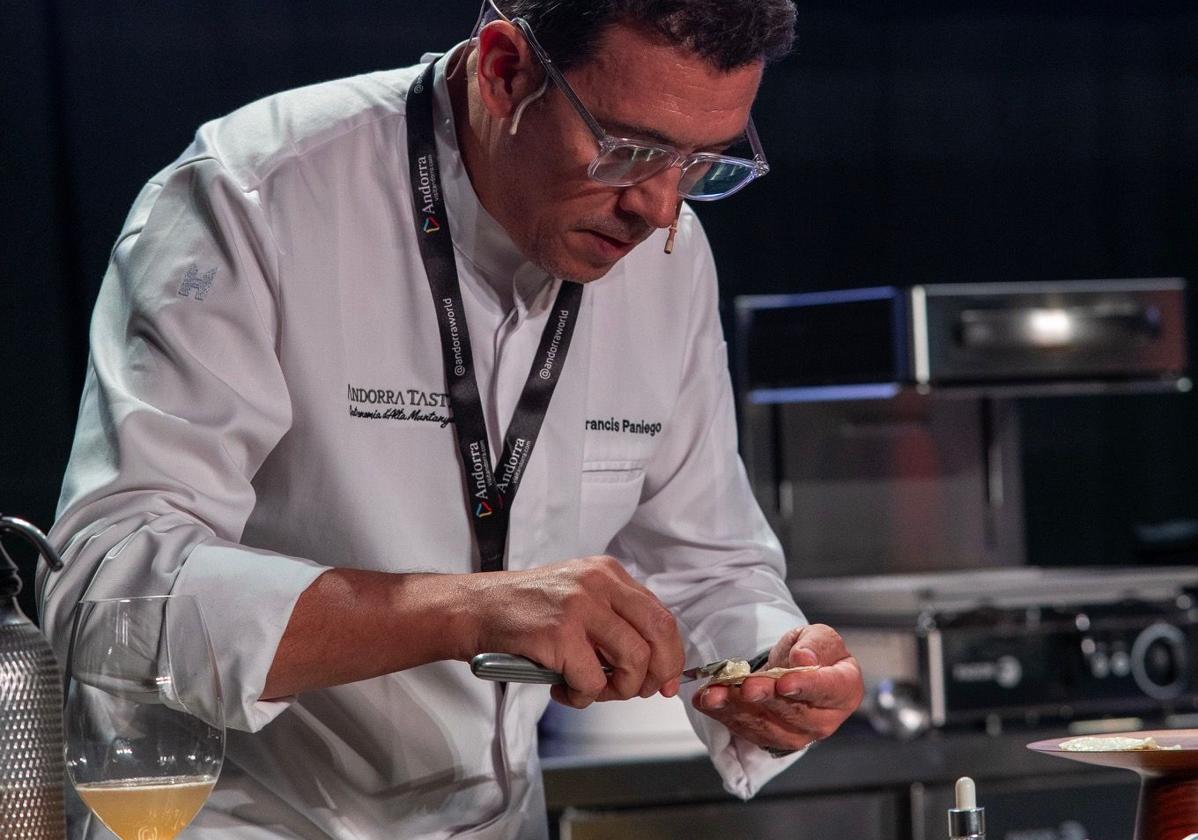

The viscera of an animal from which the hunter only seeks the trophy. An organic harvest of legumes that doesn't meet market standards. The herbs that grow by the roadside, which hikers barely notice. These might seem like discarded elements, yet they form the foundation upon which chefs like Luis Lera, Francis Paniego, or Maximilian Stock build some of their most interesting dishes. This week, they—and other chefs from Austria, France, Switzerland, Slovenia, or Georgia who look to the mountains to stock their pantries—are meeting in the heart of the Pyrenees to participate in the fourth edition of the Andorra Taste high mountain gastronomy congress. They are absolute benchmarks in their craft but, as Paniego said, "the mountains remind us how small we are."
This contrast between the ruggedness of the wild landscape and the fragility of those who inhabit it runs through most of their proposals. Luis Lera, for example, has made game cooking in Tierra de Campos his hallmark. This has earned him a Michelin star, a green star, and made him a pilgrimage site for foodies across the country, but it also forces him to constantly improvise. He works with chamois, mouflon, deer, pigeons, or wild boars, "ingredients you can't find in the supermarket," so he never knows for sure what he will have.
He goes further: he does not settle for legs, loins, or breasts—the most prized parts—but opts for offal, in a dual exercise of utilization. At Andorra Taste, he presented pickled wild boar tongue, fried snout, venison shank with almonds, or dried chamois meat. The common thread: ancient preservation techniques on the verge of oblivion that he elevates to haute cuisine. His battle is to rescue popular recipes and refine them for today's palate: "In a time of dietary homogenization, it is time to be identity-focused, to look inward, because we have a lot to offer."
From Trash to Haute Cuisine
Francis Paniego, a chef from La Rioja, showed the same commitment to the land and heritage, albeit in a different, more refined style. The fifth generation at the helm of Echaurren—a former stagecoach inn at the foot of the Sierra de La Demanda, now a Relais & Châteaux and a restaurant with two Michelin stars—said he was "almost the first in the family who could go out to study abroad, and when I returned I wanted to change everything, without realizing the value of what was around me."
From this respectful perspective on his surroundings, some of his most brilliant ideas are born, like the Marta Hake, a revision of a recipe from his mother—"with which we've catered hundreds of weddings": Roman-style hake stuffed with butter and ham. By giving a contemporary twist to this home recipe, he creates one of the most emotional moments of his menu. Another is the dish of Oja caparrones, a legume in danger of extinction cultivated by two young locals, Rodrigo and Asier, who were going to throw away half the harvest for not meeting commercial standards. Paniego bought the entire harvest. And he turned it into haute cuisine.
Cooking only local products in the Austrian Alps can be challenging, but it is the doctrine upon which Maximilian Stock's proposal is based. In his pantry: wild herbs from Tyrol, artisanal dairy products, mountain livestock, acidic fruits, fish raised in closed circuits... even an "alpine shrimp" raised at high altitude. He is already looking forward to the mushroom season, that great treasure of mountain cuisine. About its possibilities, several Andorran chefs, Pau Santamaría, Victoria Kemerer, Jordi Grau, Marcel Besolí, and José Antonio Guillermo, spoke at a round table, providing examples of the awakening of a gastronomic scene, that of the principality, which until not so long ago was satisfied with serving international cuisine.
Expand
Ferran Adrià. R. C.Award for a Ferran Adrià Who Continues to Pose Questions
He received the Andorra Taste 2025 award, following in the footsteps of figures like Carme Ruscalleda, Michel Tras, or Gastón Acurio, but Ferran Adrià—"the most influential chef of the last century," according to the congress director, Benjamín Lana—preferred to avoid any solemnity to sow doubts, pose questions, and call to action. "What is Andorran cuisine? Is it what is eaten in Andorra or the traditional one from here?" That's why he called on chefs and the administration of the Principality to define a "friendly culinary identity," to plan and invest to position themselves: "Thailand has done it, invested 20 million and today is at the top. Without a plan, there is no future."

Latest news





Upcoming events
12
Nov
El Desembarco, la traición de Viriato at La Caja Blanca
12
Nov
HOMER El Mero Mero at Sala Trinchera Málaga
13
Nov
Marbella Startup Lab – Innovate & Collaborate
13
Nov
Candlelight: Coldplay & Imagine Dragons at Sala Fundación Unicaja María Cristina
13
Nov
Candlelight: Tribute to Ludovico Einaudi at Anantara Villa Padierna
Similar News

Málaga Airport Makes History with More Than Three Million Passengers in One Month
Málaga

Port of Málaga looks beyond its docks to support future growth
Málaga

Guide to the Virgen del Carmen Processions in Málaga and the Province
Málaga
