


A pioneering conservation project restores the original flora and fauna to the Guadaiza River
The Marbella City Council, with support from the Government and the EU, removes wild canes and other invasive species to reduce the risk of flooding.
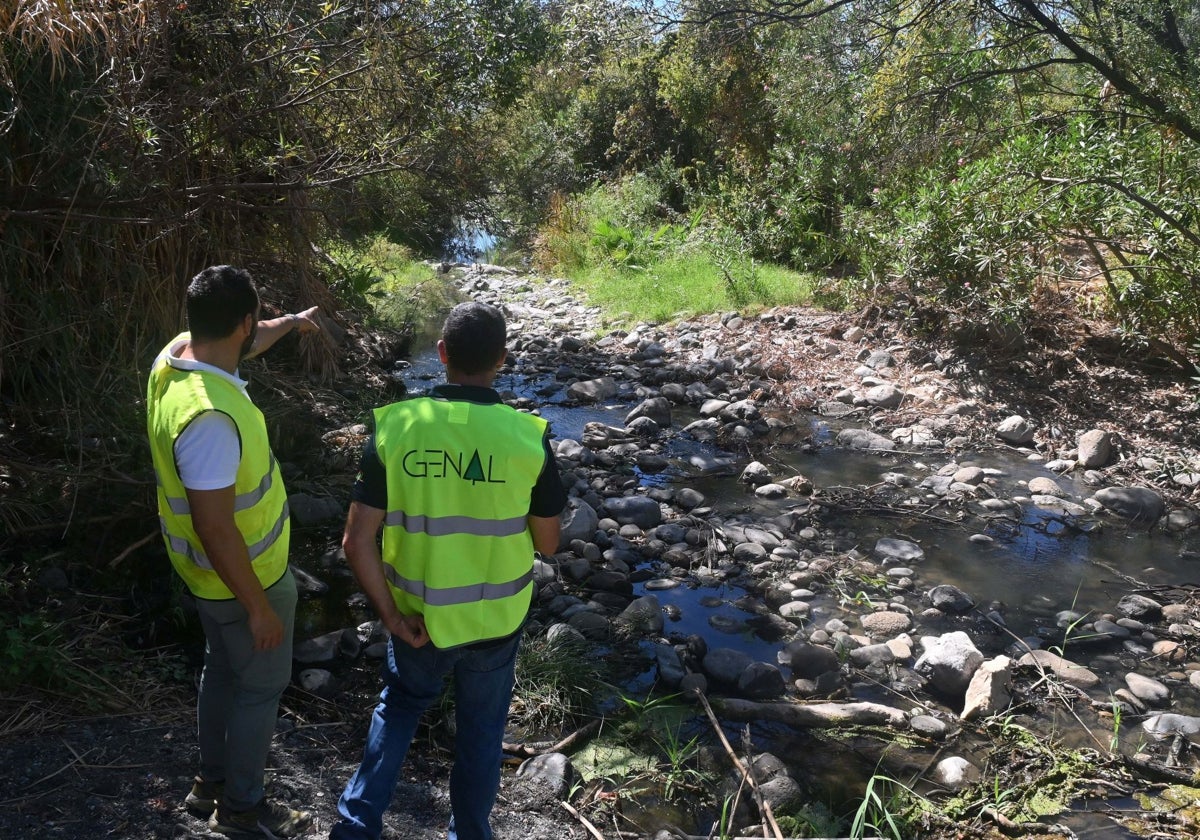

If someone were to walk directly along the riverbed, they would find it hard to believe that they are in the heart of the bustling Costa del Sol. The Guadaiza River, which is vital for the urban water supply (along with its 'cousins' the Guadalmansa and Guadalmina, and of course, the Verde River), also serves as a green lung for San Pedro Alcántara, in Marbella. There, numerous species of riparian vegetation grow, providing shelter to wildlife ranging from mallards and herons to the leprous turtle; there are even records of otters.
Expand
Extension of mats against the wild reeds. JoseleThe problem is that in recent years, like almost all rivers and streams in the province, they have been invaded by exotic plant species, which not only corner the native ones; but also clog the channel and increase the risk of flooding during the heavy rains. The Marbella City Council has been a pioneer in the province in promoting a comprehensive renaturalization project for the Guadaiza River. As explained by the mayor, Ángeles Muñoz, it meets several practical objectives, such as flood prevention and ecological restoration; but it also aims to be "a symbol of urban sustainability and social cohesion".
Mats against the reeds
Not in vain, the project was the winner among numerous proposals at the national level of a subsidy of almost 2.8 million euros, funded by the Biodiversity Foundation of the Ministry for Ecological Transition, within the Next Generation program. The work is being done using techniques that respect the environmental values of the river, and only act against harmful species. Hence, this same scheme will serve as a model for intervening in other channels.
Expand
Example of a mallard in the renaturalized channel. JoseleThe works are carried out by several companies from Malaga: Inditec, as the main contractor and responsible for coordination; together with Genal and Ituval. José Antonio Gómez is a forestry engineer and is leading this action. In the current phase, the workers are removing the wild reeds from the root, and right after the lands are covered with biodegradable mats. "Studies say this is the best measure to eradicate the invasive reed, which does not allow native vegetation to grow." This also avoids the use of chemical herbicides.
The project won, against many others at the national level, a subsidy of almost 2.8 million from the Next Generation funds
With the same purpose, large specimens of eucalyptus and acacias are being removed. "It's not just about cutting them down, but we remove them from the root with the help of a high-tonnage crane, and with that, we ensure that native vegetation has space to recolonize." In addition, to support spontaneous regeneration, up to 8,000 specimens of species such as willow, myrtle, tamarisk, and oleander, among others, are going to be planted.
"We have seen that natural regeneration is going very well, oleanders and a lot of tamarisk are sprouting, while other plants that were overshadowed are recovering." Moreover, the Guadaiza channel hosts a series of small ponds, where mallards, herons, and little egrets, eels, and leprous turtles breed.
Related news
The invasion of reeds clogs channels and reservoirs and causes damage on the beaches of Malaga
Regarding the latter, which is a protected species, a specialized company has captured more than a hundred specimens, which have been moved upstream (with authorization from the Junta), where they have more water and to prevent the work from affecting them. "With the rains, they will come down again and will recolonize their territory." At the same time, in the aspect of controlling invasive fauna, numerous Florida turtles have been removed, which have been moved to a wildlife refuge.
Otters have not been seen, but experts have identified their tracks and other signs that they roam this part of the urban channel. "There is a lot of wildlife here, and more that will be seen when we finish," states Antonio Gómez.
Flood control
Lastly, the plan also includes the mobilization of boulders and the treatment of sediments in the channel, especially in vulnerable points such as under bridges, so that floods can flow without obstacles and prevent overflows with the expected rainfall in the upcoming autumn.
"This experience will become a pilot model to apply similar criteria of renaturalization, awareness, and prevention of water risk in other channels, amplifying the ecological and community benefits throughout the municipality," states the mayor of Marbella. The City Council, in coordination with Hidralia, is working on the structural cleaning of channels and streams, with the dual function of preventing floods and protecting the environmental values of protected areas.
"In November 2024, after the heavy rain episode we had in Marbella, we managed more than 500 tons of dragged reeds, through the Costa del Sol Environmental Complex. These have been transformed into fertilizer for parks and gardens," highlights Ángeles Muñoz.

Latest news





Upcoming events
12
Nov
El Desembarco, la traición de Viriato at La Caja Blanca
12
Nov
HOMER El Mero Mero at Sala Trinchera Málaga
13
Nov
Marbella Startup Lab – Innovate & Collaborate
13
Nov
Candlelight: Coldplay & Imagine Dragons at Sala Fundación Unicaja María Cristina
13
Nov
Candlelight: Tribute to Ludovico Einaudi at Anantara Villa Padierna
Similar News

Málaga Airport Makes History with More Than Three Million Passengers in One Month
Málaga

Port of Málaga looks beyond its docks to support future growth
Málaga

Guide to the Virgen del Carmen Processions in Málaga and the Province
Málaga
