


"Friendship among women is revolutionary," asserts Chimamanda Ngozi Adichie.
"It's inhumane to criminalize those who migrate dreaming of a better life," says the Nigerian, who returns to novel-writing with 'A Few Dreams'.
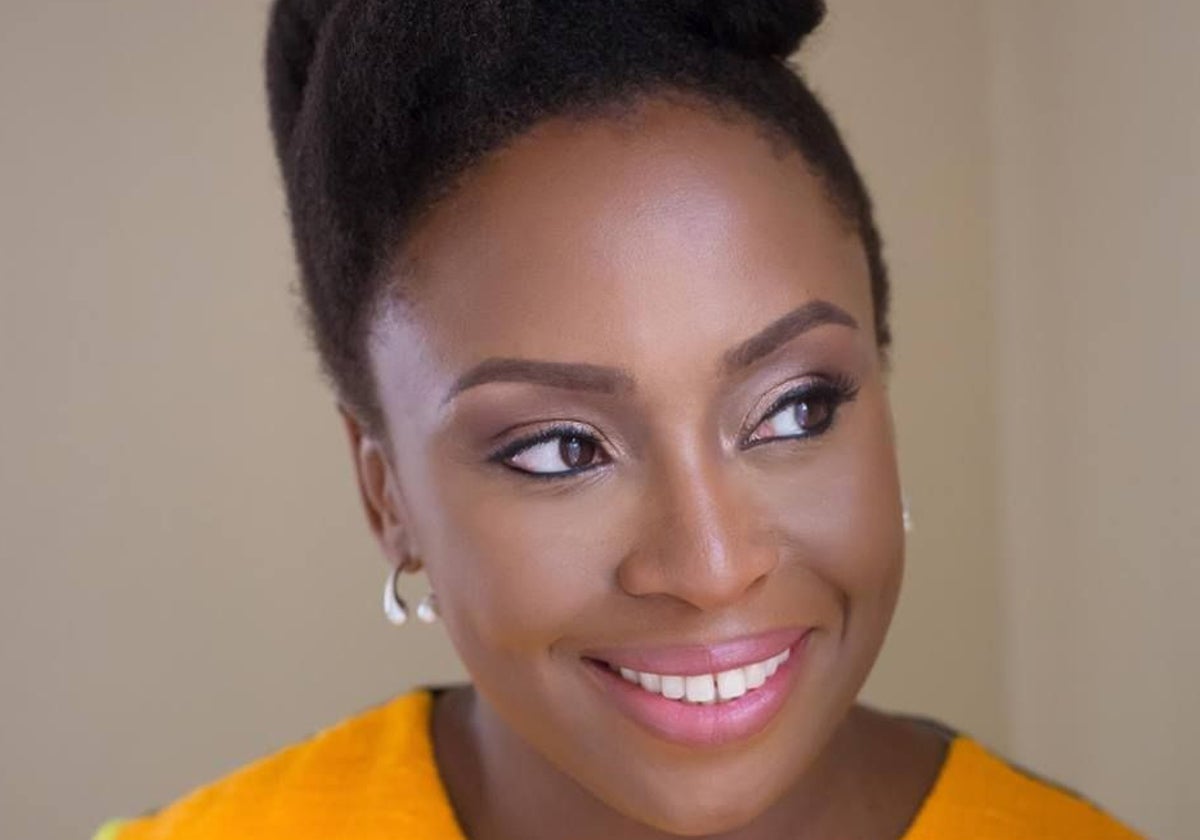

It has taken Chimamanda Ngozi Adichie (Enugu, Nigeria, 1977) years to return to the novel. The author of the acclaimed 'Americanah' does so with 'A Few Dreams' (Random House), a 500-page story about the aspirations and vicissitudes of four black women. The Anglo-Saxon critics hailed it as "a feminist 'War and Peace'." Adichie appreciates the comparison to Tolstoy, "but I like it more if we remove the word feminist and just leave it as 'War and Peace'," jokes this contradictory narrator, playwright, essayist, and beacon of feminism. She believes that women and men must redefine masculinity together and regrets the criminalization of immigrants.
In her eagerly awaited new novel, she intertwines the lives of four African women during the pandemic: Chiamaka, Zikora, Omelogor, and Kadiatou, all emigrated to the United States in search of a better life, each with different fortunes and lives.
"It's hard not to talk about immigrants in a novel like this. Whoever leaves their home does so because they dream of a different life. I find it horrible and inhumane to criminalize those who dream of something better," laments the Nigerian author, who, like her characters, emigrated to the United States.
Expand
Book Cover. Random HouseShe admits that her novel is "a celebration of female sisterhood," of sorority. "Deep friendship among women is something revolutionary. For me, it has been essential: a source of wisdom, support, and strength. But it must be understood that sorority is not universal, that there are women who do not like other women," she notes.
Necessary Changes
"Much of literature has been written by men who do not represent women in their complexity, and it's time to change that," the writer proposes. "For me, it's important to talk about women's bodies and health directly," she adds. However, she believes that women "cannot alone resolve their marginalization and the injustices of the world," so men "must be part of the solution."
"If more men read books about women's lives and bodies, perhaps communication between us would improve," she suggests. "Women read books by men and women, but men read books by men. And there lies a lack of knowledge," asserts the writer who has placed women at the center of her work.
She believes that "we need more women in what we consider serious literature: literature that addresses the confusing and complex humanity of women. There are themes that we take for granted that we think are great literature, but they do not represent women in their complexity," she insists.
"I don't like the expression 'toxic masculinity,' says the Nigerian writer, who believes it is necessary to "redefine masculinity" because "today it limits its meaning." "Boys grow up with an unreal idea of masculinity. Violence against girls and women does not decrease in the world and to combat it, it's important not to focus only on the victims but also on the aggressors," she demands. "What is happening with boys and their education? What are we doing wrong?" she asks.
"It is important to redefine masculinity, I insist, and with that, I am not advocating for a feminine masculinity. We need to go back and review some ideas that are sometimes considered outdated, but that mean bravery, positive strength, and justice," she proposes.
Accused of Transphobia
The recognition of her immense narrative talent has not spared Chimamanda Ngozi Adichie from accusations of transphobia for stating that trans women maintain some privileges from being socialized as men. Her feminist commitment was also questioned after revealing that she had twins through surrogacy, which allowed her to advance in her narrative projects. Surrogacy is legal in the state of Maryland, where the writer spends much of the year, but her motherhood is considered an abhorrent contradiction in a figure acclaimed for the essay 'We Should All Be Feminists' (2014).
She has never considered herself an activist and repeats that she did not come to literature out of militancy, but out of passion. "This is my adult novel, as a mother and as a person who no longer has parents," she says of 'A Few Dreams,' one of the most anticipated titles of the editorial 'rentrée'.
Creative Uncertainty
"It took me twelve years to finish it, and it was written by a person very different from the one who wrote my other novels," explains its author in a video meeting with Hispanic journalists. "I have been quite sure about myself and the world, but the recent loss of my parents and the mourning have taught me to embrace uncertainty as a creative engine," she explains. An uncertainty that "gave me freedom." "In literature courses, they teach you that you truly write when you cut, when you prune the texts, but my sentences are now longer; I let myself be carried away more by my love for language," she rejoices.
"I wrote it under the sensation of mourning, but it is not a sad novel. I hope the reader finds the humor, which is very important. It is crucial to laugh in life," she maintains.
Chimamanda Ngozi Adichie. R.C."I would write even if no one read me. External pressure does not overcome me, but internal pressure does; I am my greatest critic," assures the narrator. "Success does not protect you from personal doubts," affirms the author of titles such as 'Purple Hibiscus' (2003), 'Half of a Yellow Sun' (2006), 'The Thing Around Your Neck' (2009), and 'Americanah' (2013), the book that established her as one of the most sharp and committed voices of her generation.
"I hope that in a hundred years someone reads me and gets an idea of how we live today. Literature is fundamental for human beings. I am excited that my novels are useful and make people think about a social and political issue. But I do not write to participate in a political and social debate," she concludes.
Expand
Nafissatou Diallo, the hotel maid who in 2011 accused Dominique Strauss-Kahn, then president of the IMF, of sexual harassment, inspiring one of the protagonists. EPA"Only in the crime of sexual harassment is the focus put on the victim"
The character of Kadiatou, one of the four women who star in Adichie's novel, is inspired by Nafissatou Diallo, the Guinean hotel maid who accused the Frenchman Dominique Strauss-Kahn of a serious sexual assault in 2011, then the powerful managing director of the International Monetary Fund (IMF). She was impacted by the "terrible" media coverage, which in her opinion "made people empathize more with Strauss-Kahn than with her." Yet, she felt "some hope in the U.S. system." "When Strauss-Kahn was arrested I felt proud of the country and emotionally connected with Diallo," confesses the writer.
"Sexual harassment is the only crime, the only crime, where instead of focusing on the author, on the perpetrator, the focus is placed on the victim," she laments. "If you are going to report something, you must ensure that you are like a perfect angel. If not, you are at a disadvantage. That sends a terrible message to women: do not report sexual harassment because you are at a disadvantage. And that shocked me," she assures.

Latest news





Upcoming events
12
Nov
El Desembarco, la traición de Viriato at La Caja Blanca
12
Nov
HOMER El Mero Mero at Sala Trinchera Málaga
13
Nov
Marbella Startup Lab – Innovate & Collaborate
13
Nov
Candlelight: Coldplay & Imagine Dragons at Sala Fundación Unicaja María Cristina
13
Nov
Candlelight: Tribute to Ludovico Einaudi at Anantara Villa Padierna
Similar News

The Cat Guardian: Nearly 14 Years of Rescues and 16,500 Neutered Cats
Málaga
María Barranco resurfaces after hitting rock bottom: "No one can sink me"
Málaga
Ana Duato: "Merche taught me to be a woman, a person, and an actress"
Málaga
