


The town in Málaga that leaves travel experts amazed: it has one of the strangest cemeteries in all of Spain
Its unique cemetery inspired Antonio Gala and is the subject of analysis in magazines like National Geographic. Churches, Nasrid towers, cave paintings, and popular festivals complete the experience in Casabermeja.
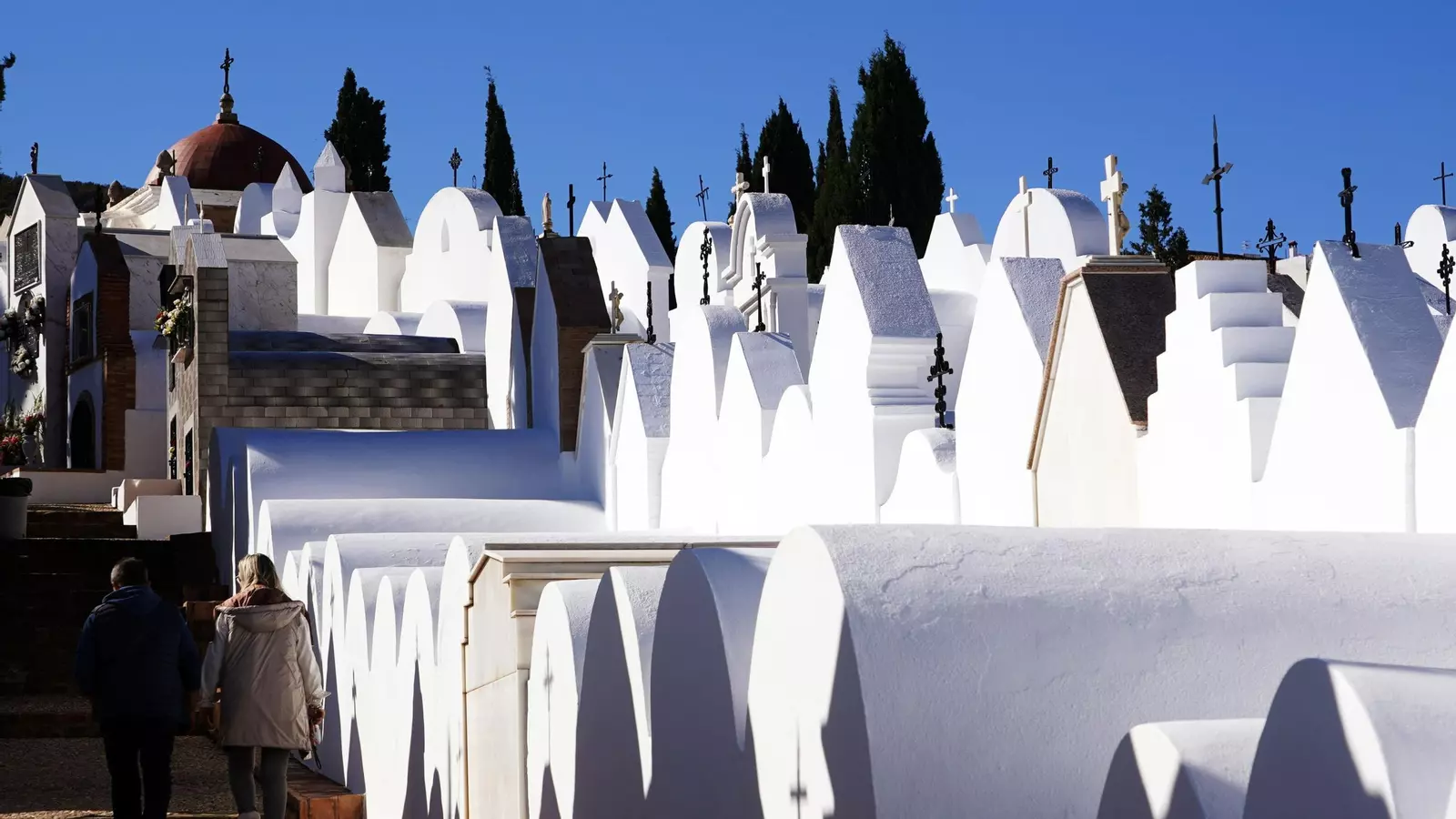

It is a charming white village of Málaga that has managed to preserve its historical heritage, nestled between the Antequera region and the Montes de Málaga, of great beauty and with a history that has astounded travel experts across Spain. We are talking about Casabermeja, a village that is said to owe its name to Isabel the Catholic’s curiosity upon sighting the place —"What a red house!"—, while others link it to the Arabic expression Qsar Bemeja. Whatever its origin, this town in Málaga stands out for many things, including its unique and surprising cemetery.
Casabermeja hosts four sites declared Assets of Cultural Interest, reflecting the richness of its past. The first, the Municipal Cemetery of San Sebastián, declared a National Monument in 1980. Its unique layout, with whitewashed niches that seem to form small houses perched on terraces, has fueled for decades the mistaken belief that in Casabermeja the deceased are buried standing up. This cemetery, considered one of the most curious in Spain, attracts the attention of experts and visitors for its aesthetics and symbolism.
National Geographic magazine discusses the Municipal Cemetery of San Sebastián, noting it as one of the most peculiar and famous throughout Andalusia. Its fame was such that it even reached the writer Antonio Gala, who stated in a 1982 column for El País that he wanted to rest there, to which the City Council responded by gifting him a plot. But what makes it unique and special? Quite simply, its monumental mausoleums: "They are structures divided into three parts: lower, where the door to insert the deceased is located; middle, which corresponds to the gravestone; and upper, where the front with architectural ornaments is placed. Given their height, with the construction of the Málaga highway in 1992, they began to be seen from the road, which gave rise to the myth that 'here the dead are buried standing up.'"
Another undeniable icon is the parish church of Nuestra Señora del Socorro, built in the 16th century, which preserves valuable pieces of silverware and constitutes one of the architectural emblems of the village. The historical legacy of the locality is completed with the Torre Zambra, a 13th-century construction that was part of the Nasrid defensive network and today offers a unique perspective over the territory. Additionally, the Pictorial Ensemble of Peñas de Cabrera, with its cave paintings, evidences human presence in the area since prehistoric times, adding a layer of depth to the history of the municipality.
Nature and hiking in Casabermeja
The municipal area extends to the Natural Park of the Montes de Málaga, a protected area of almost 5,000 hectares recently declared a Special Conservation Area (ZEC). In this space, hiking trails weave through pine forests, ravines, and waterfalls, forming a landscape of high ecological value. The Peñas de Cabrera stand out not only for their archaeological remains but also for the rock formations shaped by the wind. Added to this are the Mallén and Torre Zambra viewpoints, from which panoramic views of the mountainous surroundings and neighboring villages can be appreciated.
Festivals and popular traditions
The festive calendar of Casabermeja reflects its cultural identity. The festivity of San Sebastián, the patron saint of the municipality, starts the year with processions and gastronomic celebrations. In July, the Festival de Cante Grande brings together prominent flamenco artists, while in August the pilgrimage in honor of Nuestra Señora del Socorro and the Fair fill the streets with music and color.
Among the most unique festivities stands out the Feria de la Cabra Malagueña, in September, which highlights the local livestock tradition and its link with gastronomy. Also notable are the San Juan festivities, with the burning of the "júas," and the Carnival, where comparsas and costumes transform the urban center.
Gastronomy and Days of Popular Cuisine
The traditional cuisine of Casabermeja is another of its attractions. Dishes like olla de la era, migas, chivo en pepitoria and the plato de los Montes are part of a deeply rooted recipe book. In pastry, the borrachuelos and tortas de aceite or lemon stand out, while seasonal products—such as asparagus, tagarninas, or artichokes—take center stage each year at the Days of Popular Cuisine held between March and April. During these days, cheese, oil, and honey tastings, culinary workshops, guided tours, and a market of local products showcase the agricultural wealth of the municipality.
How to get to Casabermeja
Located just 27 minutes by car from Málaga via the A-45 highway, Casabermeja also has interurban bus services that connect the capital with Riogordo and make stops in the village. Its proximity to the capital and its strategic location between mountains facilitate access to this enclave where nature, history, and culture coexist.

Latest news





Upcoming events
12
Nov
El Desembarco, la traición de Viriato at La Caja Blanca
12
Nov
HOMER El Mero Mero at Sala Trinchera Málaga
13
Nov
Marbella Startup Lab – Innovate & Collaborate
13
Nov
Candlelight: Coldplay & Imagine Dragons at Sala Fundación Unicaja María Cristina
13
Nov
Candlelight: Tribute to Ludovico Einaudi at Anantara Villa Padierna
Similar News

Málaga Airport Makes History with More Than Three Million Passengers in One Month
Málaga

Port of Málaga looks beyond its docks to support future growth
Málaga

Guide to the Virgen del Carmen Processions in Málaga and the Province
Málaga
