


This is the best town in Málaga that you can visit in September:
Cañete la Real, Among Medieval Castles, Historic Convents, and Nature TrailsHistory, gastronomy, and local festivals make this town a unique destinationThis is one of
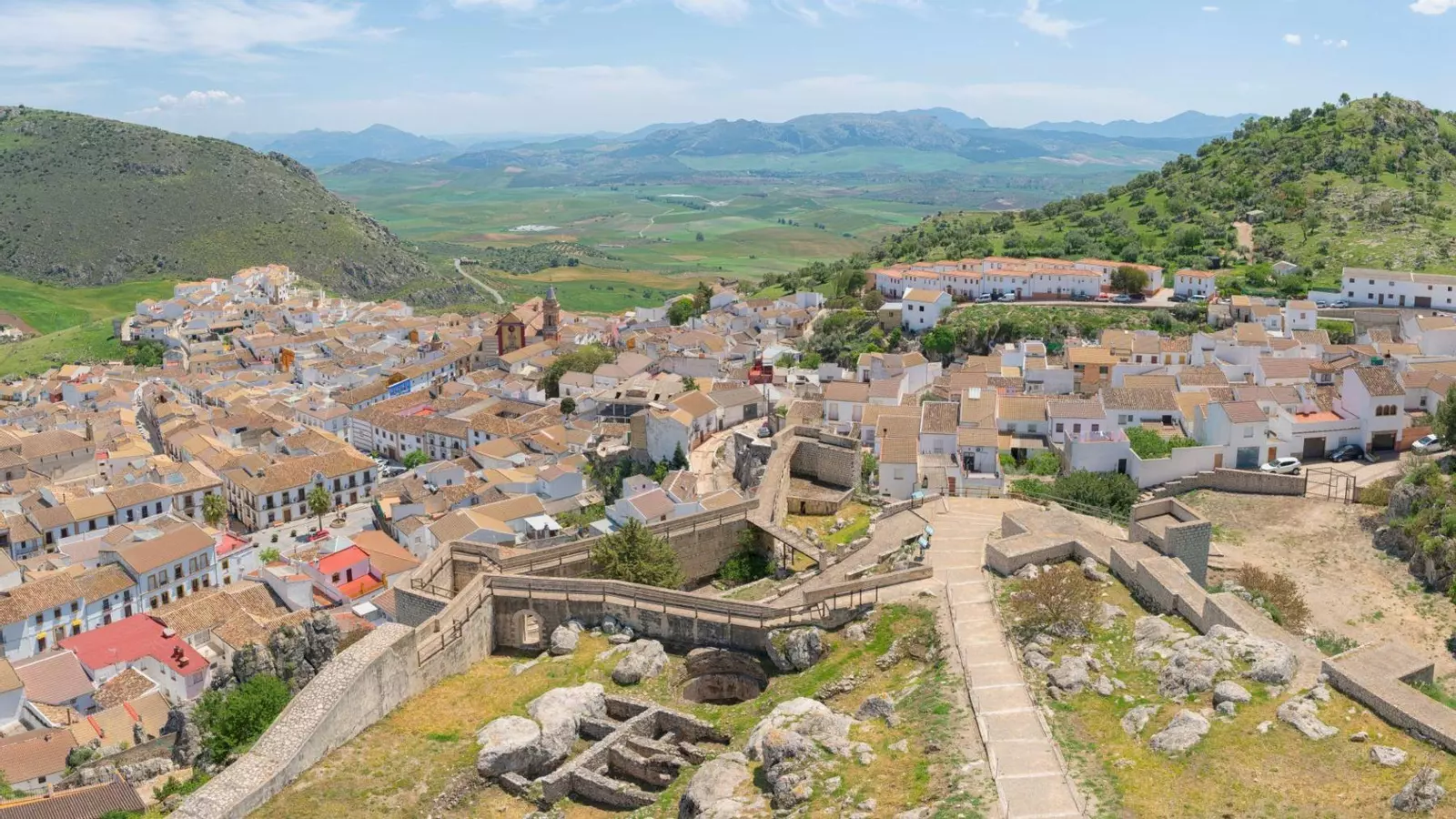

In the north of the province of Málaga, within the Guadalteba region, stands Cañete la Real, a village that combines history, nature, and traditions. Strategically located on a mountainous lookout, between the Serranía de Ronda and the Vega de Antequera, this enclave was coveted by various civilizations over the centuries. Its name comes from the Arabic name Hins Qannit, and over time, it acquired the title of Real, granted by Alfonso XI after the Castilian conquest of its fortress in the 14th century.
The imprint of its past is visible in every corner of the municipality, from the majestic medieval castle that crowns the hill to the streets decorated with murals and colorful traces that guide visitors towards monuments, restaurants, and trails.
The Castle of Hins Qannit, symbol of Cañete la Real
The most imposing emblem of the locality is the castle of Hins Qannit, built in the 9th century and covering an area of more than 3,500 square meters. Located at about 800 meters above sea level, it takes advantage of the natural relief of the hill to reinforce its defensive system. For decades, it was one of the main stages of the clashes between the Mozarabs of Omar ibn Hafsún and the Emirate of Córdoba, until it fell into the hands of Caliph Abderramán III in the year 906.
The Castle of Hins Canit. / malaga.esOver the centuries, the fortress changed hands several times. In 1330 it was conquered by Alfonso XI, although it soon returned to Muslim rule until its definitive incorporation into the Crown of Castilla in 1482. Today, its Torre del Homenaje houses the Los Vigías del Territorio interpretation center, which explains the defensive role of this construction on the frontier between kingdoms.
Other medieval remnants complete this legacy, such as the Torre de Ortegícar and the Nasrid bridge that gave access to an ancient rural farmstead.
Details of the Torre de Ortegícar. / canetelareal.esHeritage and religious architecture
The urban layout of Cañete la Real preserves buildings that reflect its splendor between the 15th and 18th centuries. The church of San Sebastián, erected in 1526 and restored in 1797, is one of the main architectural landmarks. Also notable are the convent of San Francisco and the enclosed convent of the Holy Sacrament, still inhabited.
The Church of San Sebastián. / malaga.esIn the latter, traditional sweets such as piononos, highly appreciated in local confectionery and an example of the persistence of conventual tradition in the life of the municipality, are also made.
Nature and active tourism
Beyond its historical wealth, Cañete la Real has established itself as an ideal destination for lovers of active tourism. The Sierra del Padrastro, which rises next to the urban center, offers the possibility of practicing climbing, spelunking, or even hang gliding. It is also a privileged place for bird watching, with species such as the griffon vulture, the common buzzard, or the eagle owl, in addition to the presence of the Iberian ibex in its natural habitat.
The rural environment has spaces such as the recreational area of Las Espeñas, perfect for enjoying days in the countryside. The plain surrounding the municipality is crossed by streams that flow into the Guadalteba River, forming an agricultural landscape of farmhouses and fertile lands.
Festivals and traditions in September
The month of September takes on special significance in Cañete la Real with the celebration of its patron saint festivals in honor of Our Lady of Caños Santos. During the third week of the month, the village is filled with cultural and recreational activities that keep its traditions alive.
The local festive calendar also includes other notable events, such as the Festival of the Cultures of Al-Ándalus in June, the Carnivals in February, the pilgrimage of San Isidro Labrador in May, and the Royal Fair in August.
Cuisine with local roots
The cuisine of Cañete la Real reflects Andalusian tradition with dishes such as stews, the thick tomato soup called porra, and gazpacho cooked with its garnish. Vegetable stuffing, meat stewed with onion, or toasted gazpacho are also typical, along with recipes made with tagarninas. In confectionery, highlights include muffins and the aforementioned piononos, which the local convents have turned into one of their gastronomic hallmarks.
A village with a millennial history
The origins of Cañete la Real date back to prehistoric times, although it was the Iberians and later the Romans who left the greatest mark. In Roman times, the settlement known as Sabora moved to the plain in the year 78, authorized by Emperor Vespasian. The Visigoths boosted agriculture, and it was King Witiza who first granted the "Real" category to the municipality.
This title was reaffirmed centuries later by Alfonso XI, who consolidated the importance of the town within the network of frontier fortresses of the Kingdom of Castile.
How to get to Cañete la Real
The municipality is located about 82 kilometers from Málaga capital. The usual route is via the A-357 road, then connecting with the A-367 and finally with the MA-6401 and MA-475, until reaching the village.

Latest news





Upcoming events
12
Nov
El Desembarco, la traición de Viriato at La Caja Blanca
12
Nov
HOMER El Mero Mero at Sala Trinchera Málaga
13
Nov
Marbella Startup Lab – Innovate & Collaborate
13
Nov
Candlelight: Coldplay & Imagine Dragons at Sala Fundación Unicaja María Cristina
13
Nov
Candlelight: Tribute to Ludovico Einaudi at Anantara Villa Padierna
Similar News

Málaga Airport Makes History with More Than Three Million Passengers in One Month
Málaga

Port of Málaga looks beyond its docks to support future growth
Málaga

Guide to the Virgen del Carmen Processions in Málaga and the Province
Málaga
