


Picasso in Royan: Self-Portrait (on paper) of an Artist in a Turbulent Time
The Picasso Museum in Malaga brings together for the first time the eight notebooks that the genius drew in his French refuge during the Nazi invasion; pieces that seem humble but that prefigured much of the formal breakthroughs and thematic concerns of the Malaga-born artist in his later major works.
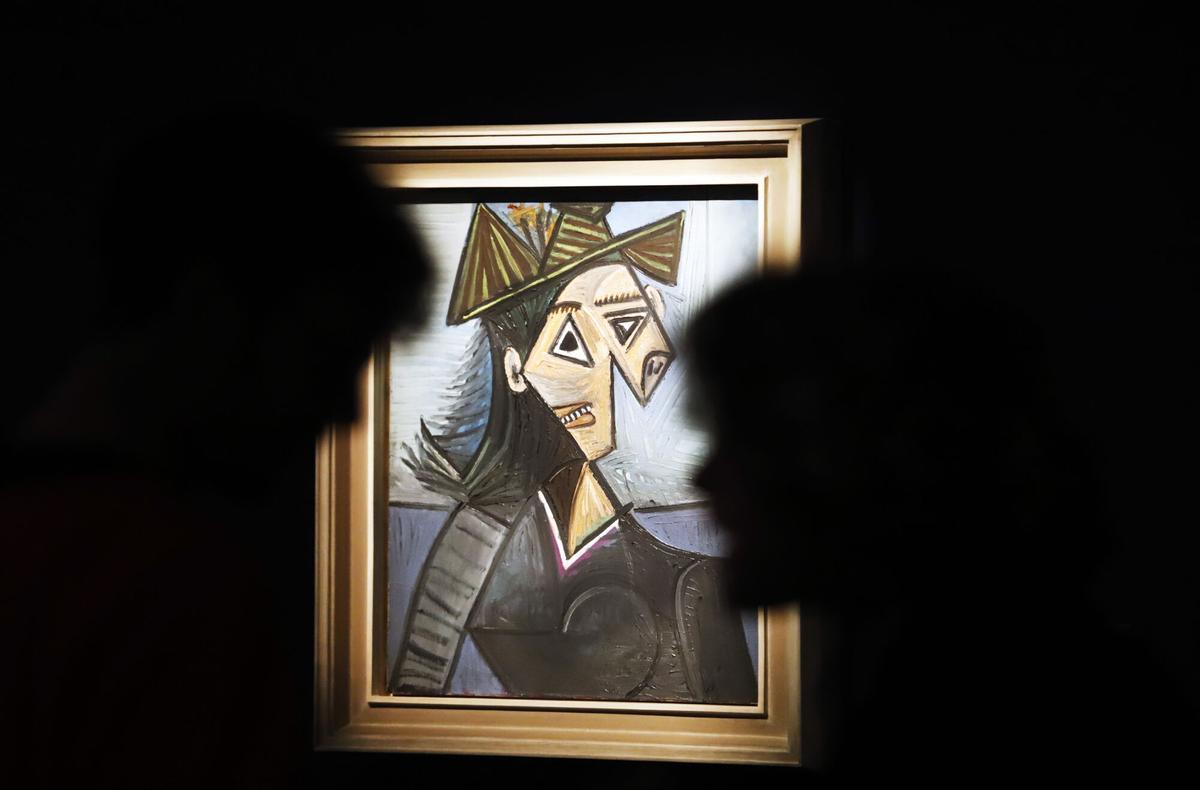

In the cartography of Picasso, Royan holds a very unique place. The capital of the so-called Côte de beauté (Coast of Beauty) in France was the refuge for Pablo Picasso and his entourage when the Nazi threat loomed over Paris, in September 1939. The decision was strategic: north of Bordeaux, Royan was far enough from potential military targets of Hitler, yet well-placed in case events necessitated a quick exile by boat. Thus, the artist from Malaga arranged everything: he sent his lover Marie-Thèrese Walter and Maya, their daughter, to the villa Gerbier de Jonc; he stayed at the Hôtel de Tigre in the village, accompanied by his official partner, Dora Maar, his inseparable secretary, Jaime Sabartés, and Kazbek, a saluki hound whom the painter fed lamb heads. He soon set up a studio in the dining room on the ground floor of the villa and rented a workshop in an apartment building, because his art never ceased. In Royan, let us remember, not exactly a metropolis (currently 18,000 inhabitants: we are talking about a spa town, almost a resort), there was not exactly an overstock of artistic materials, but the artist managed to acquire some notebooks. He needed no more. Ultimately, in the twelve months he resided in Royan he completed eight sketchbooks, seemingly modest but stylistically lavish: there he experimented and prefigured many of the constants of his later major works. The Picasso Museum Malaga gathers these notebooks for the first time in its new temporary exhibition, 'Picasso: The Royan Notebooks,' which opens tomorrow and will run until April 30.
One of the works from the exhibition 'Picasso: The Royan Notebooks' / Álex Zea
This is a "research, cabinet-style exhibition," says the artistic director of the Picasso Museum Malaga, Miguel López Remiro, as we enter a room almost completely dark to view the projections of the pages of the notebooks (some of them are displayed in showcases, to attest to their small size and the mastery of their creator's stroke). The project, López-Remiro claims, aims to document "a deeply introspective creative journey during a tumultuous historical period" and, incidentally, to claim the importance of the artist's notebook, a kind of portable laboratory, a pocket-size studio where tests, trials, daring moves, and advances are made. "The notebook is as close as you can get to the artist, it's as if one could follow the development of the creator's mind, the sequence of their thoughts," asserts Marilyn McCully, one of the curators, along with her husband, Michael Raeburn, of 'Picasso: The Royan Notebooks.
For McCully, Royan might have meant to the artist from Malaga what Bordeaux (by the way, very close to that spa town) meant to Goya, who exiled there feeling threatened by another absolutism, not the Nazi, but that of Fernando VII. If the Aragonese ended up using that physical journey as a kind of inner inquiry that led him to prefigure Impressionism in paintings like 'The Milkmaid of Bordeaux', Picasso, besieged by the lack of materials and, initially, space and the shadow of Hitler, anticipated in Royan features of later major works. No, he did not dedicate himself to painting the idyllic landscapes of the area, but to drawing pieces with a level of anguish and despair that directly connects with the outbreak of the Second World War. He did not draw the war, nor explicitly political motifs, but there is something in 'Three Lamb Heads', a vanitas very connected with the Spanish Golden Age and, again, with Goya, that reflects the disasters of wars, the threat of death with a sardonic laugh. In reality, they were the food of Kazbek, the painter's Afghan, but their eyes, like when they gaze at the fish and shellfish in the market of Royan, turn them into a kind of dark, grotesque bestiary.
Presentation of the exhibition 'Picasso: The Royan Notebooks at the Picasso Museum / Álex Zea
That sorrowful gaze is noticeable, even in some verses he wrote in one of those notebooks on December 25, 1939: "[...[ sheets embroidered with the wax of eagles / falling in laughter rain the tangled frost of the / flames of the empty sky over the skin / torn from the house in a corner at the back of the drawer of the / closet vomiting its wings [...]". McCully highlights how those "flames of the empty sky" evoke "the threat of bombings."
Then there are the women, generically, who populate many pages of the eight notebooks. If the situation was socially tumultuous, the personal situation for Picasso was not much kinder: Dora Maar frequently felt jealous of her partner's attentions towards his daughter (Maya, then only four years old, whom, they say, he visited every night to tell a story) and, of course, the presence nearby of Marie-Thèrese Walter. Therefore, there are no portraits of any of them, the inspiration for any of these women protagonists of Picasso's life at that time is not made explicit (not even of the little girl), presumably to not heat up the atmosphere more. One of the few paintings from the Royan period, 'Woman Combing Her Hair' (1940), represents a woman inside a room shaped like a box much larger than her body, compressed, in contortion; the woman is there but in a grotesque movement, reflecting the anxiety and confinement that Picasso felt at that complex intimate moment.
Subscribe to continue reading

Latest news





Upcoming events
12
Nov
El Desembarco, la traición de Viriato at La Caja Blanca
12
Nov
HOMER El Mero Mero at Sala Trinchera Málaga
13
Nov
Marbella Startup Lab – Innovate & Collaborate
13
Nov
Candlelight: Coldplay & Imagine Dragons at Sala Fundación Unicaja María Cristina
13
Nov
Candlelight: Tribute to Ludovico Einaudi at Anantara Villa Padierna
Similar News

Málaga Airport Makes History with More Than Three Million Passengers in One Month
Málaga

Port of Málaga looks beyond its docks to support future growth
Málaga

Guide to the Virgen del Carmen Processions in Málaga and the Province
Málaga
