Costa del Sol News
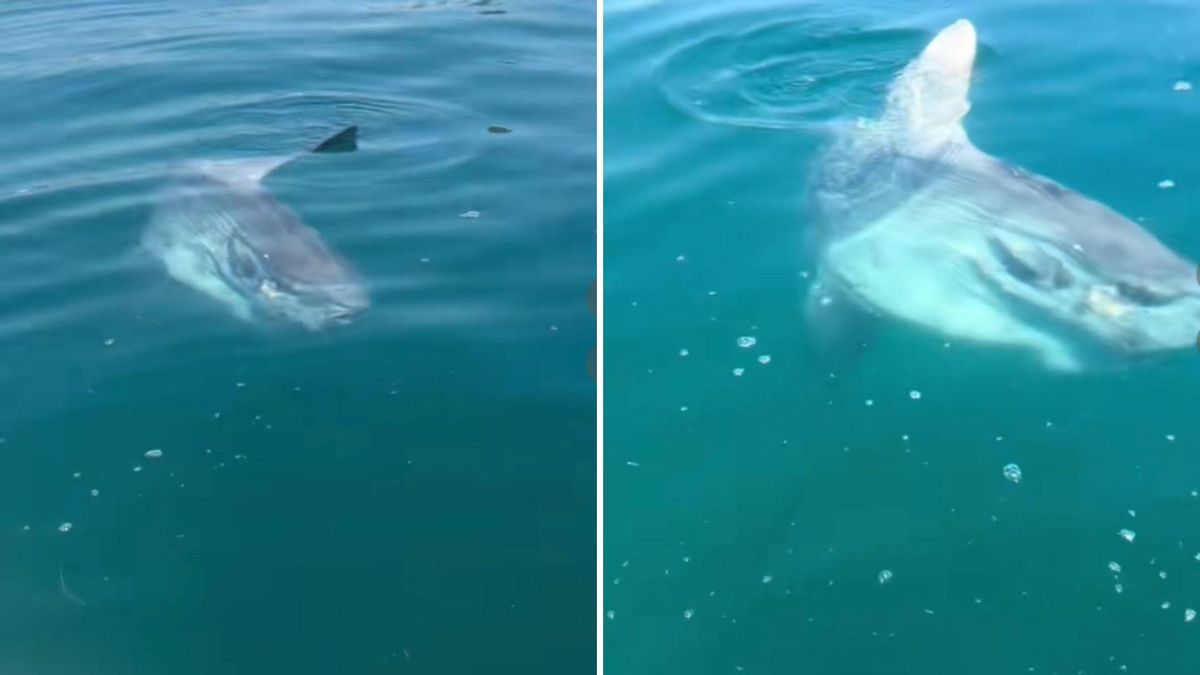
Summer is leaving behind astonishing images captured on the beaches of the province of Málaga. If the summer season began with the sighting of a basking shark in Marbella, now another marine species has surprised bathers. It is the sunfish, one of the largest and heaviest bony fish species in the world. It can reach more than three meters in length and weigh up to two tons. Its appearance is unmistakable: a body flattened laterally, almost circular in shape, without a defined tail, and with long dorsal fins. This type of fish usually inhabits the open waters of temperate and tropical oceans, especially in the Atlantic, Pacific, and Indian Oceans. However, in recent years, sightings have become increasingly frequent in the Mediterranean Sea.
Despite its imposing presence, the sunfish is completely harmless to humans. It does not have scales, but a rough and thick skin, and it usually swims slowly near the surface to regulate its temperature or to rest. In the Mediterranean, the Mola mola primarily feeds on jellyfish, although it also consumes small fish, crustaceans, and gelatinous plankton. Its presence helps control jellyfish populations, which is beneficial for the ecosystem and particularly important for humans, especially in tourist areas like the Costa del Sol.
Furthermore, another giant jellyfish has been seen on the shore of one of the beaches in Torre del Mar. Similar to the one spotted a few weeks ago at Playa de la Caleta, it is a specimen of Rhizostoma luteum, a common species in the Mediterranean Sea, especially on the southern coast of Spain. Its presence tends to increase in summer, coinciding with changes in temperature or sea currents that bring jellyfish swarms towards the coast.
Despite its size and imposing appearance, the Rhizostoma luteum is relatively harmless to humans. Juan Antonio López, president of the Aula del Mar, explains that it is "a common and typical species on our coasts, which poses no danger to humans." López points out that "its sting is imperceptible" and emphasizes the importance of raising awareness among beachgoers "not to remove it from the water." Additionally, he highlights its ecological value: "It serves as a shelter for many fish, such as jacks, and is important for marine fauna."