


Protecting the monarch, first step to creating an outdoor butterfly garden in Paloma Park
The Benalmádena City Council will preserve the colony of this species that has existed for decades in this area, and in the medium term, it aims to introduce other native species.
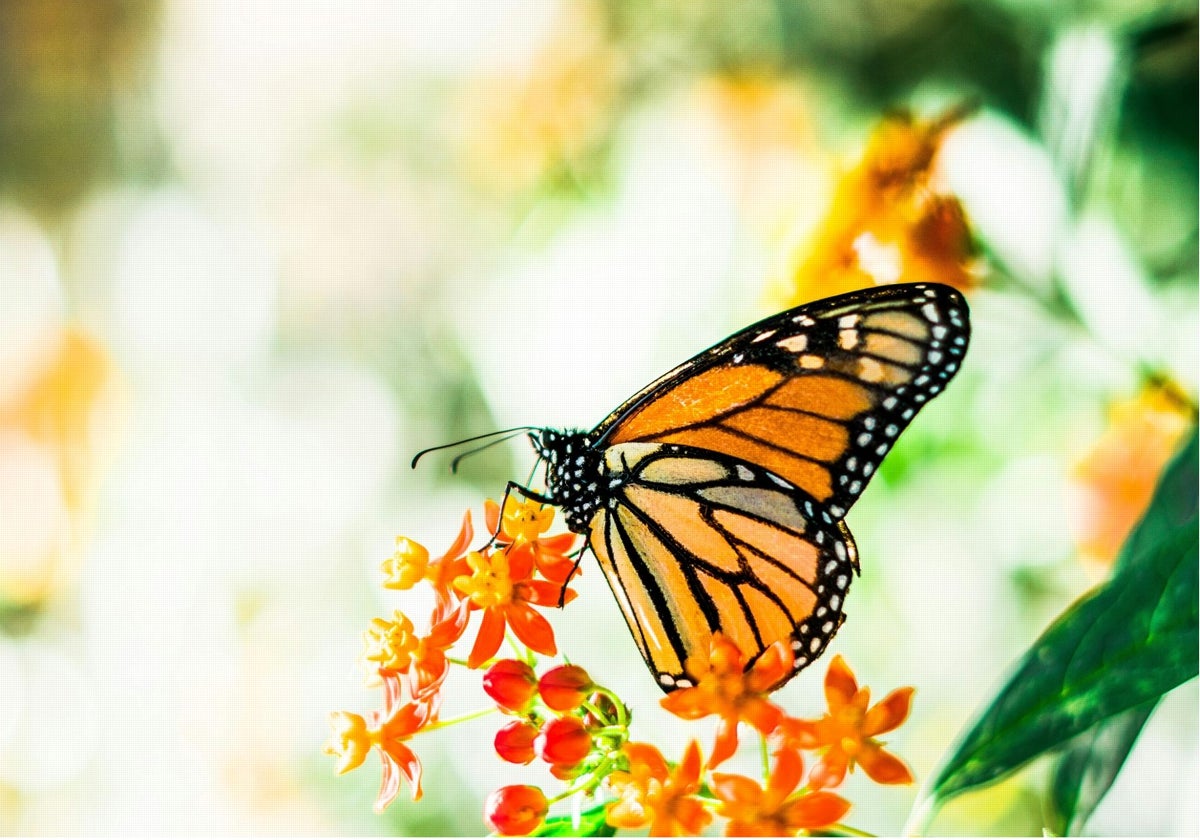

It is easily recognizable by its bright orange wings with black borders and veins decorated with white dots; it is called the monarch butterfly (danaus plexippus), ... and for decades it has been seen in La Paloma Park. The colony has survived without anyone taking care of it, and it is actually not that easy. And not only because these insects have their predators: "Without a host plant there is no butterfly, and the monarch's host plant, the asclepia curassavica, has had times when it was practically non-existent due to drought, and the caterpillars are very voracious, so there may not be enough food for all," explains Marina González, a biologist at the Benalmádena Butterfly Park.
Everything will change from now on after the local council and the Butterfly Park have signed an agreement aimed not only at preserving this colony but also at "achieving a stable and sustainable population and seeing the complete cycle: caterpillar - chrysalis - butterfly." For this, González points out, it will be necessary "to protect them from predators; to take care of their host plant and ensure there is a sufficient but not excessive amount; to control the eggs, and thus achieve sustainable breeding."
The immediate goal is the monarch, but "in the medium and long term," the goal is to introduce host plants of other native species from the Iberian Peninsula and create "a small outdoor butterfly park," the biologist assures.
And not only that, but also to carry out an educational task. By September, it is expected that informative signs will be installed in La Paloma Park explaining what the monarch is: a species native to America, capable of migrating thousands of kilometers from southern Canada and the northern United States to Mexico, which has several generations a year, flies all year round, and, like all butterflies, "plays a fundamental role as a pollinator, and is a bioindicator, because it is very sensitive to pollution and pesticides, so if there are butterflies, it means that there is good air quality."
For now, the bioindicator remains active in La Paloma Park, and now the aim is to enhance it. The means will be provided by the Benalmádena Council, and the knowledge and experience by the Butterfly Park.

Latest news





Upcoming events
12
Nov
El Desembarco, la traición de Viriato at La Caja Blanca
12
Nov
HOMER El Mero Mero at Sala Trinchera Málaga
13
Nov
Marbella Startup Lab – Innovate & Collaborate
13
Nov
Candlelight: Coldplay & Imagine Dragons at Sala Fundación Unicaja María Cristina
13
Nov
Candlelight: Tribute to Ludovico Einaudi at Anantara Villa Padierna
Similar News

Málaga Airport Makes History with More Than Three Million Passengers in One Month
Málaga

Port of Málaga looks beyond its docks to support future growth
Málaga

Guide to the Virgen del Carmen Processions in Málaga and the Province
Málaga
