


Gamel Woolsey, the poet who always had one foot in the past
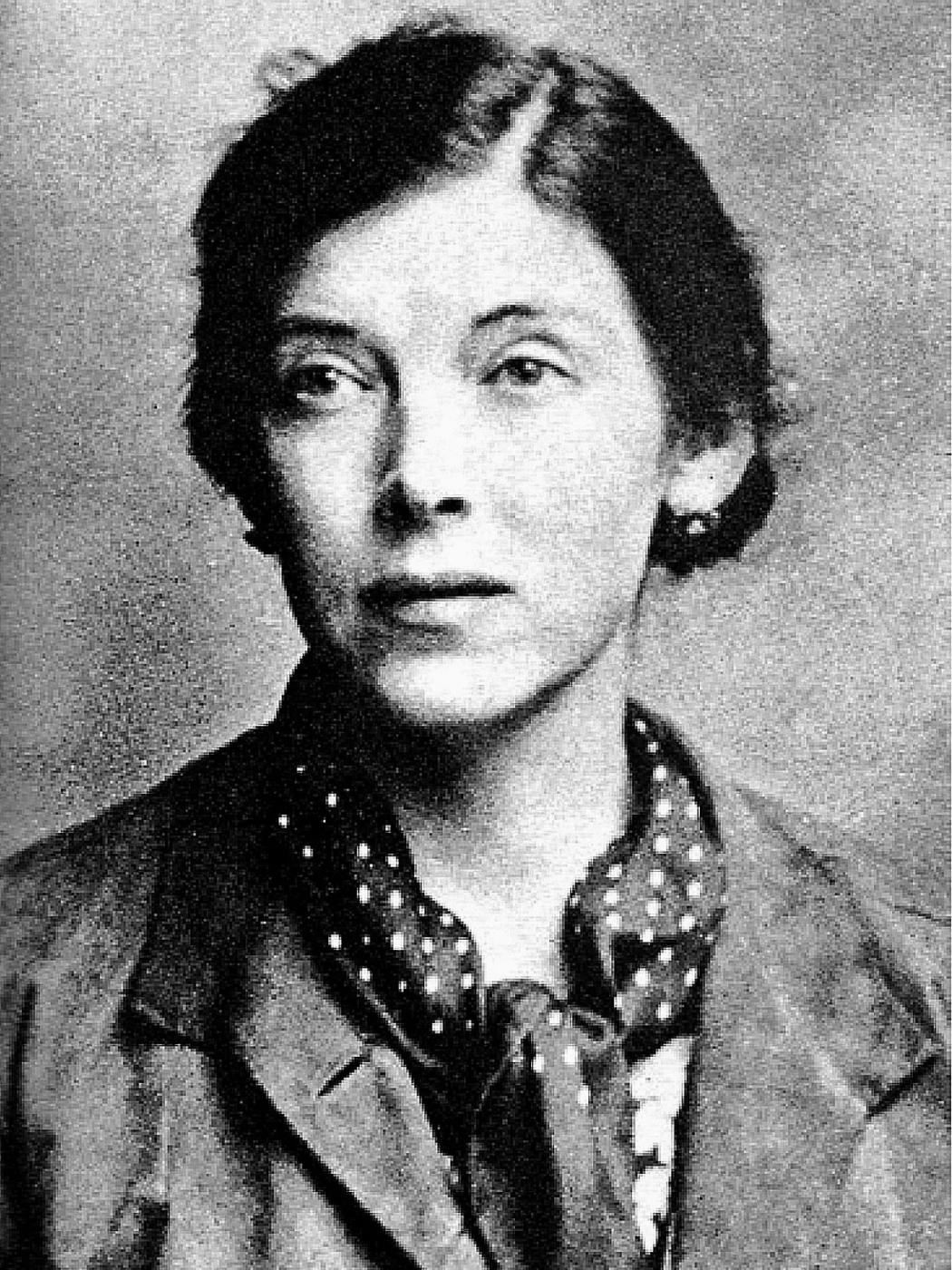

Married to Gerald Brenan, with whom she spent the last years of her life in Churriana, she had enjoyed a bohemian life in New York's Greenwich Village and lived in London with the writers and artists of the Bloomsbury circle.
Gamel Woolsey, en una imagen de los años 30.

‘It was wonderful not to have to do anything at all, just sunbathe all day like lizards in the shade of the tall whitewashed walls of the garden.’ At the age of 41, after a life marked by tuberculosis and several stormy relationships, Gamel Woolsey (1895-1968) seemed to have found the peace she so longed for in her home in Churriana, on the outskirts of Malaga. However, this was to be the calm before the storm. The next morning, war broke out in Spain and she and her husband, the British Hispanist Gerald Brenan, had to leave the country, an exile during which she took the opportunity to write one of the books that, together with Monte de Sancha, by Mercedes Formica, best reflects the early days of the war in Malaga: El otro reino de la muerte (The Other Kingdom of Death, Editorial Ágora), a title taken from a verse by her favourite writer, T. S. Elliot.
Woolsey was born in Aiken, South Carolina, into a wealthy cotton-growing family where, judging by her poems, she spent the happiest years of her life: ‘From late summers leaves fall/ calm in memory, the skies darken/ forever they will remain unmoved’. However, she left the family home in 1921 to settle in New York's Greenwich Village and lead a bohemian life, attending parties and publishing in literary magazines. She also had time to marry the then fashionable journalist Rex Hunter, whom she made the protagonist of her novel One Way of Love.
She left Hunter for Llewelyn Powys, a British poet and novelist who, like her, was suffering from tuberculosis. They had a tormented and impetuous relationship, which also involved his wife, the editor and radical feminist Alyse Gregory, and which gave rise to two voluminous collections of letters. She moved to London with him and came into contact with the Bloomsbury circle, thanks to which she met Gerald Brenan in 1930, from whom she would never part. The writer and translator Frances Partridge, a friend of Woolsey and Brenan, recounts that, despite the fact that Hunter had not granted her a divorce, she took Gerald's surname and ‘on a visit to Rome in 1932, they held a religious ceremony of their own invention, where they exchanged vows and rings in the church of Santa Maria in Aracoeli’. The beginning of their relationship was marked by her love for Powys until his death in 1939 and the emotional turmoil Brenan felt since Dora Carrington had rejected him.
IN SEARCH OF THE SOUTH
They initially moved to Yegen, a village in the Alpujarra region of Granada where Brenan had settled after the First World War, during which he had been awarded the Croix de Guerre. She, who due to her illness had been unable to have children with her previous partners, adopted Miranda Helen, a girl born from the relationship that the author of Al sur de Granada had had with a 15-year-old girl who helped him in his house in the Alpujarra. Shortly afterwards, they bought the house in Churriana, where they returned after the war. ‘Those were the happy years of the Costa del Sol,’ explains Professor Carlos Gerald Pranger in the introduction to the writer's Complete Poetry, ‘and Woolsey and Brenan's house became a beacon, a guide for writers, eccentrics and travellers of all kinds’.
After abandoning writing for a time, she returned to it with vigour during those years and wrote one of her best works, In Search of Demeter, ‘a long poem haunted by the ghostly presence of her dead mother, remorse and guilt,’ in the words of Pranger, who adds: ‘All her poems are rooted in the ephemeral and loss, pervaded by the nostalgia and dissatisfaction of the blues soul, always with one foot in the past.’ The literary fertility of those years came to an abrupt end when his admired T. S. Elliot, director of the poetry section at Faber & Faber, sent him a ‘harsh and cold letter of rejection’ of his verses.
He then abandoned himself ‘to drink, as his mother had done, lamenting a wasted literary career, where nothing remains but the terror of the end, an inescapable fact.’ The last years of his life were not the best. Brenan never stopped pursuing lost paradises and continued his fascination with female beauty and youth.
She ended up dying in 1968 in terrible pain from cancer that had been fatally treated and could not be alleviated with morphine due to the objections of her doctor, who was a devout Catholic. She is buried alongside Brenan (who died in 1987) in the English cemetery in Malaga. Shortly before her death, she wrote a poem as an epitaph: ‘When I am dead and at last at rest (...)/ and I glide with the birds, float with the fishes/ rise like smoke and shine like flame./ To be free, lost in nothingness,/ let not the grave confine me, nor death conceal me.’


Latest news





Upcoming events
12
Nov
El Desembarco, la traición de Viriato at La Caja Blanca
12
Nov
HOMER El Mero Mero at Sala Trinchera Málaga
13
Nov
Marbella Startup Lab – Innovate & Collaborate
13
Nov
Candlelight: Coldplay & Imagine Dragons at Sala Fundación Unicaja María Cristina
13
Nov
Candlelight: Tribute to Ludovico Einaudi at Anantara Villa Padierna
Similar News

The Cat Guardian: Nearly 14 Years of Rescues and 16,500 Neutered Cats
Málaga

María Barranco resurfaces after hitting rock bottom: "No one can sink me"
Málaga
Ana Duato: "Merche taught me to be a woman, a person, and an actress"
Málaga
