


Before they were villages and today it is a small and cool town in Málaga full of flowers and known for its brandy.
Several Moorish farmsteads gave rise to what is now known as Jubrique, in the Serranía de Ronda. Its brandy, roasted chestnuts, or its Moorish streets full of flowers are unique features of the municipality.
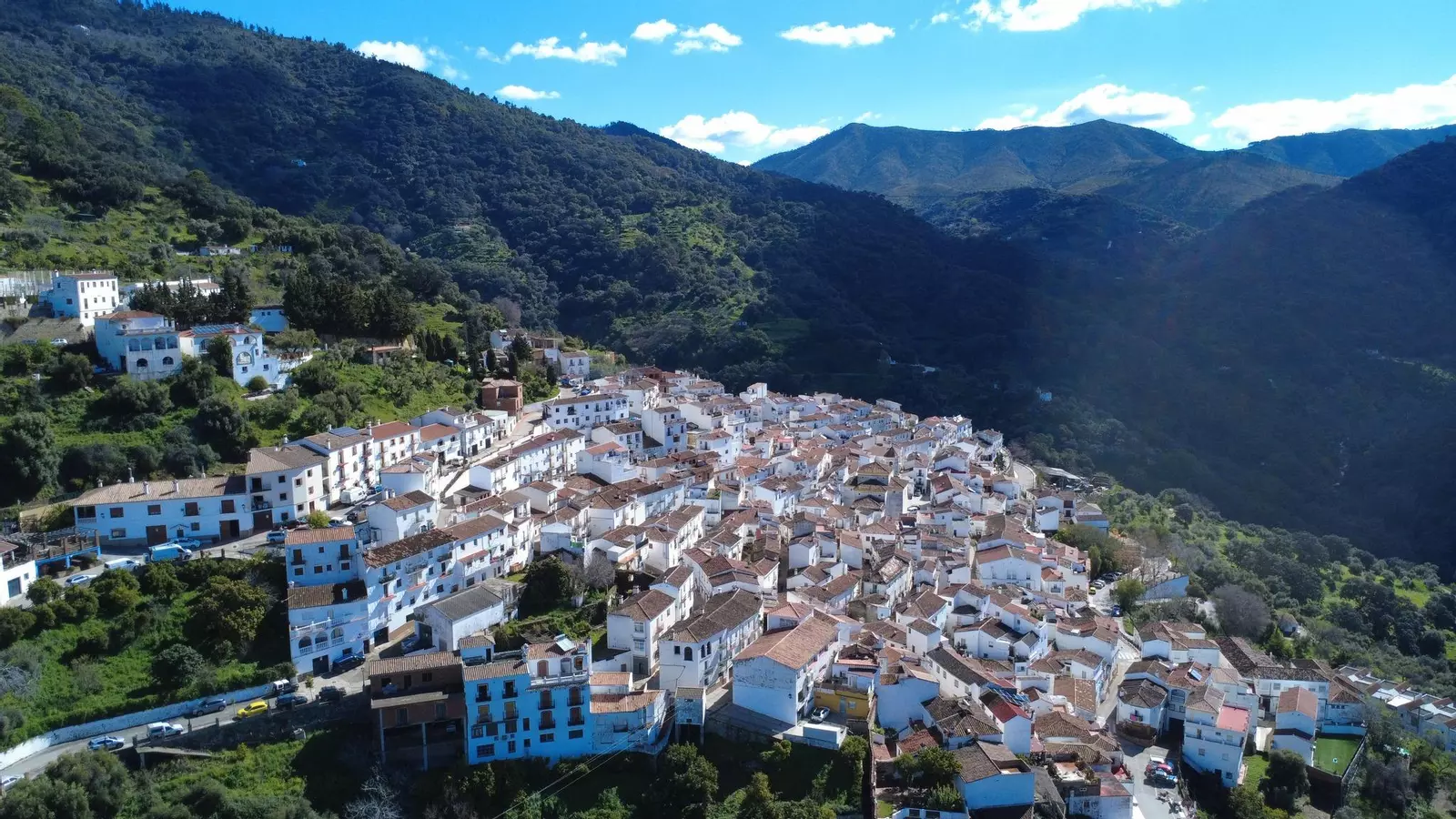

Did you know that the town of Jubrique originated from the union of four ancient Moorish villages? This charming little town in the interior of the Serranía de Ronda preserves the winding layout of its Arabic origins, with narrow streets that adapt to the terrain and whitewashed houses that bring coolness to its steep slopes. Throughout history, Jubrique has managed to maintain its identity, becoming a rural enclave full of tradition, nature, and a rich cultural and gastronomic heritage.
Among the most characteristic remnants of Jubrique's past is the Fuente del Río Lavar, an old public laundry and main water supply point. Even today, some residents continue to visit this fountain, a living witness to the village's daily life.
One of Jubrique's greatest historical prides was its notable wine production, especially during the 18th and 19th centuries. At that time, it had more than sixty distilleries. Today, this tradition is captured in the Museum of Popular Arts and Spirits, which offers a complete view of the production process and the importance of this product for the local economy.
The Hermitage of the Holy Cross of Chorrillo in Jubrique. / malaga.esIn the religious realm, three constructions stand out. The Church of San Francisco de Asís, from the 16th century, is built on the remains of an old mosque. Among its most venerated images are the Virgin of Candelaria, from the 18th century, and a Nazarene with natural hair. It is followed by two hermitages that complete the monumental tour of the village: the Hermitage of the Holy Cross of Chorrillo, linked to the traditional May pilgrimage, and the Hermitage of Castañuelo, built on a rural estate where a cross saved during the Civil War thanks to the cunning of a local woman, who managed to protect it under the pretext that it was a coat rack.
A past of Moorish revolts and agricultural splendor
The municipal term of Jubrique was established as such after the union of several Moorish hamlets, whose existence is documented in the agreements signed with the Catholic Monarchs. Although the name of the village seems to derive from Latin or Mozarabic, and Roman coins have been found in the area, there is no evidence of a Roman settlement there.
One of the flowery corners of Jubrique. / Ayto. JubriqueDuring the Moorish rebellions, the inhabitants of Jubrique showed strong resistance. The repression of these uprisings ended with the deportation of the Moors to North Africa and Galicia. Some returned later and became bandits, like the famous Marcos el Meliche, a precursor figure of the gangs that populated the Serranía de Ronda in the 19th century.
The peak of the municipality's splendor came between the 18th and 19th centuries, with the prosperity of its vineyards and the mining exploitation of the mountains. The Jubrique spirits were recognized throughout much of the southern peninsula, and its industry remained active until the 20th century.
Natural surroundings and routes for all senses
Surrounded by vineyards, pine forests, and chestnut trees, the natural environment of Jubrique is a true paradise for nature lovers. The municipal area has numerous routes available for hiking, cycling, and horse riding. In its mountains, it is not unusual to spot species such as wild boars, deer, or mountain goats, in a typical mid-mountain landscape of the Serranía. The area is well-known for the trail that connects the village with Genalguacil and also the refreshing route that leads to the Charco Azul.

Latest news





Upcoming events
12
Nov
El Desembarco, la traición de Viriato at La Caja Blanca
12
Nov
HOMER El Mero Mero at Sala Trinchera Málaga
13
Nov
Marbella Startup Lab – Innovate & Collaborate
13
Nov
Candlelight: Coldplay & Imagine Dragons at Sala Fundación Unicaja María Cristina
13
Nov
Candlelight: Tribute to Ludovico Einaudi at Anantara Villa Padierna
Similar News

Málaga Airport Makes History with More Than Three Million Passengers in One Month
Málaga

Port of Málaga looks beyond its docks to support future growth
Málaga

Guide to the Virgen del Carmen Processions in Málaga and the Province
Málaga
