Costa del Sol News
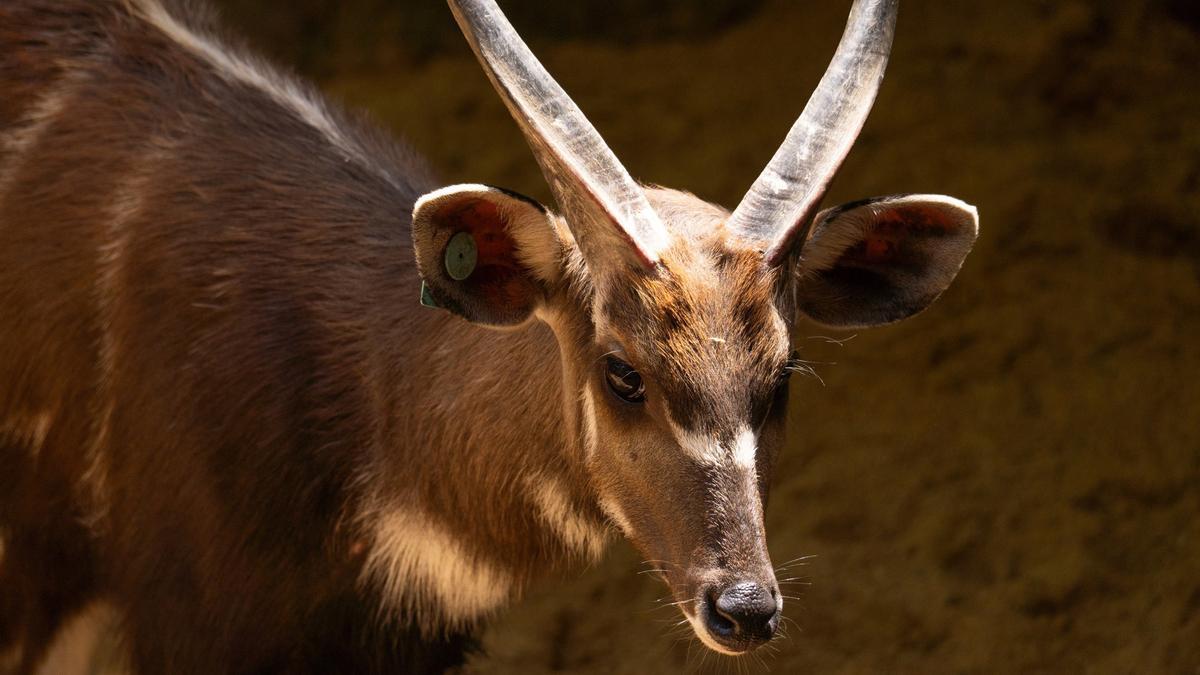
Bioparc Fuengirola is celebrating the arrival of a male Western sitatunga (Tragelaphus spekii gratus), a semi-aquatic antelope native to the swampy ecosystems of Central and West Africa. This individual is currently in the process of adapting to his new home, where four females of the same species already reside, as stated in a press release by Bioparc Fuengirola.
The introduction is part of an ex situ conservation program aimed at preserving the genetic diversity of this lesser-known and threatened subspecies due to the degradation of its natural habitat. The new male, still a young individual, has begun to explore the enclosure under the watchful eyes of his companions.
Although he has not yet fully developed his imposing presence, he will soon begin to exhibit adult characteristics, such as his majestic spiraled horns. His dark brown fur speckled with fine white lines, distinctive of the male sex, is already noticeable.
On the other hand, they explained that unlike the females, which are smaller and have a reddish coloration without horns, this specimen shows a marked sexual dimorphism characteristic of the species. His progressive integration with the group of females is being supervised by the technical team at Bioparc, who are pleased to see how well he is adapting to both the environment and his new companions.
The young male has allowed, by directive of the EAZA, for Bioparc Fuengirola to once again form a breeding group of this species. The park had not had one since 2013, when the previous male was transferred to another conservation center. Despite being classified as 'Least Concern' by the IUCN, the Western sitatunga faces increasing pressure in the wild due to the destruction of wetlands, poaching, and agricultural expansion.
Therefore, its presence in conservation centers like Bioparc Fuengirola is crucial to ensure its future. This new resident is located in one of the park's most emblematic multi-species enclosures: the African wetlands habitat.
Regarding this, they detailed that in this unique space, visitors can observe the natural interaction between different species such as the African spoonbill, the elegant crowned crane, or the African ibis, which share the environment with the sitatungas.
Additionally, occasionally, the curious ring-tailed lemurs from the neighboring island dedicated to Madagascar make brief forays into the area, adding a dose of dynamism and surprise to the tour.
Multi-species enclosures like this not only enrich the visitor experience but also play a crucial role in animal welfare. By allowing coexistence with other compatible species, they stimulate natural instincts and behaviors in each animal: from foraging to environmental vigilance or social interaction.
This innovative approach, aligned with the principles of ethology and ecological design, promotes a more active, balanced, and healthy life for the species that inhabit Bioparc.
Lastly, they valued that with this addition, Bioparc Fuengirola "reinforces its commitment to the active conservation of threatened species and the dissemination of the biodiversity of the planet's most fragile tropical ecosystems."