Accidental inventions in the kitchen: when inspiration strikes in the cooking pot
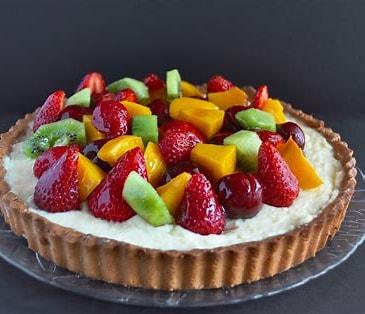

Some inventions or discoveries may seem like accidents or the result of chance: this is commonly referred to as serendipity. But in reality, only people who are mentally prepared and have the right knowledge can recognise the value of these accidents and take advantage of them.
As Louis Pasteur wrote, ‘in the field of observation, luck favours only the prepared mind’, and the history of cooking is full of examples.
Let's discover some of them.
Tarte Tatin or the story of an upside-down tart
One day around 1880, the kitchen of the Hotel Tatin, located in the French town of Lamotte-Beuvron and run by sisters Caroline and Stéphanie Tatin, was very busy. Then disaster struck: the apples prepared for a conventional tart burned in the pan with butter and sugar. To save the dish, one of the sisters decided to place a pastry crust over the apples and put the mixture in the oven to prevent it from burning further.
After baking, they turned the tart upside down, and the result was so successful that the new dish, with its caramelised apples and crispy base, became famous. Thus was born a classic French dessert: the Tarte Tatin.
Some people confuse it with apple pie, but unlike apple pie, it is an ‘upside-down tart’.
The preparation process is as follows: the apples—firm and slightly tart, such as Granny Smith or Reineta varieties—are caramelised in butter and sugar directly in a frying pan, then covered with shortcrust pastry or pâte brisée. Once baked, it is turned upside down so that the caramelised apples are on top.

The first chocolate chip cookies
In the 1930s, the Toll House Inn was a famous restaurant and inn in Whitman, Massachusetts. Run by Ruth Wakefield and her husband, one of their specialities was the traditional Butter Drop Do biscuit. It was made with butter, sugar, eggs, flour and a raising agent.
One day, Ruth decided to enrich the recipe with cocoa, but realised she didn't have any, so she added chocolate chips that she did have to hand. The idea was that they would melt, but they didn't. This improvised innovation gave rise to Toll House Chocolate Crunch Cookies, the first chocolate chip cookies in history. It should also be noted that the creator used a new culinary technique to improve the flavour and texture: she left the dough to rest for 36 hours.

Fideuá or when you run out of rice at sea
Fideuá is a typical dish from the Valencian Community. Originally from Gandía, it was created in the early 20th century in a seaside setting. According to the most widely accepted story, it was invented due to a lack of rice on board the fishing boat Santa Isabel. The cook, Gabriel Rodríguez Pastor, decided to use noodles as a substitute when preparing a seafood stew.
The variation was a hit with the crew and, over time, became popular throughout the region.

Thin chips and the Matilda effect
In 1853, a customer – possibly transport magnate Cornelius Vanderbilt – at Moon's Lake Lodge restaurant in Saratoga, New York, complained that the chips were not thin or crispy enough for his taste.
This complaint led to the creation of “Saratoga potatoes”, the origin of crisps or potato chips, traditionally attributed to chef George Crum. However, in recent years there has been speculation that they were actually invented by his sister, Catherine Wicks. If confirmed, Catherine would have been the first to drop a wafer-thin slice of potato into hot oil, with the crispy result we all know.
If this were true, it would be a typical case of a discovery or invention made by a woman and attributed to a man. This is known as the ‘Matilda effect’, a term coined in 1993 by science historian Margaret W. Rossiter in honour of Matilda Joslyn Gage, a 19th-century feminist activist who denounced this type of injustice.
The true inventor of the ice cream cone
In 1904, at the St. Louis World's Fair, an ice cream vendor ran out of containers to serve his ice cream. Nearby was Ernest A. Hamwi, who was selling a type of crispy waffle of Syrian origin called zalabia. Faced with this situation, Hamwi decided to roll one of his hot waffles into a cone shape and offer it to the struggling ice cream vendor as an improvised solution, giving rise to the edible ice cream cone.
This is the story that circulated for years. However, the reality is that an Italian immigrant named Italo Marchiony had already patented a mould for making edible cones in 1903, with the aim of avoiding the fragile glass cups in which ice cream was traditionally served.
After reading this article, before throwing away a dish that you think has gone wrong, try it with an open mind: you never know if you have a revolutionary invention in your hands.
inventors
gastronomy
cooking

Cláusula de Divulgación
José Miguel Soriano del Castillo no recibe salario, ni ejerce labores de consultoría, ni posee acciones, ni recibe financiación de ninguna compañía u organización que pueda obtener beneficio de este artículo, y ha declarado carecer de vínculos relevantes más allá del cargo académico citado.
Nuestros socios


Latest news





Upcoming events
12
Nov
El Desembarco, la traición de Viriato at La Caja Blanca
12
Nov
HOMER El Mero Mero at Sala Trinchera Málaga
13
Nov
Marbella Startup Lab – Innovate & Collaborate
13
Nov
Candlelight: Coldplay & Imagine Dragons at Sala Fundación Unicaja María Cristina
13
Nov
Candlelight: Tribute to Ludovico Einaudi at Anantara Villa Padierna