Children without fear of water: preventing drowning through confidence
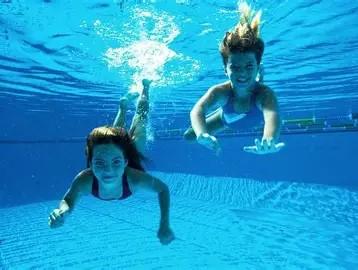

Every summer, swimming pools, beaches and rivers fill up with children eager to play and dive in. But beneath this bright image lies a dark reality: drowning remains one of the leading causes of accidental death among children in Spain. In 2024, there were 35 child deaths from drowning, one of the top three causes of accidental death among minors.

While prevention tends to focus on teaching swimming techniques or hiring lifeguards, there is an equally important and less visible factor: the emotional relationship that children establish with the aquatic environment. Fear of water not only hinders learning, but can also block the appropriate response in an emergency.
The good news is that this fear can be transformed. Not with pressure or impositions, but with science, play and confidence, as I explain in a new book based on my research.
Fear of the aquatic environment: a learned emotion
Fear of the aquatic environment is not innate. It is a learned response of the nervous system to a perceived threat. The amygdala, the part of the brain responsible for triggering alarm responses, interprets the aquatic environment as dangerous if there have been previous negative experiences: falling into water, forced immersion, abrupt separation from the caregiver or simply a lack of control.
When this happens, a fight, flight or freeze reaction is triggered, closing the so-called “window of tolerance”, i.e. the child's ability to learn and adapt.

Why saying “Jump in!” doesn't work
Practices such as forcing immersion, ignoring crying or abruptly removing the support board may seem harmless, but they actually trigger a stress response that can leave an emotional mark. According to polyvagal theory, if a child feels unsafe, their nervous system will cause them to avoid the situation, dissociate or even give up, which is often misinterpreted as “calm”.
A trauma-sensitive approach, such as that proposed by the Ibero-American Association of Aquatic, Special and Hydrotherapy Education, emphasises the importance of respecting the child's autonomy, reading their body language and never imposing activities for which they are not ready.
Playing to swim: the power of play
Child development science and neuroplasticity point to a solution: play as the primary tool for overcoming fear and learning new skills. Symbolic and progressive play allows children to reorganise their emotional experience.
Being a “dolphin”, a “pirate” or searching for “treasures” at the bottom of the pool transforms the threatening scenario into one of adventure. So-called “opposite actions”, such as blowing bubbles instead of holding your breath, help to deactivate the automatic avoidance pattern.
Read more: The ticking of metabolism: how mealtimes influence children's health
This type of play makes it easier for the brain to associate the aquatic environment with pleasure, curiosity and safety, which in turn promotes connections between brain regions involved in motor skills, emotion and memory.
Preventing drowning through emotional safety
Fear of water should not be addressed with imposition or pressure, but with strategies based on trust and enjoyment. Success in teaching swimming without fear lies in respecting the child's pace and providing enjoyable experiences that reinforce their safety. In this regard, the following is recommended:
Gradual introduction to the aquatic environment. Before submerging, children should feel safe at the edge and in shallow areas. Games such as walking in the water, picking up floating objects or playing with their hands to make waves can facilitate this adaptation.
Use of playful flotation devices. Materials such as balls, boards and rings help to create a feeling of control and reduce the perception of threat from the water.
Reinforce confidence through role play. Pretending to be water explorers, dolphins or divers allows children to focus on having fun rather than on their fears.
Positive multisensory stimulation. Water music, coloured lights in the pool or the use of pleasant scents can help children associate water with a pleasant sensory experience.
Trauma re-enactment games. For children with previous traumatic experiences, recreating situations safely and with a positive ending helps them reprogram their emotional response. For example, if a child has had a bad experience falling into the water, a game can be designed where they intentionally fall into a safe environment and then successfully get out.
The role of adults: accompany, don't force
Preventing drowning involves more than teaching children to swim: it requires an emotionally safe environment. Educators should be facilitators, not judges. Families should reinforce children's confidence without pressure. And peers, through their example, can be great allies.
When the environment is supportive, fear dissipates. Play is children's natural language, through which they process their emotions and reconstruct the world.
You can even learn to swim by playing.
The aquatic environment should not be a threatening place, but a setting for discovery and well-being. Teaching children to swim without fear is not just a matter of technique, but of empathy, neuroscience and play. It is a way of teaching them to live with confidence, both in and out of the water.
swimming
babies
parenting

Latest news





Upcoming events
12
Nov
El Desembarco, la traición de Viriato at La Caja Blanca
12
Nov
HOMER El Mero Mero at Sala Trinchera Málaga
13
Nov
Marbella Startup Lab – Innovate & Collaborate
13
Nov
Candlelight: Coldplay & Imagine Dragons at Sala Fundación Unicaja María Cristina
13
Nov
Candlelight: Tribute to Ludovico Einaudi at Anantara Villa Padierna