


The Paleolithic site of Las Suertes in Antequera is the second oldest in Malaga after that of Ardales.
Research certifies that they are 45,000 years old.
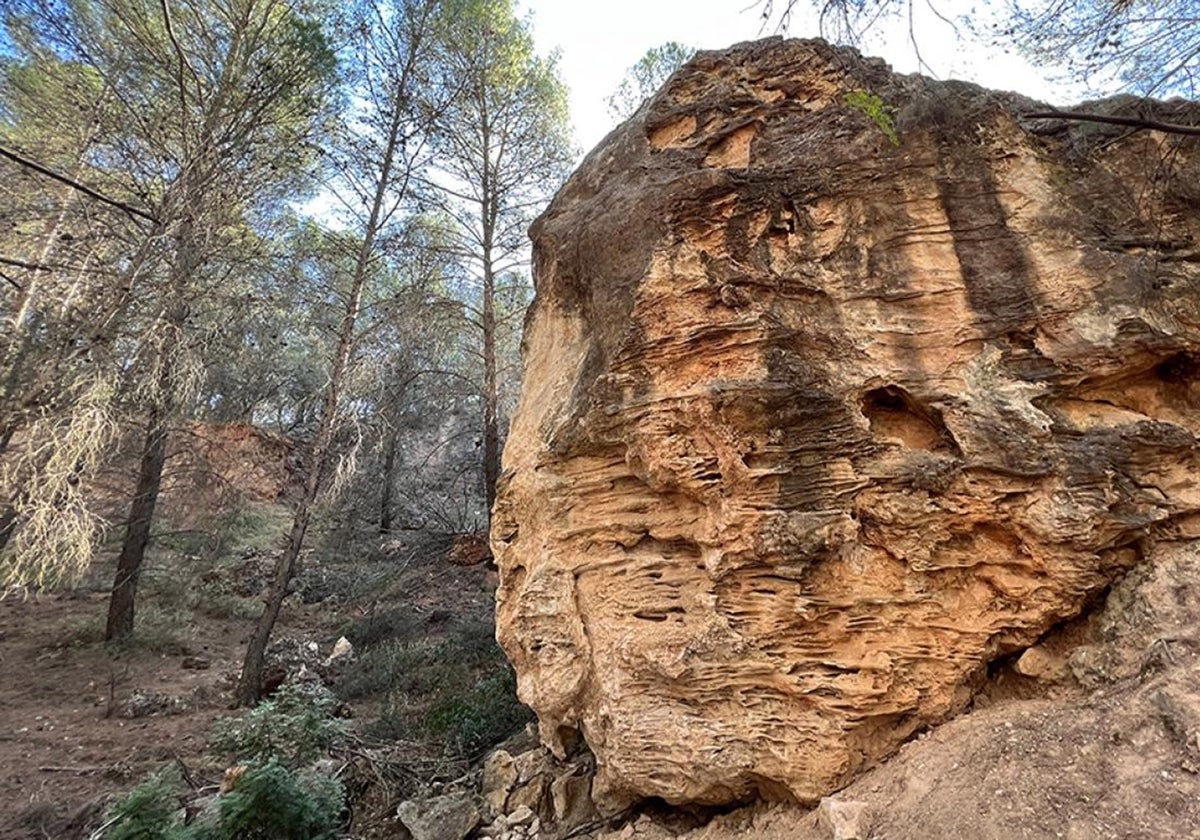

The interior of the province positions Málaga as a reference for studies of the Spanish Paleolithic. The Suertes de Antequera site concludes that ... the discovered cave is at least 45,000 years old, making it, after Ardales, the oldest space located and studied in all of Málaga. This is affirmed by archaeologists Luis Efrén Fernández and Pedro Cantalejo, who have made these results public in a conference at the Antequera Museum.
"With permission from the Cave of Ardales, the second oldest datings in the province so far, and here we must always say so far, are those of Suertes," emphasizes Efrén. This opens the theory that man was already moving through the Strait of Gibraltar and did not come from Eastern Europe as was assumed. The data are contrasting the hypotheses and initial theories. Today's Málaga and Cádiz were a route between continents.
We are talking about a cave with human remains and tools from more than 40,000 years ago. If we compare it with the settlements of the Dolmens, which are from the Neolithic, they are only 6,000 years old. The archaeologists have shared the findings and the research process of the Paleolithic Cave of Suertes, which places Antequera and Málaga at the forefront of the Peninsular Paleolithic.
A place that is already a BIC (Cultural Interest Good) and a demonstration that "man lived in Antequera and in the province of Málaga for many, many millennia and that art began to be developed there, it serves the province, to have a second world heritage site and for Antequera to be included in that file," highlights the deputy mayor of the Antequera council, Ana Cebrián.
For his part, Pedro Cantalejo points out that it is very important that at this time the province of Málaga "is very well positioned among the most important places of the birth of art and also of the sign, that is, of the human capacities to paint or engrave" and all this with the process of starting the candidacy of the Malaga area to UNESCO World Heritage.
An open-air cave discovered three years ago
At the end of 2022, a group of hikers found some human remains on a path through the pine forest near the road to Cuesta del Romeral, the old access to Pedrizas from Antequera to Málaga. They informed the municipal authorities and an alert for a prehistoric discovery was triggered.
After initial assessments, Hipólito Collado's team was called, coordinator of the "First Art" project, archaeologist of the Junta de Extremadura. Along with him, joined the professor of Prehistory from the University of Cádiz, José Ramos; the municipal archaeologist Manuel Romero; the archaeologist from the Cave of Nerja, Luis Efrén Fernández; the one from the Cave of Ardales, Pedro Cantalejo; the geologist Cristina Liñán and the biologist Yolanda del Rosal, both from Nerja.
From the first moment, it was evident that it was a Paleolithic site that was suspected to exist but had not appeared. Until then, the province of Málaga was articulated on an axis with La Pileta, Ardales, and Nerja. Along with them, "in recent times we have started to investigate important caves, which we can colloquially call satellites, from the environment of La Axarquía, Ardales, and the Serranía," within the framework of an ambitious dating and characterization project titled 'First Art', highlighted Efrén.
Tests were conducted with uranium-thorium to narrow the range of years of antiquity between 65,000 and 28,000 years. After the studies, it has been specified that the site is 45,000 years old with Paleolithic rock paintings, which are outdoors and have been so for more than half a century. The reason for being visible is transferred to the construction of the national road last century that passes through the area, which would lead to the cutting of the cave and the fall of part of it by 90 degrees, hence it is possibly the quarry "practically dismantles the entire cave," continues Efrén.
The exploitation of aggregates destroys the natural vaults, "we only have a part of the southern limit left and it causes the collapse in its southern area, surely the deepest end, of the upper part, so that a huge block containing the pictorial evidence tilts about 90 degrees towards the Northeast, which would be the left sector of the preserved site."
It must be called "Cueva de las Suertes and it seems that the quarry contributed to the state in which it is. We were left in the southwest part, a front of what would be the southern limits of the cave where the remains of recent prehistoric funerary activity appear. And in the northern end, which looks towards the plain of Antequera, all this great clast, which tilted and was exposed to daylight."
The cavity facing the entrance of the enclosure preserves stalactites and rock paintings. "There are formations like clouds that can form in an underwater environment, in other cases they are coraloids and then this whole series of sheets, these curtains where there are stalactites."
The graphic designs "would correspond to something that many researchers have called for some decades as 'Aniconic Horizon'. There are no images, no figuratives, no representations of animals from Paleolithic societies, no anthropic representations."
But there are quite clear signs. There are applications of smudges made with the hand, with something, that they were passing and leaving the pigment trace. There are very frequent digital traces and "there is a particularity, the airbrushing, the blowing, where they took advantage of natural elements that can have a sexually explicit morphology," explained the archaeologist after his discovery.
They were Paleolithic groups that moved from the coast to the interior and from the interior to the coast. These groups painted in the plain of Antequera and very possibly in the Bay of Málaga, taking advantage of natural resources near the coasts and beaches, as well as in the inland lands, in this case in the areas of the Guadalhorce river plain as it passes through Antequera, an area rich in game and plant resources, they exposed at the conference before an audience that was astonished.

Latest news





Upcoming events
12
Nov
El Desembarco, la traición de Viriato at La Caja Blanca
12
Nov
HOMER El Mero Mero at Sala Trinchera Málaga
13
Nov
Marbella Startup Lab – Innovate & Collaborate
13
Nov
Candlelight: Coldplay & Imagine Dragons at Sala Fundación Unicaja María Cristina
13
Nov
Candlelight: Tribute to Ludovico Einaudi at Anantara Villa Padierna
Similar News

Málaga Airport Makes History with More Than Three Million Passengers in One Month
Málaga

Port of Málaga looks beyond its docks to support future growth
Málaga

Guide to the Virgen del Carmen Processions in Málaga and the Province
Málaga
