


The unknown village in Málaga with fewer than 250 inhabitants where the Berbers left a unique castle that today serves as a cemetery
Benadalid has a Berber-origin castle that today houses the village cemetery. Benadalid and all the reasons why you should get to know it.
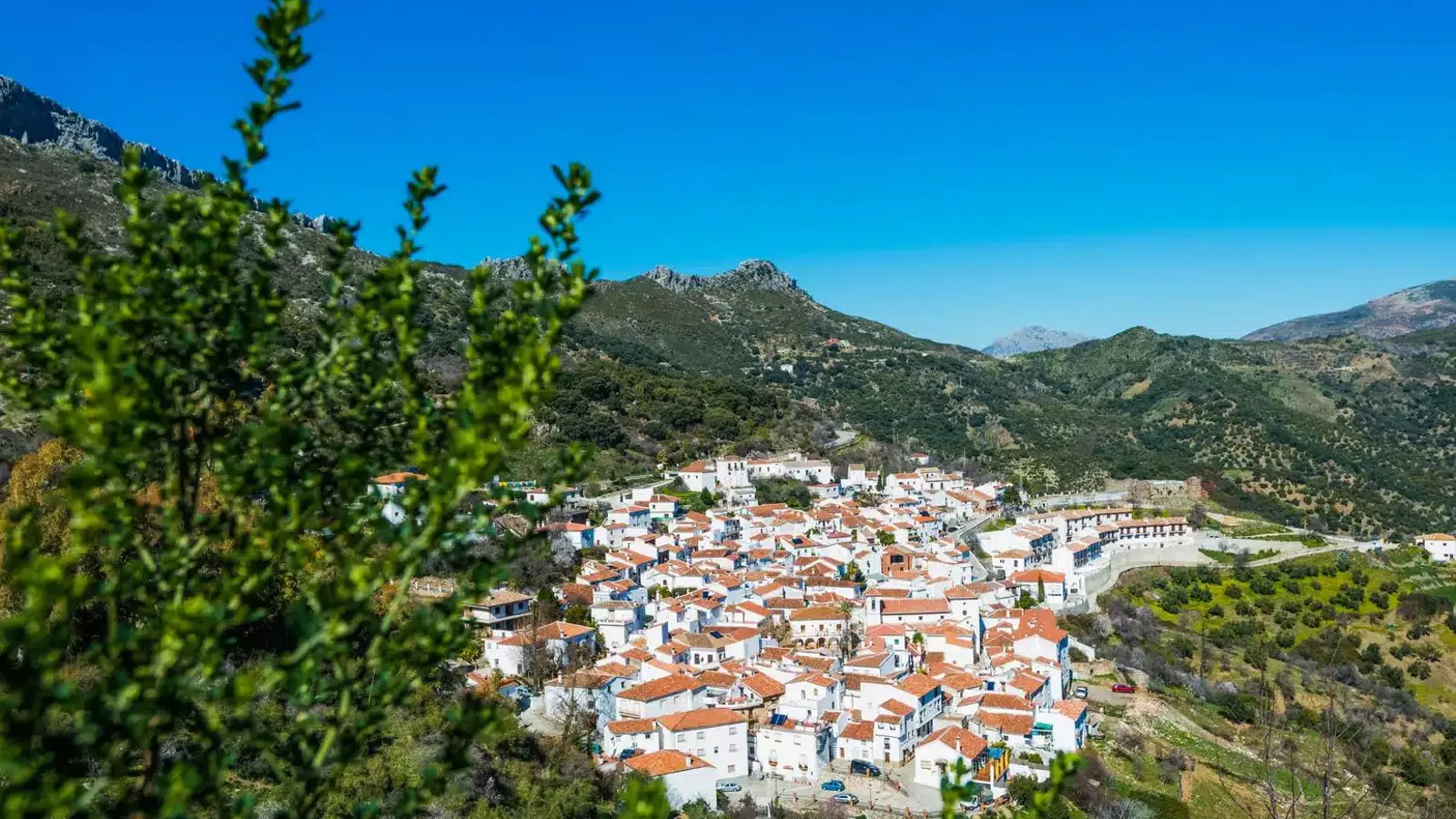

In the heart of the Serranía de Ronda, among mountains, water sources, and ancient strategic routes, lies Benadalid, a small municipality in the province of Málaga with fewer than 250 inhabitants. Isolated from the tourist hustle, this enclave preserves one of the most unique testimonies of Andalusian history in Andalusia: a castle of Berber origin that today houses the town's cemetery.
The year was 711 when the Berbers crossed the Strait of Gibraltar and began their advance into the Iberian Peninsula. Their presence soon left a mark on the Andalusian landscape. On their path to consolidating power, Benadalid became a key enclave. Its natural wealth, with abundant water sources and a strategic location between mountain passes and population centers, motivated the Berbers to settle and strengthen a fortification that already existed in the area.
The fortress of Benadalid, built on a previous Roman site, stands out for its structure of four towers, which dominated the surrounding valleys. For centuries, this construction served as a crucial defensive point in a territory that witnessed conflicts, rebellions, and constant tensions between different Muslim powers.
A castle transformed into a cemetery
The castle of Benadalid, despite the centuries passed, still retains its original layout, which allows us to understand its importance in the configuration of the territory. Over time and with political changes, the building acquired new functions. Throughout the 19th century, the ancient fortress was adapted to serve as the municipal cemetery, a use that continues to this day and gives the place a unique atmosphere, where history intertwines with the present in a symbolic and visible way.
The cemetery of Benadalid is now indistinguishable from the original castle. / Javier FloresThis contemporary use as a cemetery has not eliminated its heritage value. On the contrary, the preservation of the original structure, along with the serenity of the surroundings, makes the castle of Benadalid one of the few examples in Andalusia where a Muslim fortress has been transformed into a funerary space without losing its historical identity.
An enclave with roots that precede Muslim rule
Despite its link with the Andalusian period, the history of Benadalid dates back to earlier times. Its location between the ancient Roman settlements of Lacipo (current Casares) and Arunda (Ronda), suggests that even in Roman times the area had certain strategic relevance. However, it was during the Muslim era when Benadalid gained significant importance, becoming a frontier territory between various factions fighting for power.
During the Emirate of Córdoba, in the times of Abderramán I, Benadalid was the scene of political conflicts and a refuge for Omar ibn Hafsún, one of the great rebels of the 9th century, who confronted the Umayyad authorities. Later, the town was nestled between two great kingdoms: Granada and Sevilla, being a recurrent scene of tensions and confrontations until its definitive conquest by the Christians in 1485.
A historical legacy that endures in the landscape
Following the Christian conquest, the religious transition was also reflected in the architecture of Benadalid. In 1505, the church of San Isidoro was erected, a temple built on an old mosque, as was common in many towns in Málaga. This event marked the beginning of a new stage in the locality, although the Muslim trace never completely disappeared, remaining alive in the name of the town, its urban planning, and especially, in the presence of the castle-cemetery.
The Castle of Benadalid, now converted into a cemetery. / Malaga.esNature, tranquility, and architecture in the surroundings of the Genal River
Located less than 30 kilometers from Ronda, in the heart of the Genal River basin, Benadalid offers a privileged natural environment. At a considerable altitude and surrounded by vegetation, the town maintains a direct connection with the mountainous nature, which has favored the existence of routes and trails to explore its territory. Despite its small size, it has a dozen rural houses, scattered between its urban center and its surroundings, reflecting a growing interest from those seeking to discover less traveled places in the interior of Málaga.

Latest news





Upcoming events
12
Nov
El Desembarco, la traición de Viriato at La Caja Blanca
12
Nov
HOMER El Mero Mero at Sala Trinchera Málaga
13
Nov
Marbella Startup Lab – Innovate & Collaborate
13
Nov
Candlelight: Coldplay & Imagine Dragons at Sala Fundación Unicaja María Cristina
13
Nov
Candlelight: Tribute to Ludovico Einaudi at Anantara Villa Padierna
Similar News

Málaga Airport Makes History with More Than Three Million Passengers in One Month
Málaga

Port of Málaga looks beyond its docks to support future growth
Málaga

Guide to the Virgen del Carmen Processions in Málaga and the Province
Málaga
