


The four unique trails in the province of Málaga that are worth exploring once in a lifetime: labeled as 'Blue Trail'
They are examples of trails with great conservation, care, and respect for nature: there are only four in Málaga. For this reason, this is a unique trail in Málaga.
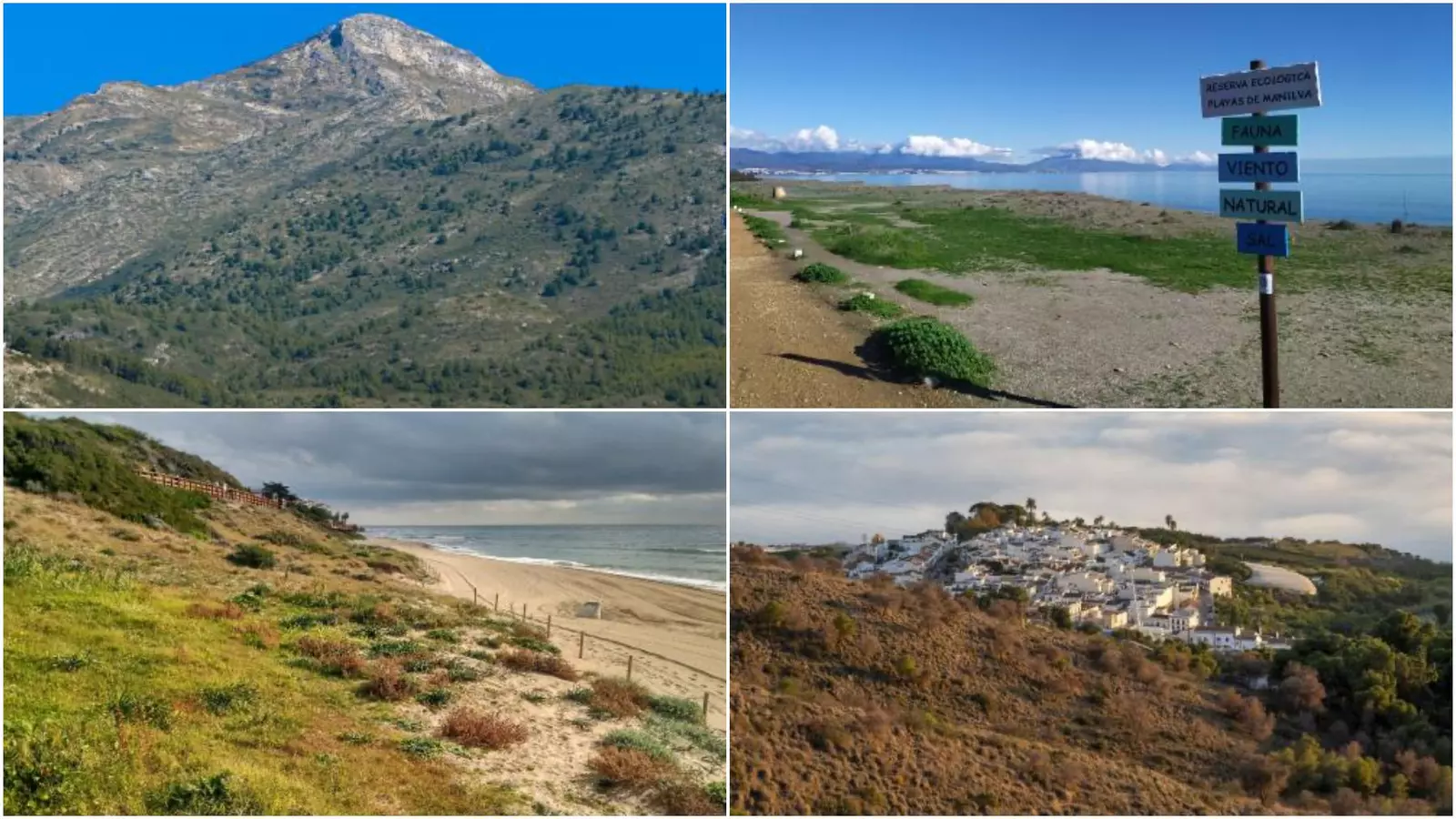

Following the latest update from the Association for Environmental Education and the Consumer (ADEAC), the province of Málaga increased from three to four the number of trails and routes in its territory awarded the 'Blue Trail' label. The number of Blue Trails awarded this year increased from 124 to 154, including 30 new ones, among them one in Málaga, the Playas de Manilva Trail which joins the Senda Litoral de Mijas and two trails in Nerja, the Cueva de Nerja – Almijara Trail and the Pico del Cielo Trail.
These four trails are unique throughout Málaga because they meet the criteria established by ADEAC to define each 'Blue Trail'. So, what is a 'Blue Trail'? It is a program and initiative of the mentioned organization that aims to reward those who commit to the recovery and enhancement of trails and routes across the country, turning them into valuable resources for environmental interpretation and the enjoyment of nature.
Senda Litoral (Mijas)
- Length: 6,000 m.
- Duration: 1h 30 min.
- Difficulty: easy
The Senda Litoral de Mijas is a six-kilometer pedestrian and cyclist corridor that links La Luna beach with the urban center of La Cala de Mijas. This stretch represents a natural and tourist axis of the Costa del Sol, connecting its main beaches through an accessible route open to the sea.
The itinerary crosses coastal ecosystems of great interest, such as Mediterranean dunes, and allows observation of species of flora and fauna typical of the Andalusian coast. Along the way, historical watchtowers are integrated into the landscape, bearing witness to the defensive past of the Malaga coast.
Nerja Cave – Almijara Trail (Nerja)
- Length: 1,890 m.
- Duration: 2 h.
- Difficulty: easy
This short but intense route starts from the surroundings of the famous Nerja Cave and ventures into the domains of the Sierras de Tejeda, Almijara, and Alhama Natural Park. Beneath the ground, there is a karst complex thousands of years old, with rooms and galleries formed by water action on limestone.
On the surface, the trail offers visitors a sensory immersion in a mountainous environment filled with Mediterranean vegetation and wildlife. The chromatic diversity of the landscape and the natural silence accompany a walk that connects the geological importance of the subsurface with the ecological richness of the surface.
Pico del Cielo Trail (Nerja)
- Length: 7,106 m.
- Duration: 4h.
- Difficulty: difficult
At 1,058 meters above sea level, Pico del Cielo is not the highest peak of the natural park, but it is the most iconic in the municipality of Nerja. From its summit, on the clearest days, it is possible to see the Mediterranean coastline and, occasionally, the mountain profiles of North Africa.
The trail starts in the area of the Nerja Cave and progressively ascends the Cuesta del Cielo, crossing pine forests, old farmhouses, and scrubland areas that reveal wide panoramas as altitude is gained. It is a demanding route, not only because of its elevation but also due to environmental conditions: lack of shade, solar exposure, and scarcity of water. A journey reserved for experienced and well-prepared hikers.
Playas de Manilva Trail (Manilva)
- Length: 7,450 m.
- Duration: 3h
- Difficulty: easy
The Playas de Manilva Trail, newly incorporated this year into the network of Blue Trails, crosses the Ecological Reserve Playas de Manilva from Playa de los Toros to the promontory of Punta Chullera. This coastal route stands out for its low urbanization, which has allowed the conservation of important coastal habitats.
Throughout the journey, visitors encounter virgin beaches like that of Negro, rocky coves like Sardina, and dune systems where sea daffodil grows, a plant species of great ecological value. The itinerary culminates at Punta Chullera, where remains of watchtowers are preserved, one of them from the Nasrid period, a testament to the strategic character of this cape throughout history.

Latest news





Upcoming events
12
Nov
El Desembarco, la traición de Viriato at La Caja Blanca
12
Nov
HOMER El Mero Mero at Sala Trinchera Málaga
13
Nov
Marbella Startup Lab – Innovate & Collaborate
13
Nov
Candlelight: Coldplay & Imagine Dragons at Sala Fundación Unicaja María Cristina
13
Nov
Candlelight: Tribute to Ludovico Einaudi at Anantara Villa Padierna
Similar News

Málaga Airport Makes History with More Than Three Million Passengers in One Month
Málaga

Port of Málaga looks beyond its docks to support future growth
Málaga

Guide to the Virgen del Carmen Processions in Málaga and the Province
Málaga
