José Manuel Sánchez Ron: ‘Quantum physics violates our understanding of reality.’
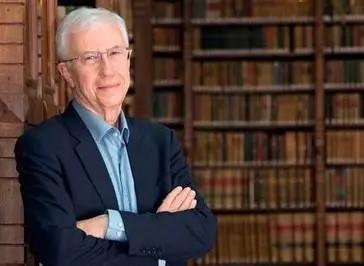

The quantum fairy tale usually begins in 1900 with Max Planck, or with Werner Heisenberg in 1925. But physicist and RAE academic José Manuel Sánchez Ron warns that establishing a beginning is never easy. His new work, Historia de la física cuántica (History of Quantum Physics), published by Planeta and consisting of three volumes, joins the International Year of Quantum Science and Technology, declared by the UN. Sánchez Ron chooses the dawn of the 18th century, with Isaac Newton, as his starting point. ‘Newton's shadow is long,’ says the academic in this interview.
Why Newton?
José Manuel Sánchez Ron: The connection between Newton and quantum physics lies in Optics, his great book from 1704. Instead of starting with Planck and the discovery of light quanta in 1900, I decided to take the path that leads to Planck. It was Newton who discovered that light breaks down into colours when it passes through a glass prism, generating a spectrum. Newton did not believe in the wave-particle duality that was later claimed, but his experiments with prisms were revolutionary. It was also Newton who invented the concept of the black body (strictly a fiction, an unattainable object).
Could the black body also be a good starting point for the history of quantum physics?
It was in the early 1860s that Berlin chemist Robert Bunsen and Prussian physicist Gustav Kirchhoff studied spectroscopy and introduced the concept of the black body, without which quantum physics might not have developed. After them came Max Planck, who wanted to find a formula for black body radiation. Planck used classical physics and, in a somewhat haphazard way, found a law that worked, but which he could only explain by introducing discontinuity into radiation, i.e. by understanding that it is not emitted or absorbed continuously, but in ‘packets’. Quanta were born from the study of black body radiation, which remains key in the 21st century.
Quantum physics flourished in the 1920s and 1930s. Were all the participants in the Golden Age of Quantum Physics European?

Dirac, Heisenberg and Schrödinger with their wives, 1933. Image source: AIP Visual Archive Emilio Segrè.
Until the 1930s, quantum physics was European. Max Born worked in Göttingen, in the state of Lower Saxony, Germany. Many young American physicists, such as Oppenheimer, did their theses in Göttingen. At the Cavendish Laboratory at the University of Cambridge, JJ Thompson identified the electron. The Danish scientist Niels Bohr arrived in Manchester and, having recently obtained his doctorate, managed to fit Planck's quanta into Rutherford's atomic model. Europe was the honeycomb that all the bees were flying to.
Was it a time of great intergenerational connection?
Certainly. Alongside the established Einstein, Planck, Sommerfeld, Born and Schrödinger were the young Heisenberg, Pauli, Dirac, Oppenheimer and Bethe.
Why Germany in particular?
England was also very powerful. Newton's shadow was very long. But Germany gained hegemony. This is something I developed in one of my books, The Power of Science. The European momentum began before quantum physics, with Justus von Liebig and organic chemistry, which made dyes, the pharmaceutical industry, agriculture, etc. possible. The authorities realised that science generates industry and, with it, attracts students from all over the world. This gave rise to companies such as BASF. Another example is SIEMENS with the development of electromagnetism. The beginning of the application of science to industry is, above all, German.
In addition to generating money, was quantum physics the great intellectual debate of the 20th century?
Yes, and Copenhagen was at the centre of this, becoming the Mecca of quantum physics. In 1925, Heisenberg produced the first more or less coherent formulation of quantum phenomena, quantum mechanics. Then Schrödinger, an Austrian, formulated another equivalent version, wave mechanics. And Paul Dirac. Max Born, with his studies in optics, introduced probability.
From all this, the famous Copenhagen interpretation was constructed, which is an enormous intellectual challenge. It was formulated at the famous Solvay Conference in 1927.

The fifth Solvay Conference on Physics in 1927 is known as The smartest photograph ever taken, because it shows the world's leading physicists gathered in a single shot. One woman is present, Maria Salomea Skłodowska-Curie - Wikimedia commons, CC BY
What is the basis of the Copenhagen interpretation?
The basis of the Copenhagen interpretation is that a system is in all its possible states until it is observed. This is known as the collapse of the wave function. The system materialises with a certain probability in one of its states.
This is difficult to swallow, which is why it was called – and is still known as – an interpretation. It sparked a scientific and intellectual debate that is still ongoing.
*Is it as important as Darwin's theory of evolution was in its day? *
The theory of evolution is a great historical moment for life as we know it on Earth. It is the greatest thing in science; it allows you to see everything in a different way. But you can understand the theory of evolution; there is nothing in it that violates our way of knowing.
However, quantum mechanics does challenge our understanding of reality. It says that when I observe something, what I observe becomes a possibility with a certain probability. This is expressed in the famous Schrödinger's cat metaphor, which is either there or not there depending on whether we look at it or not. How is this possible? This challenges everything we can understand.
Quantum physics often says that we will never be able to fully understand the world.
We can never know what will happen tomorrow, but today quantum physics confronts us with our cognitive limitations. At the same time, and this is a paradox, we are able to find theories that go against our way of understanding and yet they work. One thing is consistent with the other. Quantum physics allows us to understand, for example, the periodic table of elements, which was obtained empirically.
But quantum physics describes another property that leaves you dumbfounded: quantum entanglement. The important thing is not the live cat-dead cat, but a property that says that two particles, if they move apart, remain entangled. What happens to one affects the other. This violates special relativity. Entanglement is already being used in quantum computing to transmit secure information.
Did the exodus of physicists during World War II end Europe's hegemony?
It's not fair to talk only about physics. It was physicists, but also mathematicians, biologists, artists, psychiatrists, etc. who left Europe. Scientific development was already advanced in the United States, but it is true that the arrival of great European scientists enriched it.
And then the United States took off. Was the discovery of transistors a turning point?
Something crucial happened in the United States. In Europe, universities had created institutes and industries emerged from research, but in the United States, it is industry itself that is committed to cutting-edge research.
Arno Penzias and Robert Wilson were working at Bell Laboratories, studying communication antennas, when they discovered cosmic microwave background radiation (CMB), the radiation from the Big Bang. Decades earlier, also at Bell Laboratories, John Bardeen, Walter Houser Brattain and William Shockley invented the transistor in 1947.
With the transistor came chips, an application of quantum physics that has transformed the world. Chips have changed how we drive, led to microwave ovens, teleworking... Shockley, one of the three inventors of the transistor, decided he wanted to make money. He founded a company near Stanford. It was the seed of Silicon Valley.
Does Europe have anything to say today in quantum physics?
After the war, Europeans realised that they could not compete in high-energy experimental physics. Large particle accelerators had already been built in the United States. Then, in the 1950s, several European countries joined forces to found CERN. Now, the LHC (Large Hadron Collider) is the most powerful particle accelerator in the world. It was in Europe that the Higgs boson was discovered.
With the crisis that Donald Trump is causing in the US, does Europe have any chance of regaining its hegemony?
Science is the most important source of wealth in the United States. That is why there is so much talk now that Donald Trump is shooting himself in the foot by imposing cuts and restrictions on major universities. But look, at the Free University of Berlin there is a photograph of all the Nobel Prize winners who taught there. There are more than 20, few compared to the 161 at Harvard.
Europe's heyday is over, but that does not mean it cannot return. Of course, this could only happen on the basis of the European Union. After all, the United States is a union of states. We have a chance, but we have to know how to use it, and that's complicated because nationalism is powerful in Europe.
No one said it would be easy, did they?
Nor that it's impossible.

Cláusula de Divulgación
José Manuel Sánchez-Ron no recibe salario, ni ejerce labores de consultoría, ni posee acciones, ni recibe financiación de ninguna compañía u organización que pueda obtener beneficio de este artículo, y ha declarado carecer de vínculos relevantes más allá del cargo académico citado.
Nuestros socios

quantum physics
quantum mechanics
great minds
quantum
Books that tell a story

Latest news





Upcoming events
12
Nov
El Desembarco, la traición de Viriato at La Caja Blanca
12
Nov
HOMER El Mero Mero at Sala Trinchera Málaga
13
Nov
Marbella Startup Lab – Innovate & Collaborate
13
Nov
Candlelight: Coldplay & Imagine Dragons at Sala Fundación Unicaja María Cristina
13
Nov
Candlelight: Tribute to Ludovico Einaudi at Anantara Villa Padierna