CAR-T cell therapy is revolutionising cancer treatment – here’s how it works

Personalised medicine is already a reality in clinical
practice, and CAR-T cell therapy is one of its most promising tools. This
innovative approach, which involves genetically modifying the cells of the
immune system, is transforming the way we treat not only cancer, but also other
diseases.

The CAR-T revolution is widely documented, with more
than 1,000 clinical trials currently underway worldwide according to the
ClinicalTrials platform. This reflects an enormous amount of scientific and
medical interest.
To understand why it is of such interest, we first
need to know what the function of a T-lymphocyte is. These cells belong to the
immune system, and are responsible for finding and eliminating cells that are
infected or have become abnormal, such as cancerous cells. We can think of them
as the body’s police force: they recognise when something is wrong, and help to
maintain the balance in our body.
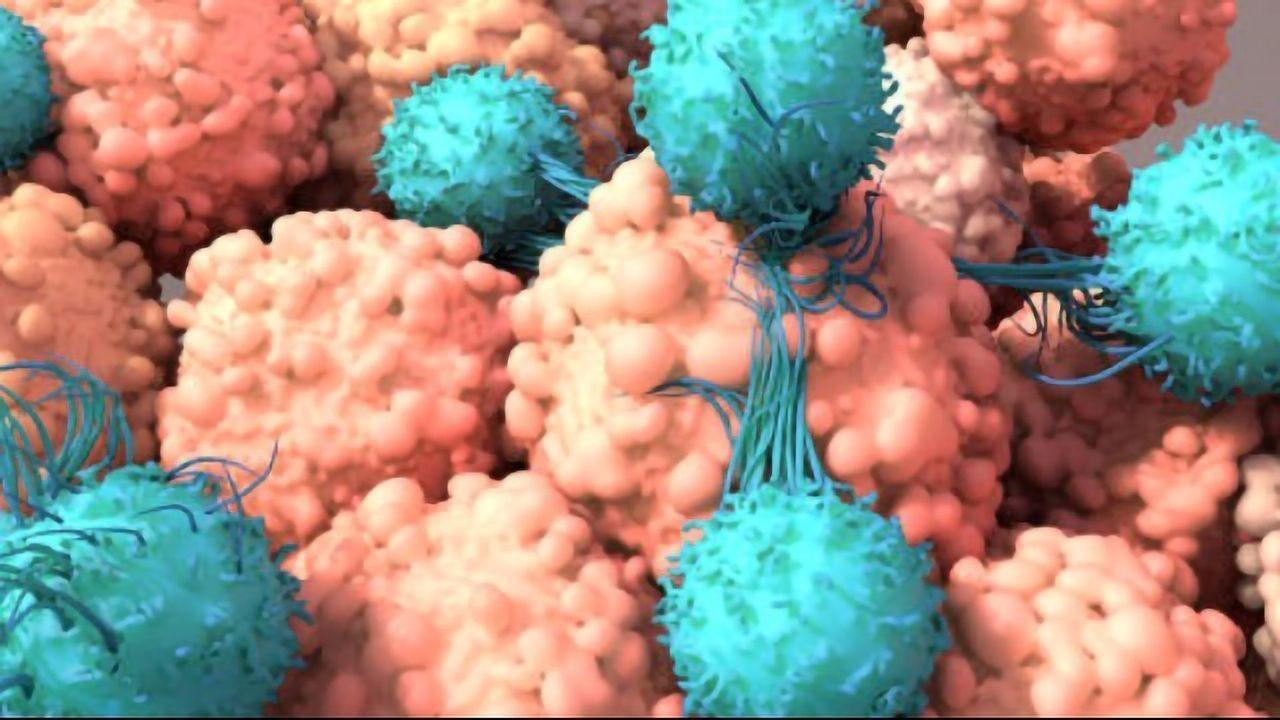
T-lymphocyte and CAR-T cell.
“Latest generation” cells
CAR-T cells are, in essence, T-lymphocytes equipped
with a next-generation membrane receptor: a structure specifically designed to
recognise and attack tumour cells with a precision and sensitivity far superior
to a normal T-cell. The difference is huge, like going from a mid-2000s Nokia
phone to the latest iPhone.
Thanks to this modification, CAR-T cells can generate
an immune response up to 1,000 times stronger than an ordinary lymphocyte. This
makes it possible to eliminate cancer cells that do not respond to conventional
treatments.
But what exactly is this alteration that proves so
lethal to cancer cells? CAR-T cells are designed as “reconnaissance and attack”
against cancer, and to do this, they have three main components. There is an
external part that acts like a radar, identifying tumour cells; another part
that passes through the cell membrane to transmit the signal inwards, and an
internal part that triggers the T-cell response, activating its attack.
A weekly email with evidence-based analysis from
Europe's best scholars
Get our newsletter
Although this basic design has already proven very
powerful, researchers continue to improve it, both to make it even more
effective and to prevent cells from becoming exhausted before they are able to
kill off every last tumour cell.

Structure of the CAR-T receptor.
Therapeutic options for many patients have multiplied
thanks both to the ability to develop these cells ex vivo – in the laboratory –
and to advances in gene editing. To date, there are 7 CAR-T therapies which are
authorised for use in patients.
Obstacles and limitations
Despite their efficacy, these therapies are not yet
available to all patients due to their high cost and associated risks. This
underlines the need to improve both their safety and accessibility.
Moreover, although CAR-T has been very successful in
treating leukaemias and myelomas, its application in solid tumours remains a
challenge. In these cases, the tumour microenvironment imposes additional
barriers: T cells must pass through dense matrices that hinder their motility.
The acidic environment also compromises their functionality, and nutrient
shortages can lead to cellular exhaustion.
Such factors have so far limited the success of CAR-T
therapies in solid tumours, but researchers continue to explore new ways to
overcome these difficulties. One such method involves combining chemotherapy
and radiotherapy to enable T-cells to reach tumour cells.
Combining CAR-T with immune checkpoint inhibitors –
drugs that block certain signals used by tumour cells to avoid being attacked
by the immune system – could also improve their effectiveness in such hostile
environments.
However, it is not always possible to obtain
lymphocytes from the patient, either due to limitations in quality or quantity
or clinical conditions that make collection difficult. To address this,
research is being done into allogeneic therapies that use “off the shelf” CAR-T
cells. These use T-cells from healthy donors, and are stored ready for use when
needed.
These methods not only reduce production times and
costs, but also expand access to such treatments to a wider range of patients.
The biggest challenge: solid tumours
Although there are still several hurdles to overcome,
the main challenge is the expanding the application of CAR-T cells to other
cancers, especially solid tumours, which could benefit from these therapies.
Examples include glioblastoma and metastatic ovarian cancer.
In the case of glioblastoma (a type of brain tumour),
specific targets such as B7H3 or EGFRvIII are being investigated. These
antigens are only expressed on tumour cells, improving the accuracy of these
therapies.
Also under study are new delivery modes that cross the
blood-brain barrier (a barrier that regulates the passage of what can and
cannot reach the brain) and ways to modulate inflammation, which is critical in
treating brain tumours.
For metastatic ovarian cancer, for which there is
currently no curative treatment, CAR-Ts offer a promising alternative. Clinical
trials have shown encouraging results by targeting certain new tumour markers.
Moreover, CAR-T therapies are not only being applied
in oncology. They are also being investigated for use in the treatment of
autoimmune diseases, with trials underway for diseases such as rheumatoid
arthritis. This opens up new possibilities for the future use of these
therapies.
Impact on the pharmaceutical industry
CAR-T’s advances, both consolidated and those on the
horizon, have led the pharmaceutical industry to boost its investment in these
therapies. Currently, the CAR-T cell therapeutics market is estimated to grow
from $10.39 billion in 2024 to $128.55 billion in 2032.

Growth projections for the CAR-T therapies market.
The true potential of these therapies is yet to be
discovered, and may lie in their effective application against solid tumours.
However, one thing is for certain: what until recently seemed a futuristic
concept is now a reality. Personalised medicine is here to stay, and CAR-T
therapies are leading the way.
This article was originally published in Spanish
Cancer
Medical research
Healthcare
Tumour
Cancer treatment

Disclosure statement
Lydia Begoña Horndler Gil does not work for, consult, own shares in or receive funding from any company or organisation that would benefit from this article, and has disclosed no relevant affiliations beyond their academic appointment.
Partners

Universidad San Jorge provides funding as a founding partner of The Conversation ES.

Latest news





Upcoming events
12
Nov
El Desembarco, la traición de Viriato at La Caja Blanca
12
Nov
HOMER El Mero Mero at Sala Trinchera Málaga
13
Nov
Marbella Startup Lab – Innovate & Collaborate
13
Nov
Candlelight: Coldplay & Imagine Dragons at Sala Fundación Unicaja María Cristina
13
Nov
Candlelight: Tribute to Ludovico Einaudi at Anantara Villa Padierna