Vanesa Martín:
The woman from Malaga claims her roots in 'Casa mía', an album that she will premiere at the Fulanita Fest in Fuengirola.
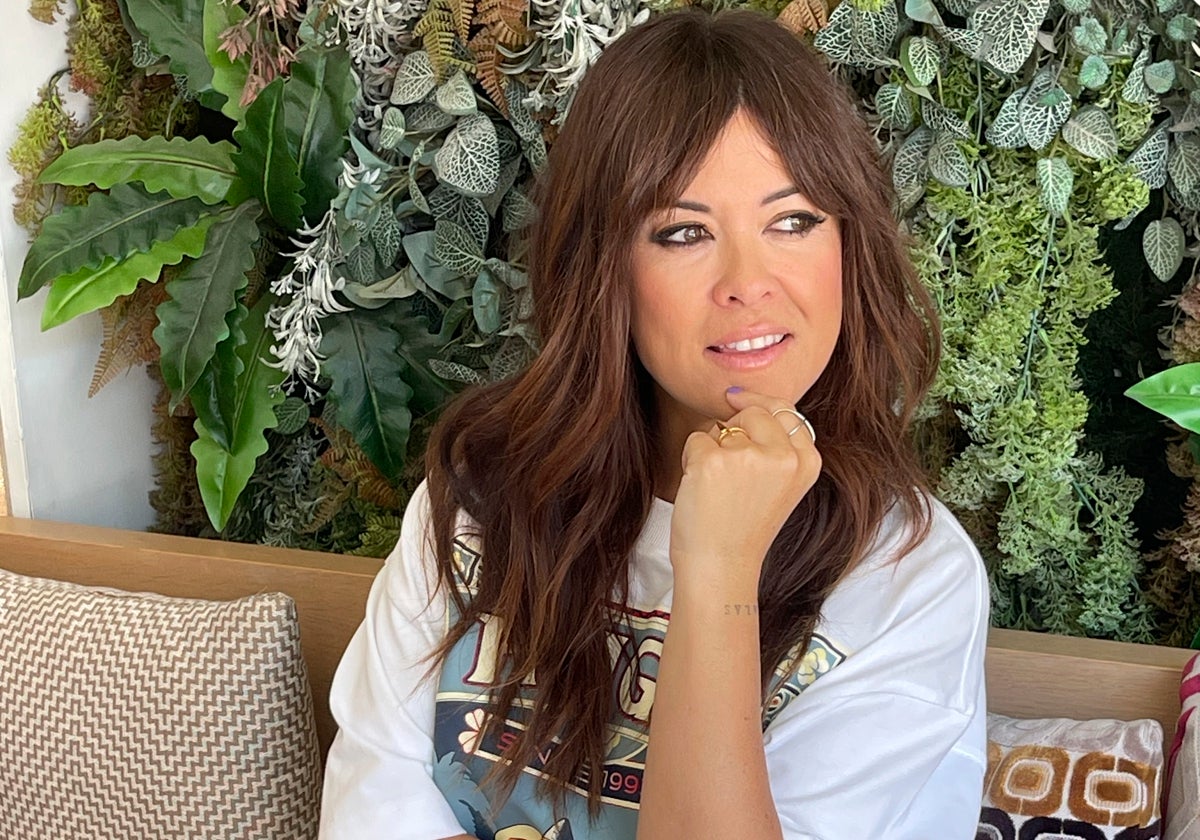

She is a wonderful hostess in her home and loves to entertain. It is her refuge, in Malaga and Madrid, the place where she remembers who she is... and where she comes from. And all of that is in “Casa mía”, an album – the ninth of her career – in which she returns to her roots in order to move forward. That's why there's a sevillana (“Casa mía”) that showcases her Andalusian roots alongside a bachata (“Objetos perdidos”), the result of her many trips to Latin America. And that's why she dares to use autotune (“60s”) without ceasing to be the Vanesa we all know, the singer-songwriter with profound, almost poetic lyrics that move us (“Tenemos universo de sobra”). All this at a time of change, with a new record label (Universal) and a new team that have helped her rediscover her enthusiasm. “Casa mía”, released on Friday, will be heard live for the first time on 31 May at the Fulanita Fest in Marenostrum Fuengirola.
–Where is your home, Vanesa?
–My home is where I am. My home is body, soul and time. In other words, my home is myself.
–The song “Casa Mía” is a declaration of intent, it's a Sevillana. It shows that you're from the south.
–One hundred per cent. This album is a reconnection with my roots, with my identity. My home is a refuge of sound and an emotional refuge. And those roots that I sing about, not only from my Andalusia, but also from other countries I have travelled to, I have allowed to be permeable and the music I listen to today to mix with the music I have always made.
–Can you imagine “Casa Mía” playing at the Malaga Fair?
–I'd love to, honestly. Because it's also a Sevillana that defines very well who I am, where I come from and what my pillars are: my family, music, love for life and running away from labels.
‘Having personality and rooting myself even more in who I am has saved me.’
–This album has been your refuge during a time of change. What happened to make you want to shake things up? Why did you feel like you were losing your enthusiasm?
–I felt that my goals were only mine and that my ability to regenerate and be chameleon-like were only mine. I needed to move, change and reassemble a team with a common goal. Above all, I needed to feel alive and strong, to feel the blossoming I feel now. I'm calm, I'm excited, I'm really looking forward to starting the tour and releasing the album. It's a very avant-garde album, because I've been daring and stepped out of my comfort zone. There's a lot of fusion, but there's also more roots than ever before. I'm not letting myself be carried away by the algorithm, I'm letting myself be carried away by pure, unadulterated music.
–You know that some people have been surprised by your daring, like the autotune on “60s”.
–Yes, but if you don't dare, it's boring. And I get bored easily. If I never sing the same song the same way at a concert, imagine if I had to stay in my comfort zone! I'd suffocate, I'd choke.
–And besides, you're a person, not an inert, immobile being. You evolve too.
–Something that defines me is that I'm very curious, I mean, I like to try new things.
–To do that, have you had to break down your own barriers, overcome your fear of what people will say?
–One hundred percent. I accept constructive criticism, and I can't please everyone, I'm not a croquette. But what I don't accept is being told what to do because they're afraid themselves. When you're afraid of other people's freedom, it's because you're afraid of yourself.
‘If I have to stay in my comfort zone, I drown, I suffocate.’
–However, when you listen to the whole album, you realise that the Vanesa we know is still there.
–People who really know me and have followed me from the beginning recognise me much more. Do you remember “Agua”? It's a 4.0 version of “Agua”. On that album, I already had different rhythms, because that's where I come from. I really like listening to different music and mixing it up. And unconsciously, it ends up coming out. I had no idea that I had done a bachata on “Objetos perdidos”. It was the producer who told me that the rhythm I was doing with the guitar was very bachata.
–It's funny because Pablo Alborán is also in that moment of experimentation.
-Look, Pablo and I got together for dinner to listen to each other's albums. We live very close to each other. And we started playing one song by you, one song by me, one song by you, one song by me. And we both realised that we were at that point of change, of breaking out of our shell, and we threw our hands up in the air and said, “Wow, what are people going to think?”. But at the same time we were excited, happy and content because it was what we wanted to do. Imagine if Serrat had done “Mediterráneo” many times. That man had to do other things too.
–I get the feeling that your house is a home for many, that you are very welcoming and hospitable.
–I'm a very good hostess, people who come to my house know that, and I love to entertain, to make people feel comfortable. The best compliment I can get when people come to my house is “wow, what great energy, I don't want to leave”. Well, okay, but you're going to have to go (laughs). I want this album to be a refuge for people because music heals, it doesn't just accompany you, and when you listen to certain songs, you dare to make decisions. This is an album that makes you happy. At concerts, for example, I try to find out what each person's home is, what their strength is, what they remember and will never forget. We can't lose our memory, I want to remember with this album.
Enlarge
Fran Leal–And not forget where you come from.
–Exactly. You can merge with the new things you learn and discover, but without ever ceasing to be yourself.
–In reality, what has kept you grounded and prevented you from losing your mind has been that connection with your core, with your people, with your home.
–My south, my Malaga. And now when I see that Malaga is on everyone's lips as the cutting-edge city that it is, I love it. But for me, Malaga isn't a fad, for me Malaga is what defines me, it's where I grew up, how I breathe, my character, my sea. For me, Malaga is where I always want to return.
–Maybe it's become too trendy now...
–Yes, I'm defending that too. In terms of urban planning, it's becoming increasingly difficult for people in Malaga to buy a house. This needs to be regulated.
–A balance needs to be found between tourists and the people of Malaga.
–These are words that have accompanied me throughout the recording process: balance, harmony and surprise.
–Have you surprised yourself?
–Myself, I promise. When I arrived at Universal, after spending my whole life at Warner, Jesús López, the president for Latin America and Spain, said to me, “Feel free to do whatever comes naturally to you. I want your roots, I want your identity, I want your essence. Give us what you least expect us to like. I want you to not think and just feel”. And that's freedom and a real treat. I surprised myself doing things I didn't usually do, to be honest.
‘Destructive criticism affects me much less now, some of it even makes me laugh.’
–But haven't you felt that freedom before?
–Yes, but what we were talking about with the algorithm. Maybe I was more conditioned... as if you have to go under a bridge. I refused to go under the bridge and I changed.
–In your interview with Elle magazine, you said: “I lowered my limits because I thought it was necessary to better introduce myself to the world, to this profession”. What limits are you referring to?
–Well, I wanted to access that algorithm, but then you realise that you are your home, that people aren't just in the algorithm, that there are many more people out there breathing emotions, passion, primal feelings, music with lyrics, with substance and that tell stories. The algorithm is a fad that will change, and I don't want to belong to a fad. If I had let myself be led down some very subtle paths that the industry was taking me down in recent years, I wouldn't be here today talking to you and with nine albums. Having personality and rooting myself even more in who I am has saved me. Because there are people who do a great job of following the algorithm, but I'm something else. And I can't disrespect myself or stop being honest.
–Do you also feel that you opened up too much on a personal level?
–I'm a very frank, honest and natural person in all aspects of my life. But it's true that when you start talking about your life, because I'm so natural, the questions tend to focus on that. As I don't consider myself to be better or worse than anyone else, just a normal person who lives, dreams, breaks up and falls in love, I limit myself to writing songs and talking about my music.
–You must be a good friend to confide in, because you have a manual for all kinds of love.
–I observe a lot and refine things. Maybe you tell me something and I get out of you what you haven't told me. And yes, it's quite common for people to say, “I need to talk to you, I need your perspective”. I'm not looking after people all the time, but I do rescue them.
‘I can't please everyone, I'm not a croquette’
–You've fulfilled dreams that weren't even in your plans, like that song with Joaquín Sabina.
–It's a gift that he and life have given me that I never would have dreamed of. When I was little, I used to listen to Sabina at my parents' house when I was 7, 8, 9 years old, and now I have a song with him... And we're such good friends! We've considered each other family for many years. I made more video calls with Sabina during the pandemic than with many of my friends.
–And despite the heart-wrenching songs you write, you're a fun-loving person.
–What's more, on this album I sing about love from a much more serene and luminous perspective. In “Objetos perdidos” I say goodbye with gratitude. And there are other really fun songs that aren't heart-wrenching at all. You get further with a sense of humour.
–With age, you see life differently.
–I've always been like this, even when I was 25. And women are so stigmatised when it comes to age that I run away from it completely. I'm timeless.
–But there are things you gain with age. You're clearer about what you want and what you don't want.
–In some things, yes, in others I still have doubts. And I hope I always will, because doubt is what drives you forward and keeps you on your toes. But yes, destructive criticism affects me much less. With some of it, I promise you I laugh and say, “That person has a good heart”. If they knew how much work goes into it, everything that goes into releasing an album, the tour, the industry, being surrounded by people all day... and then suddenly someone comes up to me and says, “So, what are you going to say now? Do you feel empty? Well, think about poverty”. Let's not trivialise or be demagogic.
–You're kicking off the tour in Malaga, at the Fulanita Fest in Marenostrum Fuengirola on 31 May.
–I really wanted to start in Malaga this year. It's going to be a very special tour, very beautiful and very powerful. What we've prepared for the live show is very demanding vocally and also very powerful.
–It's surprising to see a line-up featuring women. It's a shame it's not more common.
–Yes, that's right, we're working on it, it should happen much more often. And look, the festival is packed. I mean, when some promoters tell you that girls sell less, that's a lie. What happens is that we need to have opportunities to express ourselves, to show our art, what we do, and that it's not always the same people who get access. I consider myself privileged, mind you, but there are many young girls who are doing incredible things and don't have a chance.
–I think it's harder today than ever before.
–Today it's easier to get noticed through social media, but it's also more fleeting. Because today you're watching a series on Netflix and shopping on Amazon and talking to your mother at the same time. We're doing 400 things at once, so there's no memory.
–How many of those around today will stand the test of time? Does that worry you?
–Rather than thinking about the future, I think about today, about doing things well, being honest with myself, improving and having the capacity for self-criticism that I have.
–Life has treated you well, but you have to work for that too.
–I've worked really hard for it. I owe everything to the people who follow me and to what my parents taught me, to that capacity for hard work, perseverance and effort. If you want something, fight for it with the healthiest tools you have, but believe in it one hundred per cent. The education my parents gave me has saved me from many moments of frustration.
Latest news

Upcoming events
17
Sep
La Pequeña Cuba Gastro-Cultural Festival in San Pedro Alcántara 2026
18
Sep
World Wellness Weekend Marbella 2026
18
Sep
Candlelight: Queen vs. ABBA in Málaga
18
Sep
Candlelight: Coldplay and Imagine Dragons in Málaga
18
Sep
3 de Corazones – Pancho Céspedes, Enrique Ramil and José Luis Jaén in Málaga
Similar News
Melody, brand new representative at Eurovision: more than a decade based in Malaga and with a spectacular villa on the Costa del Sol
Fuengirola