


The Russian Museum pays tribute to Anna Pavlova, the borderless dancer
The art gallery gathers a collection of photos and programs of the artist who took classical dance around the world.
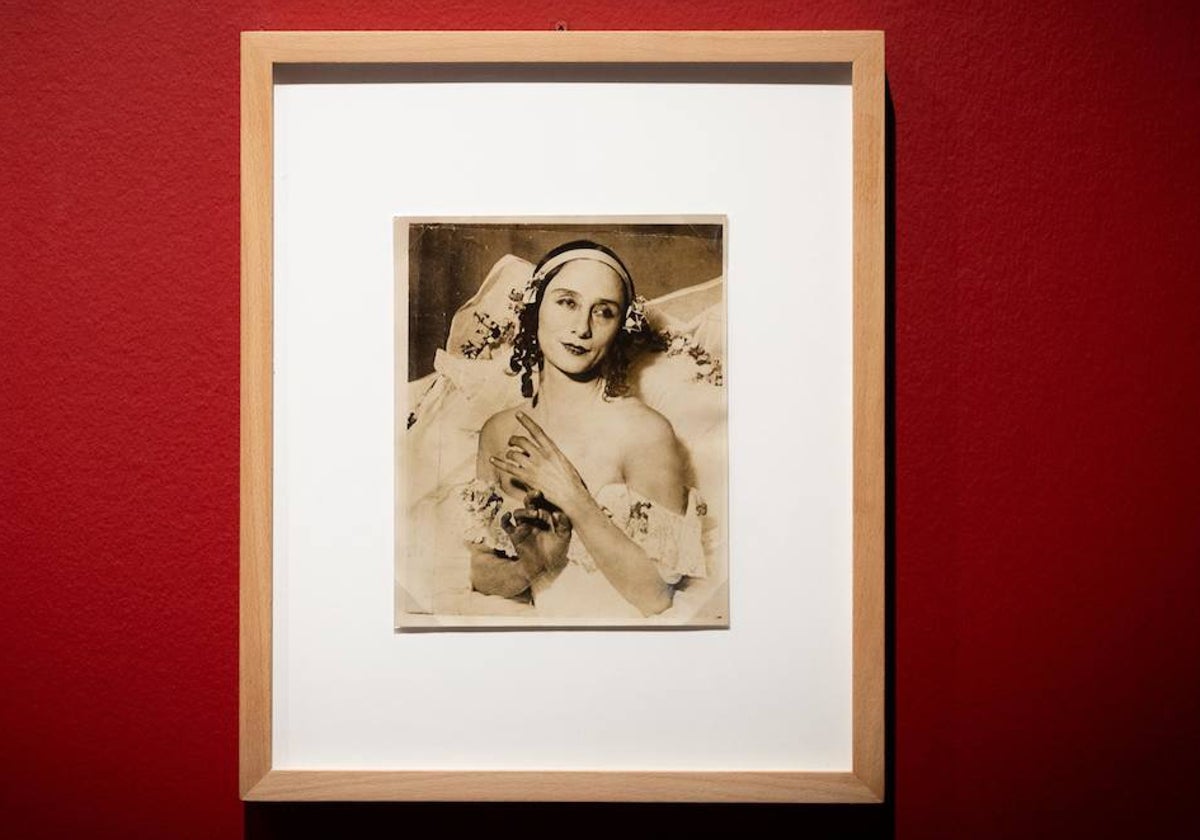

She was one of the first global divas. With a classical ballet passport, she traveled from Europe to America, Australia, and even Japan, returning home. Her fame was further amplified by Hollywood, which cast her in the film credits for the adaptation of the opera 'La muda de Portici' (1916). This continuous tour that was Anna Pavlova's life has now arrived in Málaga to be showcased for a year in the temporary halls of the Museo Ruso with a collection of photos, press clippings, and theater programs from around the world that, as the title of the exhibition inaugurated this Tuesday states, displays 'A Life Without Borders'.
"In the 1910s and 1920s, she was one of the most well-known people in the world and could have chosen to perform just once a year in Paris and New York, but she chose another life, a life without borders for many reasons, as she visited nearly 50 countries, bringing ballet to places where it had never been seen before," explained collector and curator Dmitry Yusov, who has gathered about 90 documentary pieces for this exhibition, which for him is a "dream" and is sponsored by the 'la Caixa' Foundation and Caixabank.
Related News
Leaks halt major exhibitions at the Russian Museum until its roof is waterproofed
The reality of the Russian Museum: 2,300 square meters for just 40 works
The exhibition includes photos and press chronicles of the great work that immortalized Anna Pavlova, 'The Dying Swan', whose performance by the artist from St. Petersburg was considered poetry in motion. Additionally, it also displays the Spanish influence on the Russian dancer who performed both at the Teatro Real in Madrid and the Liceu in Barcelona, as well as portraying the eternal 'Carmen' and Dulcinea in the ballet 'Don Quixote'. "She met King Alfonso XIII in 1910, who invited her to Madrid and she performed in Spain in 1919, being the first European country she visited after World War I," Yusov recounted, highlighting Pavlova's interest in learning about local dances and culture, hence she "took flamenco classes" during her stay in our country.
Expand
Antonio Caballero, Mariana Pineda, Francisco de la Torre, Dmitry Yusov, Luis Lafuente, and Juan Carlos Barroso, at the exhibition presentation. Ñito Salas.Meanwhile, the mayor of Málaga, Francisco de la Torre, explained that this display of press clippings and photos "completes" the exhibition of the Castañé collection, which, for now, forms the only offering of the museum in Tabacalera until the "humidity issues" of the building are resolved, which keep more than half of the rooms closed indefinitely. A scant offering for a gallery that, indefinitely, only offers 32 Russian oil paintings from the Castañé funds and a purely documentary exhibition, without artistic pieces.

Latest news





Upcoming events
12
Nov
El Desembarco, la traición de Viriato at La Caja Blanca
12
Nov
HOMER El Mero Mero at Sala Trinchera Málaga
13
Nov
Marbella Startup Lab – Innovate & Collaborate
13
Nov
Candlelight: Coldplay & Imagine Dragons at Sala Fundación Unicaja María Cristina
13
Nov
Candlelight: Tribute to Ludovico Einaudi at Anantara Villa Padierna
Similar News

Málaga Airport Makes History with More Than Three Million Passengers in One Month
Málaga

Port of Málaga looks beyond its docks to support future growth
Málaga

Guide to the Virgen del Carmen Processions in Málaga and the Province
Málaga
