What are the differences between gazpacho and salmorejo?
Summer begins and with it the cold soups.
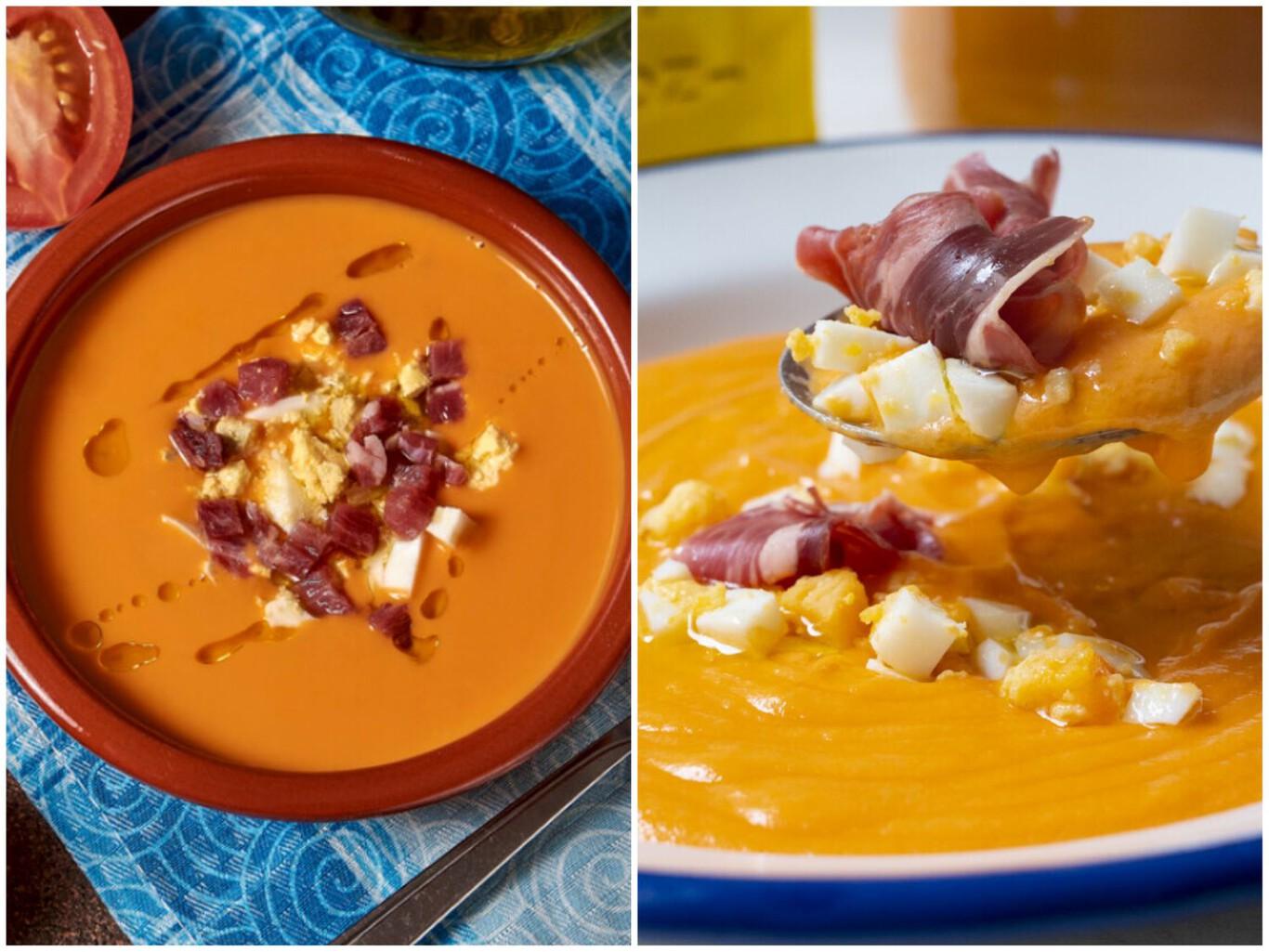

There are so many cold soups and creams, and there are so many options in our country's cuisine that it's easy to confuse one with another. The other day, during a dinner with some friends, I was asked this question: What is the difference between gazpacho and salmorejo? Anyone who has tasted both dishes will be able to differentiate them without problems, as they have very different flavors and textures, but the reasons might not be so clear.
As I think it's an interesting question, here are my explanations, hoping they will be useful for you to distinguish between these two fundamental dishes of our gastronomic culture that we always enjoy in summer: traditional Andalusian gazpacho and Cordoban salmorejo.
How do gazpacho and salmorejo differ?
In terms of culinary technique
Generally, gazpacho is a cold vegetable soup, seasoned with oil and vinegar, while salmorejo is an emulsion. This explains why gazpacho has a texture that allows it to be drunk from a glass or bowl, whereas salmorejo has a texture that, if very thick, can be similar to mayonnaise.

Regarding the ingredients
Generally, both gazpacho and salmorejo share common ingredients such as tomatoes, stale bread, olive oil, and garlic. The main difference is that gazpacho also includes cucumber, pepper, and vinegar, elements not used in salmorejo.
While garlic and bread are common to both salmorejo and gazpacho, they are more prevalent in salmorejo, which uses them in greater quantities. The same goes for the oil, which is used more in salmorejo. As for the vinegar, it is typically used more in gazpacho.
Water
Water is an ingredient in gazpacho, either added to the vegetables when blending or used to soak the bread. The presence of water in gazpacho makes it a spoonable or bowl dish since it has a texture that allows it to be consumed as a drink.
In salmorejo, water is not added except for soaking the bread and is not incorporated when blending the ingredients, resulting in a thick cold cream texture. When the oil is emulsified with the tomato's vegetation water, a thick emulsion is created thanks to the bread.
Regarding the garnishes
While it is common to serve gazpacho with croutons and small pieces of onion, pepper, and tomato cut into brunoise as garnish, salmorejo is typically accompanied by chopped hard-boiled egg and diced serrano ham, or even better, Iberian ham. Of course, in recent years, multiple alternative garnishes have been added to the recipe book, and tastes vary widely.
With these explanations, I assume you will have no difficulty distinguishing between these two summer staple dishes and understanding the differences between gazpacho and salmorejo, whether you are served them this summer or if someone asks you about them.

Latest news





Upcoming events
12
Nov
El Desembarco, la traición de Viriato at La Caja Blanca
12
Nov
HOMER El Mero Mero at Sala Trinchera Málaga
13
Nov
Marbella Startup Lab – Innovate & Collaborate
13
Nov
Candlelight: Coldplay & Imagine Dragons at Sala Fundación Unicaja María Cristina
13
Nov
Candlelight: Tribute to Ludovico Einaudi at Anantara Villa Padierna