Half marathons: a challenge for runners and a draw for local tourism
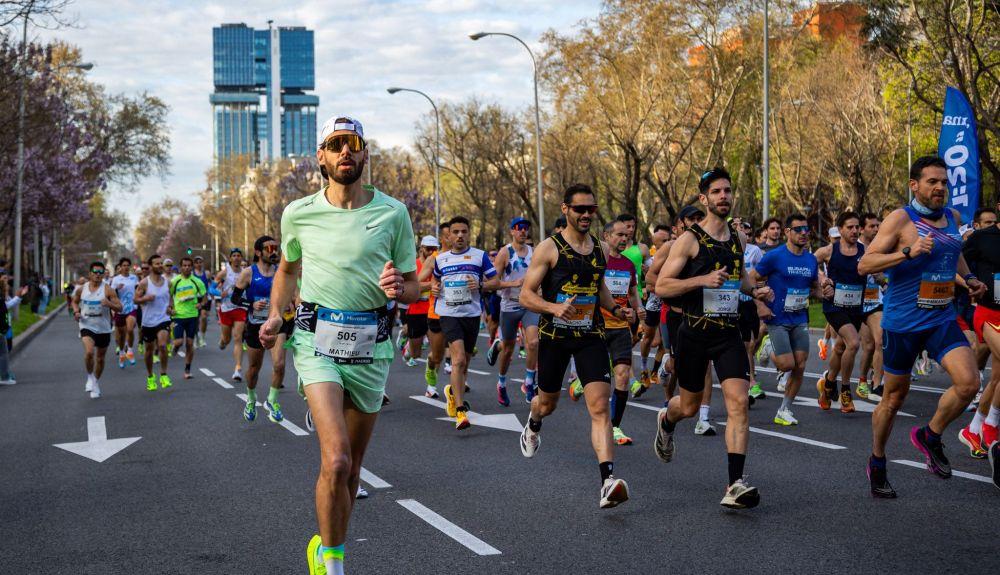

More and more people are travelling to take part in races. What once seemed reserved for experienced runners is now an effective tool for boosting the local economy and promoting the destination to a more diverse and numerous audience.
The typical participant in a half marathon is usually male, in his forties, with a higher education and a profession unrelated to sport or one that requires him to keep in good shape. However, when events include shorter distances, such as 10 or 15 kilometres, female participation increases significantly.
The success of these events depends on three pillars: runner satisfaction, local community support and economic profitability.

What drives people to run
Internationally, prestigious and popular events such as the New York Marathon stand out. The 2023 edition brought together more than 51,000 runners from around the world, consolidating its position as one of the largest marathons on the planet. It is followed by other iconic marathons such as Berlin, where multiple world records have been broken; London, with nearly 48,000 finishers (runners who completed the race and reached the finish line) in 2023; and Tokyo, with 38,000.
These competitions attract both elite athletes and tens of thousands of amateur runners, reflecting the global boom in running. In half marathons, the Valencia race stands out as one of the fastest in the world, with more than 22,000 participants in 2023.
There are five main motivations that drive people to compete in popular races:
Sporting hedonism, running for the pleasure of physical activity and the well-being it brings to the individual.
Socialisation, sharing the experience with family, friends or strangers with similar interests.
Inclusion, participating in events open to all, regardless of age, gender or physical ability.
Competition, when the aim is personal improvement or to compare one's own performance with that of other runners.
Virtual interaction, when the experience is shared on social media, documenting the entire process: from preparing for the race to the moments afterwards.
Addressing this range of motivations improves the runner's experience and increases the likelihood that they will repeat and recommend both the event and, if they have travelled for the race, the destination.

Interaction with residents
A half marathon disrupts the daily life of the host community, so it needs public support to become established. Without local support, it is difficult to maintain over time. The impact is usually measured in economic, social and environmental terms, but such analyses are still rare for this type of event.
Data on the 2024 Córdoba half marathon show that 94% of the local population rated the event positively and 88% would like it to continue. They also perceived the race as an initiative that improves the image of the city (84.9%), encourages physical activity (80.1%) and generates opportunities for leisure and inclusion (9 out of 10).
This high level of acceptance demonstrates the role that such events can play in social cohesion and collective pride in the localities where they are held.
The economic footprint of half marathons
During their stay in the place where the race is held, runners take part in activities linked to the attractions of the destination. For example, in Córdoba they visit the heritage sites, in Almería and Magaluf they enjoy the beach, and in Zubiri–Pamplona they enjoy contact with nature. In all cases, they highlight the enjoyment of the local cuisine as a cross-cutting experience.
Spending on food and drink is usually the main source of return, even above accommodation, followed by leisure, supermarkets and other expenses. The key is to distinguish between sports excursionists, who only stay for the day of the race, and sports tourists, who stay overnight and spend more time at the destination. Overnight stays contribute to increased spending in all areas, as well as the number of accompanying persons.
It is estimated that while a day tripper generates an average daily expenditure of £54.25, a tourist multiplies this by 2.45 to £120.75. If we add the consumption of accompanying persons, the daily expenditure rises to £318.52. During an average stay of 2.5 days, the total impact per tourist with companions rises to £79.30.
Thus, half marathons such as those in Córdoba, Salamanca and Magaluf have generated a direct economic impact for the region of more than £3.3 million, £1.35 million and £1.2 million respectively.
The tourism factor in race planning
For a half marathon to generate economic impact beyond the sporting arena, it must be integrated into the host destination. A race that offers different distances – for beginners, children, older people, people with functional diversity, etc. – increases participation, improves the atmosphere of the event and promotes greater economic return. In addition, the organisation of other types of activities beyond sport (cultural, social and leisure) helps to prolong the stay of sports tourists.
The event as a whole must be consistent with the local identity, heritage, gastronomy and landscape of the host community in order to enrich the experience and leave a lasting impression. The aim is not only to attract runners but also to make them want to return and become authentic tourist ambassadors for the destination.
Autoría

Profesor Organización de Empresas de la Universidad de Córdoba y miembro del Grupo de Investigación Economía del Turismo, la Cultura y el Deporte, Universidad de Córdoba

Becaria del departamento de Economía Aplicada, Universidad de Córdoba

Catedrático del Área de Economía Aplicada, Universidad de Córdoba
Cláusula de Divulgación
Las personas firmantes no son asalariadas, ni consultoras, ni poseen acciones, ni reciben financiación de ninguna compañía u organización que pueda obtener beneficio de este artículo, y han declarado carecer de vínculos relevantes más allá del cargo académico citado anteriormente.
Nuestros socios

Universidad de Córdoba aporta financiación como institución colaboradora de The Conversation ES.

Latest news





Upcoming events
12
Nov
El Desembarco, la traición de Viriato at La Caja Blanca
12
Nov
HOMER El Mero Mero at Sala Trinchera Málaga
13
Nov
Marbella Startup Lab – Innovate & Collaborate
13
Nov
Candlelight: Coldplay & Imagine Dragons at Sala Fundación Unicaja María Cristina
13
Nov
Candlelight: Tribute to Ludovico Einaudi at Anantara Villa Padierna