'Olo': the color never before seen by humanity
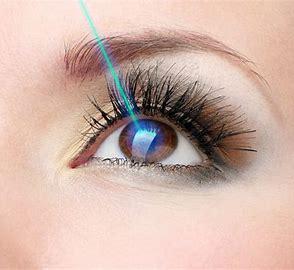

A team of researchers has just created the perception of a new color they have named "olo," which apparently had never been seen before. The lucky ones were five individuals whose specific type of photoreceptors were stimulated with a laser.
First of all, it must be clarified that colors "do not exist" as such, since what we perceive in the retina, at the back of the eye, is light. There, our photoreceptors (the cones) transform it into nerve impulses which, once processed, are interpreted by our brain as color. This equates to what we know as the visible spectrum, a very narrow portion of the electromagnetic spectrum.
Specifically, the wavelengths of light responsible for our ability to perceive colors interact with the cones. It is the mixture of this information, depending on which cones are stimulated, that allows our brain to resolve the color (or colors) we are seeing.
A Matter of Cones
Humans are trichromats because we have three types of cones: those that respond to the longest wavelengths (L), which we perceive as red; to the medium wavelengths (M), which we perceive as green, and to the shortest (S) which we perceive as blue. In other words, we see in RGB (red, green, blue).

This graphic shows how the stimulation range of the M cones overlaps with those of the S and L cones. Wikimedia Commons
In total, we have 6 million cones, and chromatic perception depends on how and how many are activated at any given moment. Each object absorbs a series of wavelengths and reflects others, which will correspond to the color we are seeing. Thanks to all this, humans can distinguish around one million colors. And none is the one just discovered.
The researchers wondered what a person would perceive if only one type of cone was activated. For this, they used a device they have called Oz Vision System (named in honor of the Emerald City from L. Frank Baum's novel The Wizard of Oz), a laser capable of selecting and stimulating about a thousand photoreceptors of a single type in isolation, without the involvement of the other two types.
The scientists stimulated only the M cones (those that respond to wavelengths we perceive as green) in a small area of the eye in the five participants in the experiment. They reported seeing a more intense bluish-green color than any they had seen before.
A Unique Experiment
The green cones cover the middle area of the visible spectrum, so their stimulation range overlaps with the cones for red (L) and blue (S). In the case of these last two, there are certain "natural" conditions in which some wavelengths can stimulate them in isolation, but because of this overlap with the L and S cones, independent activation of the M cones is not possible under typical lighting conditions.
Therefore, using this type of laser that can isolate and independently stimulate the M photoreceptors was the only way to verify if it is possible to generate colors that do not exist in normal human perception.
The name of the new color is associated with the terminology used in binary code, i.e., the combinations of 0 and 1 used to represent data in computing. "OLO" represents the binary number 010: of the three types of cones, since only the M type is activated, it is represented as 0 (S not stimulated), 1 (M is stimulated), and 0 (L not stimulated).
How Can Someone Know if They Have Never Seen a Color Before?
The subjects described "olo" as a "bluish-green with unprecedented saturation". However, chromatic perception has objective components (deficits in distinguishing colors, visual problems, etc.) and subjective ones. A person can infer whether what they are seeing is new or not by comparison with previous experiences, for example, but that appreciation falls within the realm of subjectivity.
To verify that indeed all participants were perceiving a color completely different from those already known, chromatic matching experiments were conducted, comparing the perception of "olo" with that received with a bluish-green laser beam, to which they adjusted the saturation by adding white light. All five agreed that, by adding white light to "olo" –i.e., reducing its saturation–, the result matched the color of the laser. This confirmed that "olo" is outside the visible spectrum known to humans.
However, from an objective and scientific perspective, a person cannot know with absolute certainty if a color they are perceiving has never been seen before, as there is always a subjective component that is difficult to overcome.
Moreover, we cannot be 100% sure that someone on this planet, due to some anomaly in their cones, has the ability to perceive "olo" naturally, even if they are not aware of it. Or how can we be certain that a tetrachromat, capable of identifying up to 100 million shades in our visible spectrum, might not be able to distinguish "olo" without the need for microlaser pulses? It's something complicated to demonstrate.
Can We Reproduce "olo" for Everyone to See?
It is impossible to see "olo" with the naked eye. By its nature, it cannot be reproduced either physically or digitally. There is no "natural" light stimulation that activates only the M cones in our retina. Although we can now find circulating images that claim to resemble the bluish-green color with very high saturation, the wavelength they represent cannot activate only our M cones.
As for the potential practical applications of Oz Vision, this tool can be very valuable in basic research to explore still unknown functions of our photoreceptors, as it allows isolating and studying specific groups of these cells in conscious individuals, something that until now was not possible.
Moreover, it could help better understand the mechanisms that lead to visual diseases in which photoreceptors deteriorate or are lost, which could open new ways to prevent or treat them.
The authors also suggest that generating the perception of novel colors in experiments with human subjects could have future applications in creating new, enriched, and personalized experiences in visual therapy or even in communication and art. Although promising, these applications still seem far from becoming a reality.


Latest news





Upcoming events
12
Nov
El Desembarco, la traición de Viriato at La Caja Blanca
12
Nov
HOMER El Mero Mero at Sala Trinchera Málaga
13
Nov
Marbella Startup Lab – Innovate & Collaborate
13
Nov
Candlelight: Coldplay & Imagine Dragons at Sala Fundación Unicaja María Cristina
13
Nov
Candlelight: Tribute to Ludovico Einaudi at Anantara Villa Padierna