


Gabriel Padilla, the "Silent" Painter of the New Figuration Movement in Malaga from the 80s, Passes Away
The artist, whose work is exhibited at the Malaga Museum, had been retired from the exhibition circuit for decades.
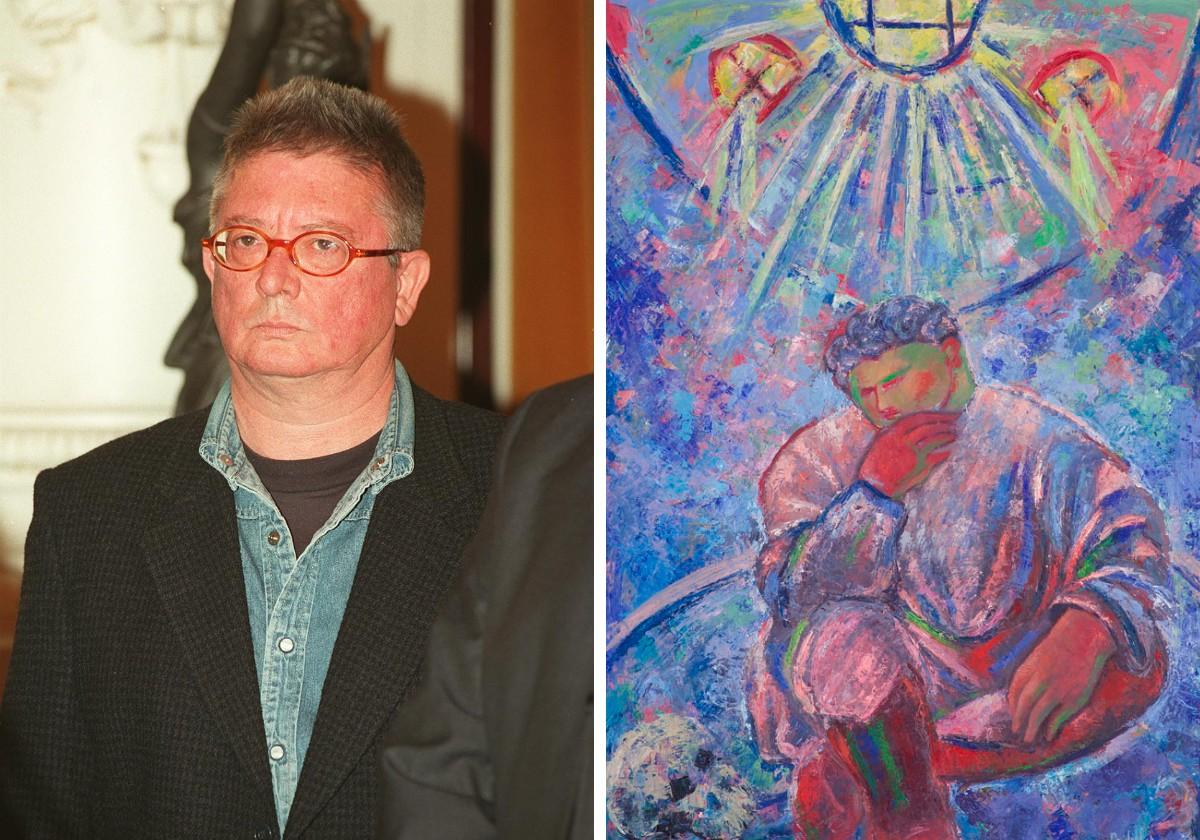

A few weeks ago, the Carmen Thyssen Museum inaugurated an exhibition dedicated to figurative painting from the 80s, marked by hedonism, color, and the vibrant 80s scene. A profile that perfectly suited the work and spirit of Gabriel Padilla (Málaga 1949-2025), who passed away a few days ago in Málaga. Having withdrawn from the public scene for decades, the Malaga-born painter had a significant influence on contemporary Andalusian art and particularly in Málaga, noted for his rich color palette and his fondness for melancholic, absorbed, and introspective figures, as well as voluminous, Mediterranean, and exuberant bodies.
Journalist Julián Sesmero described him as a "silent" artist due to his aversion to photos and spotlights during the opening of the Alfredo Viñas Gallery, which began in the early 90s with an exhibition of Padilla himself. Gabriel Padilla, known for his hedonism and everyday themes in his painting, demonstrated his detachment from public recognition when he expressed his surprise in 2016 at the Málaga Museum's claim to his work by including him among the essential artists in its room dedicated to the new Malaga figuration of the 80s, alongside José Seguiri and Diego Santos.
"I remember the 80s as a very fun, happy, and creative time," Gabriel Padilla told Antonio J. López in SUR a decade ago, subsequently distancing himself from his inclusion in the museum's exhibition proposal: "I don't know if something related to that era needs to be claimed... Time will tell. I don't attach much importance to it." Indeed, as a true artist, he felt more identified with what he was painting at the time, even though it had been a while since he had exhibited publicly. "Afterwards, I painted a lot, I think I have improved... But well," he added.
The truth is, more than belonging to any artistic movement or community, Gabriel Padilla belonged to his own world, his own art, through which he expressed himself with an "innate ability to harmonize color without conflict, even though, apparently, there is a permanent aggressive conflict in the intentional ways of segmenting, distributing, and assembling the different optical fields that generate a style as lively and kinetic as his," as described by Sesmero.
Artistically linked to his friend Joaquín de Molina, his work is also present in the collections of the Ateneo de Málaga and the College of Architects. The 1999 Carnival poster also bore his signature, although his most popular work was probably the mural that for decades welcomed tourists and locals on the ascent to Gibralfaro, where he depicted a compendium of the urban landscape of Málaga, including the Cathedral, the Alcazaba, Atarazanas, Picasso, the skewered sardines, and the patience of the philosopher Ibn Gabirol.

Latest news





Upcoming events
12
Nov
El Desembarco, la traición de Viriato at La Caja Blanca
12
Nov
HOMER El Mero Mero at Sala Trinchera Málaga
13
Nov
Marbella Startup Lab – Innovate & Collaborate
13
Nov
Candlelight: Coldplay & Imagine Dragons at Sala Fundación Unicaja María Cristina
13
Nov
Candlelight: Tribute to Ludovico Einaudi at Anantara Villa Padierna
Similar News

Málaga Airport Makes History with More Than Three Million Passengers in One Month
Málaga

Port of Málaga looks beyond its docks to support future growth
Málaga

Guide to the Virgen del Carmen Processions in Málaga and the Province
Málaga
