The 2025 conclave begins between the sacred and 'theological marketing'
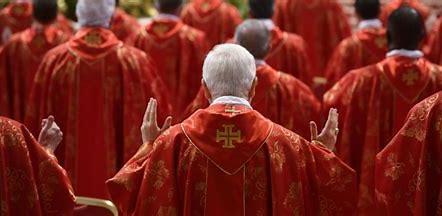

The 2025 conclave has a unique historical profile for multiple reasons, but I will particularly highlight the impact of social media in promoting the profane and displacing the sacred. I refer to what the influencers of the new "theological marketing" – not the digital missionaries – do as a formula for adapting the transmission of the word to the new times. In simple terms, the pre-conclave should not be a process loaded with speculation or betting on the network, but that influence is massive and difficult to contain.
The speculation inherent in "theological marketing" translates into a general conviction that the closeness of the "papabili" to the proposals of Francis can determine the next pontificate. If this is true, we will have a pope suddenly, as soon as the electors are installed.
But the conviction of the Christian is that the Holy Spirit is a guide who acts in ways that are not always evident to human reason (Romans 8:26-27).
If we turn to the theological plane, as is appropriate at this time, Saint Augustine highlighted the root of the problem by stating that human knowledge is imperfect and depends on divine illumination to reach the truth, precisely what seems to have failed in the preliminaries of this conclave, although it will not be so at the end of it.
Resistance to Francis's proposal
Most may agree that Francis's main legacy has been the return to Jesus, the invitation to discipleship to regain the centrality of listening to the Gospel. However, internal resistance – those called conservatives – oppose openly or covertly the synodal proposal of Francis, to the point of referring to it as "synodal Babel".
The central theme of that proposal was eminently ecclesiological and is based on a church that assumes its cultural diversity and a horizontal structure that, in practice, would surpass Vatican control and involve global representation. It would even involve a reform of the curia that would allow laypeople and women to hold decision-making positions within the Church.
Do not consume news, understand it.
Subscribe to the newsletter
The argument of that manufacture defined as "theological marketing" is that the majority of the conclave will lean towards a "papabile" that represents the proposals of Francis, because he chose them, but they omit the internal conflict that generates that ecclesiological proposal, simply because they are unaware of it. The significant audience on social networks is more concerned with issues such as the blessing of homosexual couples and communion for the divorced.
These have been issues raised by Francis from the perspective of mercy, but in fact, the Fiducia Supplicans Declaration confirms the "perennial Catholic doctrine" that only considers licit sexual relations within marriage between a man and a woman.
Moreover, in the apostolic exhortation Amoris Laetitia, Francis only left open the possibility of pastoral discernment, case by case, allowing some remarried divorcees to access communion under certain conditions. Both documents created a certain degree of pastoral discretion for bishops and disorder in the application of criteria.
The issues do not correspond to each other. Those cardinals chosen by Francis might support his speech or his style, be in solidarity with his pontificate, but may not agree with specific theological or ecclesiological issues. This has led theologian Rafael Luciani, an authority on synodality and a unique supporter of Francis in its dissemination in Latin America, to state that "there is no guarantee that the next pontificate will follow the line of Francis". Moreover, he confirms that "an element to discern the character of the next pontiff will be whether he continues the synodal process that Pope Francis had scheduled".
The Church has its own dynamics. For example, after decades, some of the decisions of Vatican Council II have remained pending. This concern is based, as many cardinals have been sharing reflections on digital platforms, which allows identifying some trends before the vote. Thus, it can be stated that those he appointed are united only by the theme of synodality, and they are not all.
How the votes will be
The first vote will be tendentious, there may be between 6 and 8 names, most synodal, but all far from obtaining the required 2/3 majority.
Subsequent votes will be different, a process of decantation that will have the certainty of a clash between trends. And they will be based on the continuity or not of the synodal reform, the agreements reached on specific controversial aspects, and the support of expectant sectors. If there is no definition among the synodals, they will look for the "lukewarm" of older age. And there is also the strong inherently Italian factor.
It is most likely that the concern that delay is taken as a sign of division will prompt the election in the first three days of the conclave. This factor and the dismissal of a candidate are media consequences – the best way to block the possibility of a papabile is an overexposure to the media as has been seen in the days leading up to the conclave.
In this conclave, reality has been replaced by representations that do not have a real referent, as defined by the French philosopher Jean Baudrillard, who indicated that behind the baroque of images hides the gray eminence of politics.
Without making bets, it is true that the limitations of human knowledge do not prevent the majesty of the truth and it can be reached through reason illuminated by faith, as Saint Augustine affirmed. And this mystery, the intervention of the Holy Spirit in the decision of the cardinals, is precisely what can manifest itself in the negotiations and in the decision of the conclave.

Latest news





Upcoming events
12
Nov
El Desembarco, la traición de Viriato at La Caja Blanca
12
Nov
HOMER El Mero Mero at Sala Trinchera Málaga
13
Nov
Marbella Startup Lab – Innovate & Collaborate
13
Nov
Candlelight: Coldplay & Imagine Dragons at Sala Fundación Unicaja María Cristina
13
Nov
Candlelight: Tribute to Ludovico Einaudi at Anantara Villa Padierna