Nori and wakame: consuming seaweed could promote gut microbiota and prevent disease
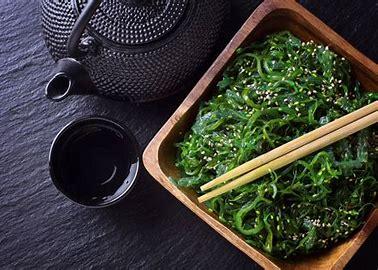

Rich in iodine, fibre and antioxidants, seaweed has been used in Eastern cuisine for centuries and in Western cuisine for several decades. Two popular examples that demonstrate its versatility are nori, famous for wrapping sushi rolls and for its delicate, toasted flavour, and wakame, commonly found in soups such as miso, or in fresh salads, where it adds a soft, slightly gelatinous texture. Both offer an ideal dietary option for adding umami depth to broths, stir-fries and even bread.
However, beyond the flavour they provide, there are several health reasons to include seaweed in your diet. Among them is the fact that it can improve the gut microbiota.
A colony of 100 trillion bacteria
The gut microbiota, formerly known as gut flora, is made up of a huge community of microorganisms—mainly bacteria, and to a lesser extent viruses and yeasts—that live in the gut, especially in the large intestine. These microorganisms that make up the microbiota coexist with humans and play an essential role in maintaining health.
Among its most important functions are protection against pathogens, the production of vitamins and enzymes, the maintenance of the intestinal barrier function and the modulation of the immune system.
The gut microbiota is also capable of fermenting the indigestible components of food (such as fibre), generating metabolites known as short-chain fatty acids (SCFAs).
These compounds help maintain an adequate composition of the microbiota by regulating intestinal pH and bacterial growth. They also contribute to the prevention of various diseases due to their anti-inflammatory effect and their ability to pass from the intestine into the bloodstream.
An almost ‘virgin’ natural resource
In this context, marine macroalgae represent a promising and still largely unexplored source of compounds with prebiotic potential. In other words, compounds that selectively stimulate the growth and activity of certain beneficial bacteria that form part of the gut microbiota, as they serve as food for them. In addition, prebiotics, when fermented by the microbiota, generate SCFAs.
In terms of nutritional composition, seaweed stands out for its high dietary fibre content, which in some species can exceed 50% of its dry weight. It also has a significant presence of polyphenols and peptides.
These compounds can selectively promote the growth of beneficial microorganisms in the gut and contribute to the production of key molecules for health, such as SCFAs.
In addition to the effects mentioned above, some of its components can improve the intestinal barrier and attenuate inflammatory processes, as well as reduce oxidative stress.
Early research and advances
This positive impact on the state of the gut microbiota, and ultimately on human health, is supported by some scientific studies which, although still limited, have already taken their first steps.
Thus, it is possible to find various studies suggesting that seaweed consumption could contribute to the prevention of certain diseases through its effect on the microbiota.
Specifically, one of these studies evaluated the polysaccharide ramnan sulphate, extracted from the seaweed Monostroma nitidum, and analysed its behaviour when ingested by mice and humans.
In rodents, the result was that this compound increased faecal volume, which is useful in cases of constipation, and increased the calories eliminated through faeces, indicating that part of the energy from food is not absorbed. It also improved triglyceride, cholesterol and blood glucose levels.
As for the effects on people with constipation, ingestion of this polysaccharide increased the frequency of bowel movements without side effects. This could be mediated by an improvement in the composition of the gut microbiota.
Another study, this time a clinical trial conducted in overweight and obese individuals, showed that the polysaccharide xylaminoglucuronate, extracted from the seaweed Ulva spp., reduced cholesterol and markers of inflammation.
In addition, this study revealed changes in the composition of the microbiota, suggesting that some of the benefits may be related to intestinal bacteria.
On the other hand, there is also research on the effects of combining probiotics (live microorganisms) with seaweed. Specifically, a study focusing on the mixture of the seaweed Laminaria japonica, commonly known as Kombu, with probiotics confirmed that this combination improved the gut microbiota by increasing the number of beneficial bacteria.
The synergistic effect of combining prebiotics from Laminaria japonica with probiotics increased the beneficial effects on the gut microbiota.
Furthermore, this combination was found to cause no side effects or other alterations, indicating that its use was safe.
Possible risks among so many benefits
Despite the remarkable positive effects reported in the studies mentioned above, the consumption of seaweed may be associated with some health risks. This is because seaweed can contain contaminants, such as heavy metals, which could negatively affect the microbiota and, consequently, health.
Furthermore, when its components are consumed in isolation, for example after being extracted and/or concentrated by industry, they are found in higher concentrations than in whole seaweed, which may alter their effect.
In short, in order to incorporate this food safely and effectively into our diet, it is important to take into account which species of seaweed have been studied, as well as the amount and frequency of consumption analysed, as each type of seaweed has a particular composition, which can vary depending on where and when it is harvested.
Autoría

Profesora en la Universidad del País Vasco. Investigadora del grupo Nutrición y Obesidad del Centro de Investigación Biomédica en Red de la Fisiopatología de la Obesidad y Nutrición (CiberObn) y del Instituto de Investigación Sanitaria Bioaraba, Universidad del País Vasco / Euskal Herriko Unibertsitatea

Profesor en la Universidad del País Vasco. Investigador del grupo Nutrición y Obesidad del Centro de Investigación Biomédica en Red de la Fisiopatología de la Obesidad y Nutrición (CiberObn) y del Instituto de Investigación Sanitaria Bioaraba, Universidad del País Vasco / Euskal Herriko Unibertsitatea

Estudiante predoctoral, Grupo Nutrición y Obesidad, Universidad del País Vasco/Euskal Herriko Univertsitatea, Universidad del País Vasco / Euskal Herriko Unibertsitatea

Catedrática de Nutrición. Centro de Investigación Biomédica en Red de la Fisiopatología de la Obesidad y Nutrición (CIBERobn), Universidad del País Vasco / Euskal Herriko Unibertsitatea
Cláusula de Divulgación
Las personas firmantes no son asalariadas, ni consultoras, ni poseen acciones, ni reciben financiación de ninguna compañía u organización que pueda obtener beneficio de este artículo, y han declarado carecer de vínculos relevantes más allá del cargo académico citado anteriormente.
Nuestros socios

Universidad del País Vasco / Euskal Herriko Unibertsitatea aporta financiación como institución fundacional de The Conversation ES.

Latest news





Upcoming events
12
Nov
El Desembarco, la traición de Viriato at La Caja Blanca
12
Nov
HOMER El Mero Mero at Sala Trinchera Málaga
13
Nov
Marbella Startup Lab – Innovate & Collaborate
13
Nov
Candlelight: Coldplay & Imagine Dragons at Sala Fundación Unicaja María Cristina
13
Nov
Candlelight: Tribute to Ludovico Einaudi at Anantara Villa Padierna