


The town of Málaga that the Arabs turned into the watchtower of our coasts
During the Arab domination, Totalán acquired a strategic function, serving as the watchtower facing the Mediterranean, connecting Málaga and Axarquía through five routes: Mudejar, Raisin, Avocado, Oil, or Wine.
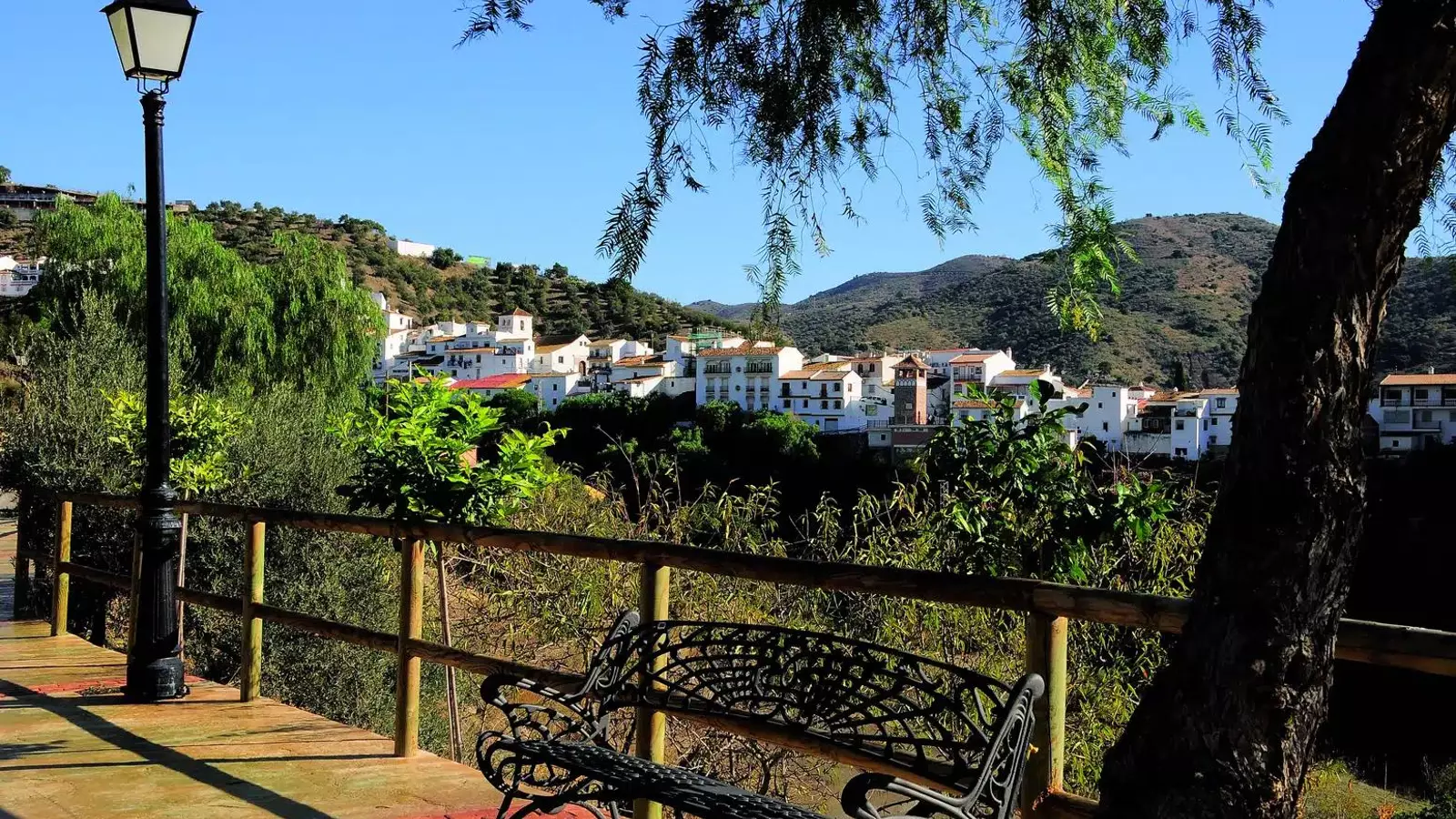

Located between the sea and the mountains, Totalán is one of those corners of the province of Málaga that, despite its small size, holds a historical and cultural wealth of enormous value. Positioned on the natural border between the Axarquía and the Montes de Málaga, this village of narrow streets and whitewashed houses preserves the essence of its Andalusian past, when the Arabs transformed it into a strategic enclave to watch over the coast of Málaga. Its historical remains, monuments, landscapes, and traditions make Totalán a key place to understand the Islamic and rural heritage of the region.
A millennia-old history among dolmens and battles
The human presence in Totalán dates back to prehistoric times. The Dolmen of Cerro de la Corona, popularly known as the “Moor's tomb,” is one of the oldest testimonies of settlement in this area. This megalithic structure, dated between the 4th and 3rd millennia BC, served as a collective burial site for at least a dozen people. Nearby, bone and ceramic remains were found that reflect the importance of the site as a necropolis.
Poster of the Dolmen of Cerro de la Corona, in Totalán. / malaga.esDuring the Arab domination, Totalán acquired a strategic function. In 1483, El Zagal, a Nasrid leader, managed to defeat part of the Christian army attempting to attack a nearby Muslim garrison. The sound of a violin from a tower served as the signal to launch the offensive. This episode, still present in the collective memory of the village, reinforces the defensive role that Totalán had as a watchtower overlooking the Mediterranean.
The origin of the name Totalán also seems to be linked to its Islamic past. Popular tradition holds that it comes from an Andalusian pastry that was made in this land. Although no material remains have been found to confirm this craft activity, ancient documents mention homesteads called Tortela, Tortila, or Tortalán, which suggests a possible connection to that production.
Monuments between faith, defense, and memory
Totalán preserves an interesting architectural heritage. The parish church of Santa Ana, built in the 16th century and renovated a century later, stands out for its two naves separated by semicircular arches and a wooden coffered ceiling that crowns the temple. Its Mudejar-style tower and the arch connecting the temple with adjacent houses reflect the fusion between the religious and the popular.
The parish church of Santa Ana / malaga.esBut it is the Torre de Salazar that directly connects with the Islamic legacy. Declared a Site of Cultural Interest, this 11th-century tower stands on a hill overlooking the sea, fulfilling its ancient function of surveillance. Not far from the urban center, in the area of Los Baltasares, is the dolmen that bears witness to the remote origin of the settlement.
Another emblematic point is the Torre del Violín-Mirador del Zagal. Recently constructed, it commemorates the Nasrid victory of 1483. This complex includes a square, a ceramic mosaic, and an exhibition space, merging historical memory with the function of a viewpoint.
Nature, hiking, festivities, and tradition
The natural environment of Totalán is shaped by steep slopes, ravines, and streams. From the village, two notable hiking trails start: one leads to the beach of Cala del Moral, crossing landscapes that open to the sea; the other, towards Moclinejo, runs between views that allow glimpsing the Natural Park of the Montes de Málaga. Its position between the coast and the mountains makes Totalán a transit point between two geographical worlds.
Totalán vigorously preserves its popular festivals. The fair in honor of the Virgin of the Rosary, celebrated on the last weekend of May, is the oldest and most attended. Added to this are the Cultural Week in October and the Fiesta de la Chanfaina in November, declared of Provincial Touristic Singularity. This event highlights the most characteristic dish of the municipality: chanfaina, a traditional stew of potatoes, bread, garlic, vinegar, and spices that once fed the day laborers. This recipe is complemented by other specialties such as maimones, fried pumpkin, ajoblanco, gazpacho, and gazpachuelo. All this is occasionally accompanied by artisanal wine produced in small quantities in the locality.

Latest news





Upcoming events
12
Nov
El Desembarco, la traición de Viriato at La Caja Blanca
12
Nov
HOMER El Mero Mero at Sala Trinchera Málaga
13
Nov
Marbella Startup Lab – Innovate & Collaborate
13
Nov
Candlelight: Coldplay & Imagine Dragons at Sala Fundación Unicaja María Cristina
13
Nov
Candlelight: Tribute to Ludovico Einaudi at Anantara Villa Padierna
Similar News

Málaga Airport Makes History with More Than Three Million Passengers in One Month
Málaga

Port of Málaga looks beyond its docks to support future growth
Málaga

Guide to the Virgen del Carmen Processions in Málaga and the Province
Málaga
