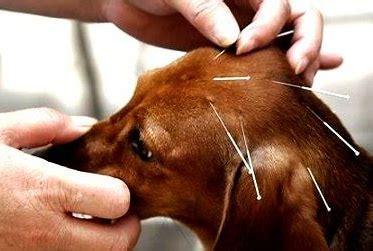
From cats and dogs to penguins and llamas, treating animals with acupuncture has become mainstream in veterinary medicine

A perentie lizard in Dallas, an African penguin in
Boston and an Oberhasli goat in Chicago are just a few recent examples of
animals at zoos and aquariums benefiting recently from acupuncture therapy. As
acupuncture has gained wide use in human medicine in the U.S., it also has
become increasingly common in veterinary practice, especially for pain
management.
The Conversation U.S. interviewed University of
Tennessee Assistant Professor of Veterinary Medicine Joe Smith, a specialist in
farm animal medicine and veterinary clinical pharmacology, about this trend. He
describes acupuncture’s current uses for treating many species, from household
dogs and cats to large animals like horses, cows and llamas:

Is veterinary acupuncture modeled on the traditional
Chinese version?
There are two schools of thought about veterinary
acupuncture. The original form of acupuncture, which has been practiced for
thousands of years, follows principles of traditional Chinese medicine. It
views the patient through a lens of five elements: wood, fire, earth, metal and
water.
Each element is associated with a different type of
energy. Practitioners work to maintain balance between those energies, which
they believe is essential for a healthy body to function.
Another approach focuses on anatomical effects on the
body. Practitioners place needles to achieve specific effects by stimulating
muscles or nerves.
Both versions of acupuncture can help veterinary
patients. They use very small, flexible needles, about two-tenths of a
millimeter wide – less than one-hundredth of an inch. The needles are placed at
various parts of the body to elicit specific responses from connective tissues,
muscles and nerves.
The needles can be used by themselves, or with low
levels of electrical current – a process called electroacupuncture. Both
approaches are effective, but research suggests that benefits from
electroacupunture last longer.
Veterinary acupuncturists can treat nearly any animal,
from a bear to a porcupine, a dog or a sea turtle.

What does research show about using acupuncture on
animals?
Acupuncture and electroacupuncture both increase the
body’s levels of compounds called endogenous opioids. These are pain-relieving
substances that the body produces naturally. They work similarly to
pharmaceutical opioids, such as fentanyl and morphine.
Acupuncture increases these compounds so dramatically
that the effect can be reversed with opioid antidotes, such as Narcan.
Studies in small animal medicine show that using
acupuncture can speed up healing from nerve injuries, such as spinal cord
damage from herniated disks. This is a condition in which material from the
disks in between the vertebra of the spinal cord is damaged, and puts pressure
on the spinal cord and other parts of the nervous system.
Herniated disks can be very painful for animals. A
2023 study found that when dogs with this condition were treated with
acupuncture, nearly 80% recovered, compared with 60% of animals whose cases
were managed conservatively without acupuncture. Acupuncture can also make
other techniques, such as epidural nerve blocks, more effective when both
methods are used together.
Many vets are using acupuncture creatively for other
purposes, such as increasing sick animals’ appetites, improving their digestion
and accelerating healing from injuries.
How does your veterinary medicine group use
acupuncture?
Our practice at the University of Tennessee has used
acupuncture most extensively to help rehabilitate animals recovering from
conditions like radial nerve paralysis and femoral nerve injury. We can use
acupuncture to stimulate muscles or to provide pain relief, either by itself or
combined with other therapies.
In our Farm Animal Hospital, we regularly use
acupuncture for recumbent or “down” animals. That’s a veterinary term for
animals that have been unable to stand for extended periods of time.
With acupuncture, and occasionally electroacupuncture,
we can stimulate muscles and nerves that aren’t functioning normally. This help
to prevent atrophy, or wasting and thinning of muscle mass.
For every day that a large animal is down, its muscles
atrophy and fluid builds up around injured limbs or joints. These effects can
prolong their recovery, or even make it less likely that they will recover.
By using acupuncture to stimulate atrophied muscles,
veterinarians can start to reverse this process. We have used acupuncture
extensively on large animals, including cattle, horses, llamas, alpacas, sheep,
goats, pigs and even camels.
One example is goats that have spinal cord injuries
caused by parasite migration – a condition called cerebrospinal nematodiasis,
or “meningeal worm.” Worm larvae that normally are parasites of white tail deer
infect goats through the animals’ digestive tracts, then migrate to the spinal
cord and nervous system. They get lost and die there, causing inflammation that
can do significant damage.
We use acupuncture and electroacupuncture to stimulate
the goats’ large and accessory spinal nerves and the muscles in the animals’
legs and backs. This gives the goats more muscle function when the inflammation
clears, and we believe it helps reduce their pain.
We’ve also had good results with acupuncture treatment
for llamas and alpacas, which are widely used in Tennessee’s Smokey Mountains
to carry tourists’ gear up- and downhill. As large animals like these age, they
can develop osteoarthritis, a degenerative joint disease that’s incredibly
painful and debilitating for them. Acupuncture and electroacupuncture can help
keep them moving.
Our equine services mainly use acupuncture for
rehabilitation, helping horses recover from injuries.
One advantage of acupuncture and electroacupuncture in
large animals is that they don’t have many adverse effects. Drugs can have side
effects such as nausea and diarrhea, and may cause potentially serious
complications. An acupuncture needle placed by a trained veterinarian has few
to no adverse effects when it’s done correctly.
A crow and an opossum at the Nashville Zoo receive
acupuncture treatment for mobility issues.
Can pet owners be confident if their vet recommends
acupuncture?
If there is a nerve or muscle involved, there is
probably a veterinary treatment option using acupuncture or electroacupuncture.
New studies regularly add to our understanding of the neurology and
biochemistry that underlie these therapies.
Although we’re still learning, if your vet recommends
acupuncture for an aging dog or cat – especially for chronic pain – you can be
confident that it’s not a fringe treatment. As long as the person treating your
pet is a licensed veterinarian, and is certified by a professional organization
like Curacore, Chi University or the American Academy of Veterinary
Acupuncture, acupuncture should make your pet more comfortable and improve its
quality of life.
What's been called a "high-altitude garbage
dump," Mount Everest or the Eiffel Tower? What calls for "truth,
justice, and a better tomorrow" – the Declaration of Independence or
Superman?
Fritz Holznagel here, quizmaster for The Conversation.
If you like news, quizzes, or just feeling smart, come join us each weekend for
our news quiz. You’ll tackle questions on the latest news and on The
Conversation’s in-depth reporting on the issues of our times. It’s fun and
challenging and a great way to show the world that, darn it, you really were
paying attention.

Disclosure statement
Joe Smith has attended attended Curacore Inc's Medical Acupuncture for Veterinarians course.

Latest news





Upcoming events
12
Nov
El Desembarco, la traición de Viriato at La Caja Blanca
12
Nov
HOMER El Mero Mero at Sala Trinchera Málaga
13
Nov
Marbella Startup Lab – Innovate & Collaborate
13
Nov
Candlelight: Coldplay & Imagine Dragons at Sala Fundación Unicaja María Cristina
13
Nov
Candlelight: Tribute to Ludovico Einaudi at Anantara Villa Padierna