Fake models for fast fashion? What AI clones mean for our jobs — and our identities
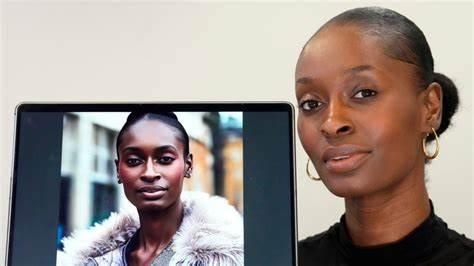
British fashion model Alexsandrah poses with an AI-generated image of her in London last year. The use of computer-generated supermodels has complicated implications for labour, diversity and ethics. (AP Photo/Kirsty Wigglesworth)

In the heart of New York City’s Times Square, there
are signs of an artificial intelligence (AI) revolution in marketing. In a
health supplement store, a popup by British tech startup, Hypervsn, showcases
life-size holograms. From behind the glass, a virtual humanoid avatar with
spunky pink hair waves to passersby.
Down the street, H&M — the Swedish fast-fashion
giant — offers a new kind of immersive shopping experience. The flagship store
showcases a room covered in mirrors equipped with virtual environments,
encouraging shoppers to make social media content while they try on
merchandise.
And last month, H&M made waves with its newest AI
venture: cloning 30 real-life models using “digital twin” technology.
These AI-generated replicas sparked global excitement
and debate. But as digital replicas of real people become more common,
especially in image-based industries like fashion, urgent ethical questions are
emerging. These include conversations about the future of work, compensation
and identity in the cultural economy.

Two twin-looking women touch heads
H&M AI models. One is real, one is an AI generated
model. H&M
Digital twins, explained
In New York’s bustling AI startup scene, where tech,
fashion and finance collide, the potential of digital twins is being met with
optimism.
Developers, investors and brands believe that by
cloning our human bodies and personalities, we can reach a future in which we
live in “double time.” That time would look something like us sinking back into
our couch for some rest while our identical avatars show up to work on our
behalf. But is it really that simple?
What does it mean for workers whose identities are
being cloned without clear guidelines on compensation, ownership and rights?
Digital twin production is a meticulous process that
begins with a person’s unique identity. This includes their voice, personality,
body and face, all things considered to be their intellectual property (IP).
When someone signs off to be cloned with a digital
twin startup, they agree to the use of generative AI replicating everything
about their physical body: personal identity, distinct features and skills.
The ethical questions
The emergence of digital twins has forced the
development of new ethical frameworks, still in flux. Industry leader Natalie
Monbiot, former co-founder of HourOne, has coined the term “Virtual Human
Economy” to describe this growing sector.
Companies like HourOne, Synthesia and Soul Machines
are competing to dominate this space. They offer digital twins for applications
that range from fashion modelling to corporate training videos and online
education.
The ethical challenges are significant, particularly
regarding ownership.

A woman faces a TV screen with two twin images of a
woman.
Content creator McKenzi Brooke stands in front of a
rendering of her AI twin by Hollo AI, in January 2024. The company can create
your digital twin in minutes which Brooke says will allow her to rest. (AP
Photo/John Locher)
The human half of the H&M digital twin models, for
example, will receive “fair compensation,” including continued payment for the
use of their digital replicas beyond initial creation. The company has said
models will retain some rights to how their likenesses are used, but industry
standards for such contracts remain inconsistent.
Most digital twin companies establish contracts where
the human “original” receives initial compensation for the creation process.
This typically involves extensive scanning, voice recording and movement
capture.
But such arrangements remain inconsistent across the
industry, and the long-term value proposition of these digital likenesses is
still unclear.
Some companies offer royalty structures, while others
purchase full rights upfront. This raises questions about the fair valuation of
a person’s digital likeness.
Traditional image rights contracts, borrowed from the
entertainment industry, don’t account for AI’s ability to generate novel
content using a person’s likeness. The industry is essentially creating its
ethical standards in real time, with some companies adopting more transparent
approaches than others.
‘Jackpot’ economy means those at the top take all
For workers in image-based industries, like models and
photographers, the rise of digital twins brings a fundamental shift in how
labour and compensation are structured. While modelling has always been
hyper-competitive, social media has dramatically intensified that and is now
playing a large role in how opportunities are allocated.
American labour scholar Andrew Ross pinpoints these
dynamics as a “jackpot economy,” where intellectual property becomes “the
glittering prize for the lucky few” while the majority face increased
precarity.
U.S. fashion scholar Minh-Ha Pham has also written
about how digital technologies amplify the winners-take-all economic structures
within the fashion and blogging industries. She describes concentrated
opportunities and rewards among an elite minority.
To add to this, New Zealand scholars Rachel Berryman
and Misha Kavka have demonstrated how the rise of “parasocial” relationships
has become increasingly central to career success in these fields. A parasocial
relationship describes the sense of intimate connection followers feel toward
influencers and celebrities.
In other words, those successful digital twins could
further concentrate power among models who already possess substantial
followings and cultural cachet. This cachet allows them to multiply their
earning potential while those with less visibility struggle to compete against
both humans and AI-generated alternatives.
Race, sexuality and gender
This concentration effect is particularly concerning
when considering how race, sexuality and gender representation manifests in
virtual spaces.
a close up of a virtual Black model with orange lips

Virtual influencer, Shudu.
Instagram
For nearly a decade, fully virtual fashion models like
Shudu have become increasingly popular. Shudu has more than 237,000 Instagram
followers and partnerships with brands like Balmain, Louis Vuitton and Furla.
Shudu and others have demonstrated how digital avatars often flatten and
commercialize identity. They present sanitized versions of racial and gender
diversity that serve brand interests rather than authentic representation.
While digital twins based on actual humans may provide
more authentic representation than fully synthetic avatars, they still risk
reinforcing existing inequalities in who receives visibility and compensation.
On the other hand, digital twinning could potentially
offer improvements over purely synthetic virtual models.
By maintaining a connection to real human subjects who
can negotiate their representation and compensation, digital twins might
provide a more equitable approach than computer-generated avatars created
entirely at a corporation’s discretion.
Behind the digital glamour are real-life issues
Our collective fascination with technology and the new
AI-driven digital twins may be distracting us from a more pressing (but also
old) issue. Let’s not forget to look at the economic structures that govern
work cultures, human creativity and labour norms.
The debate isn’t just about banning or regulating AI,
which enable phenomena such as digital twins; it’s also about how we ensure
fair compensation and equitable access to these new forms of labour.
The “jackpot economy” often benefits only a select
few, leaving the majority in precarious positions. As digital twins technology
continues to evolve, we must develop regulatory frameworks to ensure fair
compensation for workers in creative industries.
While we focus on the capabilities and potential of
AI, we also need to shift the conversation towards the economic systems and
power structures in which these technologies operate.

Disclosure statement
Jul Parke receives funding from the Department of Canadian Heritage and the Social Sciences and Humanities Council of Canada.
Partners

University of Toronto provides funding as a founding partner of The Conversation CA.

Latest news





Upcoming events
12
Nov
El Desembarco, la traición de Viriato at La Caja Blanca
12
Nov
HOMER El Mero Mero at Sala Trinchera Málaga
13
Nov
Marbella Startup Lab – Innovate & Collaborate
13
Nov
Candlelight: Coldplay & Imagine Dragons at Sala Fundación Unicaja María Cristina
13
Nov
Candlelight: Tribute to Ludovico Einaudi at Anantara Villa Padierna