A Linguistic Look at the Emojis from the 'Adolescence' Series
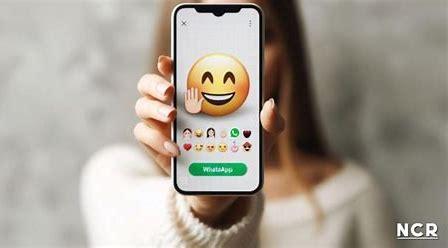

I see with horror that in the list of recently used
emojis on my mobile is a pink heart. I don't remember why I used it. I just
hope that the recipient does not interpret it as a sign of romantic interest,
as Adam, the son of the policeman investigating a murder, explains in the
second episode of Adolescence, the popular miniseries by Jack Thorne and
Stephen Graham.
In it, a teenager, influenced by the misogynistic
discourse of the machosphere (also called the ‘manosphere’), is arrested for
the murder of a classmate. Like the pink heart, Adam uncovers the hidden - and
even unthinkable - meaning of other emojis, all related to incel (involuntary
celibate) and misogynistic digital culture.

A man sits opposite a teenager looking at his mobile
phone in an empty classroom.
The teenager Adam has to explain to his father the
“code” of emojis so that he understands how teenagers talk. IMDB
For example, the number 100 💯 refers to the theory that 80% of women are attracted
to 20% of men and the dynamite 🧨 refers to the possibility of taking action against
women. The colours of the hearts also have specific meanings: in addition to
pink, red ❤️
indicates love, purple 💜 indicates sexual desire, and yellow 💛 means ‘I'm interested, aren't you’.
Many viewers were dumbfounded by these revelations,
which have been branded as tangible evidence of the generation gap, even as
warning signs of the hate speech spread on social media. As a linguist and
expert in the use of emojis, I would like to introduce some concepts that can
help us understand their use in these contexts.
What we say and what we mean
The first aspect to highlight is the difference
between denotation and connotation. The former refers to what we could indicate
as ‘literal meaning’. Connotation, on the other hand, is the figurative or even
subjective meaning that an element can have, depending on the context.
The word ‘donkey’, for example, can refer to the
animal or be used to describe an unintelligent person. The same goes for
emojis. Different coloured hearts are just that, different coloured hearts
(denotation), but their ‘real meaning’ can vary depending on the context.
In one study we showed that the purple heart 💜 is used as a sign of mobilisation in favour of
feminism around 8M. On the other hand, in 2019, in Argentina, the green 💚 and light blue 🩵 hearts were used in networks to show affiliation,
respectively, with the positions in favour or against the legalisation of
abortion in that country.
n Adolescence, it is explained that the bean emoji 🫘
is used to proclaim oneself a member of the incel collective, perhaps because
of its resemblance to another emoji, that of the pill 💊. The red pill, popularised by the film Matrix (1999),
symbolises the choice to face a hidden truth which, for involuntary celibates,
alludes to the acceptance of ‘the truth’ about the mechanisms of sexual
attraction.
Emojis as slang
The second concept that can help us understand some of
the uses of emojis is that of slang. One of the definitions of ‘jargon’ in the
dictionary of the Real Academia Española is that of ‘special language
originally used for cryptic purposes by certain groups [...]’. Jargon delimits
the ‘boundaries’ of the group and makes the content unintelligible to
outsiders. The same goes for emojis.
Again, the ordinary user interprets 🫘 as pinto
beans. Emojipedia itself, a web portal with up-to-date and comprehensive
information on emojis, says that the explosion emoji (💥,🧨 at Apple), like the fire emoji 🔥 or the 💯, are ‘commonly used to represent that something is
excellent or exciting’.
A standing boy looks down on a seated young woman who
holds his gaze.
The adults and teenagers in the series seem to speak
two different languages. FilmAffinity
As we have seen, in the series, Adam points out that
two of these emojis (🧨 and 💯) have a very different connotation in the
machosphere. Far from being a novelty of the digital age, these uses of emojis
are reminiscent of criminal slang or secret languages developed among members
of a group to purposely exclude the rest of society.
One example is polari, used among homosexuals in
England in the 1960s when they were considered criminals. Another is verlan (a
change of syllables in the expression à l'envers, ‘in reverse’), a speech that
originated in the suburbs of French cities in the middle of the last century.
How to understand a language that does not want to be
transparent?
In the wake of the cryptic use of emojis brought to
light by the trending series on Netflix, solutions have been proposed to
prevent teenagers from becoming radicalised like the film's protagonist: just
keep an eye on which emojis they use.
However, social problems do not have simple solutions.
TikTok's moderation systems have only had to ban the use of the incel tag for
members of that group to opt for other terms, such as sub5. Apple changed the
design of the gun emoji in 2016 from a revolver to a water pistol 🔫 to prevent it being used to threaten. As we can see,
it has done little good.
Emojis are an example of the enormous creativity we
display when it comes to communicating. If anything, Adolescence has made many
of us take them more seriously.

Cláusula de Divulgación
Agnese Sampietro recibe fondos de la Universitat Jaume I.
Nuestros socios


Latest news





Upcoming events
12
Nov
El Desembarco, la traición de Viriato at La Caja Blanca
12
Nov
HOMER El Mero Mero at Sala Trinchera Málaga
13
Nov
Marbella Startup Lab – Innovate & Collaborate
13
Nov
Candlelight: Coldplay & Imagine Dragons at Sala Fundación Unicaja María Cristina
13
Nov
Candlelight: Tribute to Ludovico Einaudi at Anantara Villa Padierna