


Oscar Wilde, the Prodigal Son of the New Ireland
Relegated to oblivion since his scandalous trial over a century ago, the battered memory of the writer is rescued on the 125th anniversary of his death / "He is the most quoted author in English after Shakespeare, but he is seldom read and not sufficiently valued in his country."
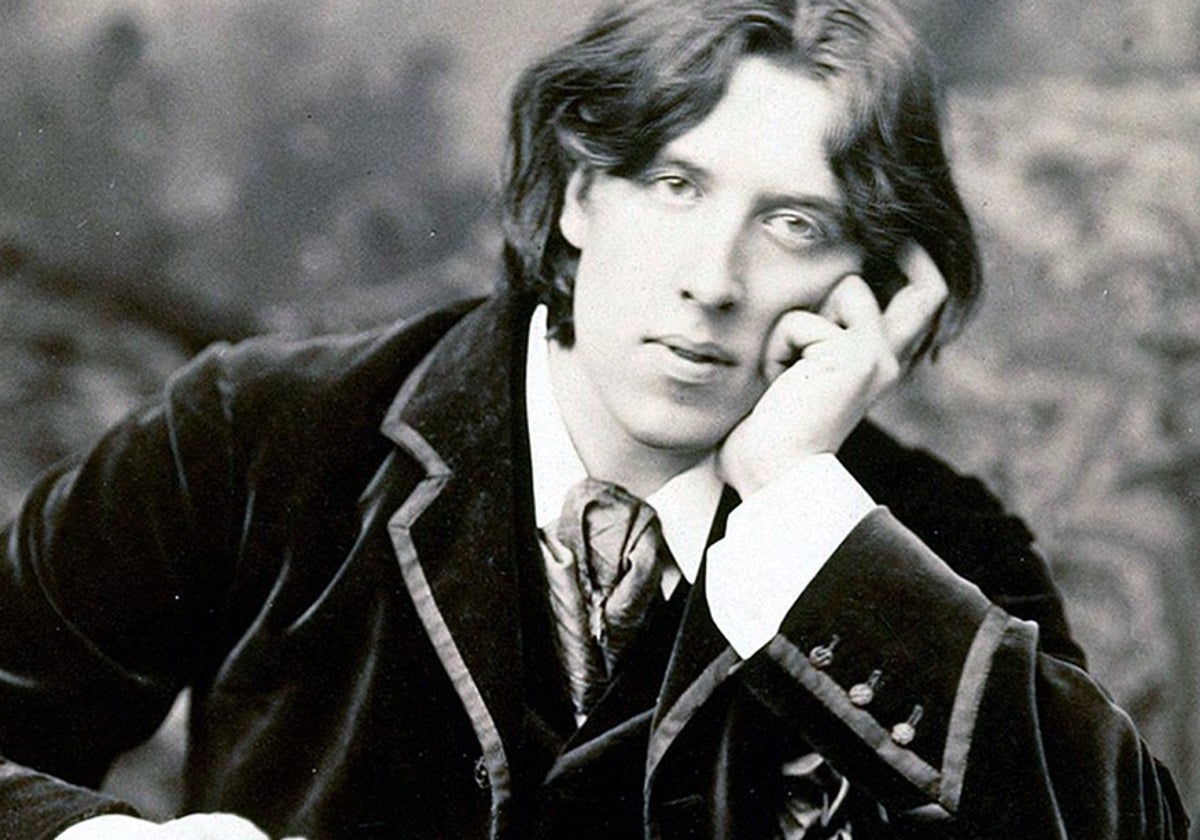

Oscar Wilde wanted nothing to do with his native Ireland. As Ireland ignored the brilliant and scandalous writer, he swapped Dublin for London to carve out a literary career and shed his 'Irish' accent in favor of the elegant 'British' one. On the 125th anniversary of his squalid death in Paris, alone and in poverty, a new, modern, thriving, technologically advanced, and youthful Ireland is reclaiming the memory and attention that one of the most distinguished figures in its literature deserves. The most quoted British author after Shakespeare, an early global literary star whose legacy was buried by the scandal of his trial for sodomy in an ultra-Catholic and uncompromising Ireland that is now history.
Today, it is the youngest country in the EU, with 21.6% of its population under 15 years old and only 11.9% older than 65 years. Since 2015, same-sex marriage has been legal in the new Ireland that claims Wilde. It does so with festivals, exhibitions, and events both in the Dublin of his childhood and youth and in Enniskillen, in Northern Ireland, where Wilde studied during his adolescence.
With four Nobel Prizes in Literature, Ireland is slow to be generous with its great writers. James Joyce left the island never to return after revolutionizing the novel with his 'Ulysses'. The same happened with Samuel Beckett, who transformed theater with his 'Godot', nor did Oscar Wilde return to stay, ashamed of his Irish accent and desperately wanting to be English.
"Wilde is not in the curriculum," laments Martin Burs, director of the Oscar Wilde House and curator of the Oscariana festival, which, through private initiative and with scant public subsidy, will celebrate its third edition in October. Committed to rescuing Wilde, he has designed a route starting from his birthplace, where a plaque commemorates the birth of Oscar Fingal O'Flahertie Wills Wilde on October 16, 1854. He was the second of three children of the otolaryngologist and surgeon William Wilde—who faced his own scandal accused of rape by the young Mary Travers—and of the poetess Jane Frances Agnes Elgee, better known as Speranza, a staunch Irish nationalist and crucial for Oscar.
There is no plaque, effigy, or hardly any trace of Wilde at the legendary Trinity College in Dublin, where the writer spent four years and where the passage of geniuses like Jonathan Swift—creator of Gulliver's Travels—or Bram Stoker—father of Dracula—is remembered and celebrated in the formidable library that houses the legendary Book of Kells. "For Wilde, being Irish meant belonging to an inferior category, something unforgivable for national pride," asserts Loic Wright, an expert in Irish literature in the halls of Trinity that also hosted Samuel Beckett and Sally Rooney.
There is another commemorative medallion at the Wilde family home, at number one Marlon Square, where the author spent his childhood. It faces Saint Stephen's Park, where a colorful 'pop' sculpture designed by artist Danny Osborne stands, depicting Wilde reclining on a rock, increasingly visited by Wilde enthusiasts. Wilde viewed the park from his window, which inspired 'The Selfish Giant'. His other Dublin sculpture is in front of Kennedy's pub, allowing tourists to sit on a bronze bench next to the playwright, poet, and narrator. "He had his first job as a stocker there when the pub was a store," Burs shares.
"To fully understand Wilde's life and work, go to London," says Flora Gusmao, a worker at the Museum of Literature Ireland (MoLI) whose star is Joyce, recovered after another long and profound oblivion. The museum, which treasures the first copy of the prince edition of 'Ulysses', dedicates just a small panel to the author of 'The Picture of Dorian Gray'. A gap that is remedied, in the heat of the anniversary, with the exhibition 'De Profundis', a video installation in which LGBTIQ activists read the poignant love letter written by Wilde from Reading prison to Alfred Douglas, his lover and torment.
Two hours north of Dublin, in County Fermanagh, Northern Ireland, is Enniskillen, where the young and brilliant Wilde studied at the elite Portora Royal School—then the Irish Eton—from ages 10 to 17. His name has been restored on the honor board of 1871, from which it was removed after his scandal for homosexuality.
"He is the second most quoted, famous, and known English author after Shakespeare, but he is little read and not sufficiently valued in Ireland," admits Seán Doran, director of the festival In our Dreams—from October 16 to 20—who dreams of making Enniskillen a Wildean enclave. He regrets that "his quotes are more famous than his books." "He was a celebrity. He spoke even better than he wrote, and he was treated like a rock star when in 1882 he toured the United States giving more than a hundred lectures in a bunch of cities," says Doran. The bucolic landscapes of Enniskillen inspired Wilde's 'The Happy Prince,' a seminal tale. "Everything he saw from his window at school is recognized in the story, including the monument to General Lowry Cole," says Elizabeth Armstrong, director of the now called Royal Grammar School, a co-ed public school with a thousand students. "I don't think Wilde is studied in depth outside of my school," says a young student at her door, surprised by the interest of a group of journalists in Wilde's legacy. "There's still a long way to go," Doran resigns.

Latest news





Upcoming events
12
Nov
El Desembarco, la traición de Viriato at La Caja Blanca
12
Nov
HOMER El Mero Mero at Sala Trinchera Málaga
13
Nov
Marbella Startup Lab – Innovate & Collaborate
13
Nov
Candlelight: Coldplay & Imagine Dragons at Sala Fundación Unicaja María Cristina
13
Nov
Candlelight: Tribute to Ludovico Einaudi at Anantara Villa Padierna
Similar News
The Cat Guardian: Nearly 14 Years of Rescues and 16,500 Neutered Cats
Málaga

María Barranco resurfaces after hitting rock bottom: "No one can sink me"
Málaga
Ana Duato: "Merche taught me to be a woman, a person, and an actress"
Málaga
