


Artisans of Malaga: Guardians of Time
Four individuals from Málaga have been honored by the Andalusian Regional Government for preserving ancient trades, which are today threatened by fast consumption and low-cost products.


They look to the future without losing sight of the past. It is their guide, their reference, their source of inspiration and knowledge. They return to it when the overwhelming technological present, of fast consumption and low-cost products, threatens their essence. They use their hands, unhurriedly and with patience, to shape unique pieces or to create others with centuries of history with a contemporary varnish; there is no clock or time to mark the working hours. In their workshops, there are no quantities; only unique units. They earn their living with an innate talent only honed by the wisdom that others passed on to them. They are the craftsmen of the 21st century, guardians of tradition and heirs to professions not always well valued either economically or socially.
Four of them, from Malaga, have been recognized by the Junta de Andalucía with the Master's Charter, which professionally accredits them after having practiced their craft for at least 15 years. José Bienvenido Angulo, Joaquín Salcedo Canca, Alicia Teresa Guerrero Núñez, and Jonatan Díaz Navarro are the ones distinguished this April, coinciding with the European Days of Craftsmanship. "We are aware of how hard it is to make a living from craftsmanship, but the value of the works you create is priceless, because a craftsman's product is the result of passion, love, and vocation," emphasized the provincial delegate of Employment of the Junta, Carmen Sánchez, during the event.
Currently, the Registry of Craftsmen of Malaga has 149 professionals, 13 companies, and one association. Additionally, the town of Mijas, with ten fully operational workshops, has been declared an Area of Artisanal Interest.
The sector, which received just over two million euros in subsidies in 2024 in Malaga, strives to carve out a niche in the economy of the province, aware of its capacity to generate value, whether through the creation of employment, its potential to retain the population so that they do not have to seek opportunities elsewhere, and its appeal to attract tourism.
The four awarded professionals talk to SUR about their life as craftsmen, their dedication, and the difficulties of surviving in professions that seem from another era.
Their talent comes from afar. José Angulo (Tetuan, 1963) was in high school when a teacher, astonished by the neatness and perfection of the technical drawing figure he presented, expressed his admiration: "I can't give you an 11; otherwise, I would." He channeled that skill by training in Design and Decoration at the San Telmo School of Art, although he realized that his true passion was modeling clay and, over time, painting on tiles. Working independently from a small workshop in his house, he made himself known. He used to sell online, but the space became too small not only to display his work but also to teach classes and pass on all that knowledge. Now, he shares a workshop in Mijas Pueblo with five other artisans, and there is no shortage of orders for shapes and sizes, though always faithful to the majolica technique, which involves using a white enamel as a tile coating before painting the mineral oxide pigments.
In his 40 years of profession, there have been "ups and downs," but he assures that he has never lacked work. City councils, hotels, companies, brotherhoods, community associations, and also individuals have turned to his creations to add personality to their signage or murals. Among the largest he has made (9 meters long by 1.20 meters high) is one commissioned by a canning company to preside over the facade of the headquarters with the name and corporate blue color. "The price of my works? Well, it depends on the motifs and complexity, though the square meter is between 1,300 and 2,000 euros," explains Angulo, who does not hide the damage that low-cost products from the Chinese market have caused to a craft that was well valued both in Spain and Europe: "It's cheap junk without quality," he scorns. Therefore, he calls on institutions to care for the sector and to equalize the VAT on crafts (21%) to that of artists (10%).
He was a child when he would borrow his mother's "pedal" machine to shape fabrics. The 'madelman' he played with was the first to wear his designs. "But with Holy Week in Malaga, I discovered art," he recalls. Captivated by it, by the beauty of the embroidery of skirts, cloaks, and canopies, but still without the necessary training to create those unique pieces, Joaquín Salcedo (Malaga, 1971) started at 14 years old giving his first stitches and learning from the craft in a professional workshop. A lively, tireless, and perfectionist apprentice, he would soon discover another world in books, other techniques used in Sevillian workshops that inspired him and increased his curiosity for this art. He investigated and learned on his own until he emulated the greats. "I took photos of the embroideries and then, aided by a magnifying glass, dissected each stitch of the piece to try to reproduce them as best as possible." That workshop in Malaga was the starting point for a young self-taught man, today a consecrated professional established in Seville. Among his many recognitions is the Gold Shield of the Brotherhood of the Captive of Malaga (1991) and of the Brotherhood of Mercy of Malaga (2005). Nazarene of the Year Award for his professional career and the completion of the embroidery of the canopy of the Virgin of the Crowned Trinity of the Brotherhood of the Captive of Malaga in 2019 (made in silk and inspired by a work by Murillo) awarded by popular vote. He also made the skirt for the coronation of the Virgin of the Solitude of Mena, "perhaps the one that had the most impact." Now he adds the title of Master Craftsman, which Salcedo appreciates: "It helps people recognize you; I wish being a master of something was more valued."
He assures that behind these recognitions there is love for the craft and a lot of sacrifice, attitudes that he now does not find in new apprentices: "Learning this takes a long time and they can't stand it; they quickly complain if you correct them twice in a row," says Salcedo, who also regrets how respect and the principle of authority have been lost. And not only among those who learn; also among those who buy. "Before, what the professional said was respected, but now, as people look for the cheap, everyone knows everything and has an opinion; the knowledge and dedication behind it are not valued." And he gives an example: the hand embroidery of a dress for a virgin can take a year of work.
A call from SUR interrupts her particular "fight" with AI. Alicia Guerrero (Malaga, 1968) has been dedicated to artistic ceramics for more than three decades, but tries to keep up to date. "Customers come with a design made with Artificial Intelligence and I have to know how to do it," says this craftswoman, also recognized by the Junta de Andalucía. She studied industrial pattern making, because her initial vocation was fashion, but "by chance of life," one day she came across a tile painted with a drawing of The Simpsons. "I loved it." And what started as a hobby would eventually become her profession. She applied the designs she made on the computer to the tiles using the dry cord technique, which consists of drawing lines with a greasy element to separate the different colors of the enamels. The greasy stroke acts as a barrier and prevents them from mixing during firing.
From a premises her father left her in 1997, she forged her career: "I took photos of all the designs and visited shops, decorators, schools... until thanks to a project by Promálaga I had my own website and started receiving orders," she explains. One of the most outstanding was the one commissioned by an Arab sheikh for a 17-meter pool. "The design, a seabed with fish and corals, had to be done in pieces and assembled one by one." A challenge, like the stairs of the Cantón Passage in Mijas, a composition of flowers in which she used focused perspective.
To her workshop on Zamarrilla Street, where she has been working since 1997, clients come who seek to stand out. "People still like having something unique, different, that adds personality and stands out from the crowd. Precisely, that is what differentiates us from the rest of the stores that all sell the same thing," says this craftswoman, who values her work and laments that many are "outraged" at the price of a unique piece. "I don't know any craftsman who has a Porsche at the door; we work to live from this craft that we love."
His childhood fascination with colored light passing through stained glass led him to research and study medieval treatises that spoke of techniques and designs. So great was his passion that at 18 he was able to open his own workshop, which to this day he maintains under the name of Vitromar in Plaza Daniel Casares in Estepona. He assures that although the techniques used today are practically the same as in the past, the designs have evolved. "In the 90s, in the midst of the construction boom, little original work was done and I fled from that; I sold less, but over time that has forged my identity," he emphasizes. Of the 15 workshops that existed years ago in Malaga, only three remain. "The demand is like a roller coaster," describes this master of glass, who is currently working on a 100-square-meter stained glass window in the Palacio de la Tinta, in full restoration.
Díaz would like to train others so that the trade does not get lost. "Those who try it, like it; it's addictive and I think there can be a replacement." However, he regrets that, deep down, the profession does not like to transmit ideas "because we fear they will be competition and in the end we take them to the grave."
Without losing the good work of decades past, Díaz shuns the "usual" flowers and diamonds; "we must innovate," he defends. His effort to perpetuate the art of stained glass in construction has been fundamental to being part of the National Network of Masters of Traditional Construction, also a member of the most important community of craftsmen in Europe, Homo Faber Guide of the Michelangelo Foundation. He is also a member of the INTBAU network (International Network for Traditional Building, Architecture, and Urbanism) and ARCOVE, the Association for the Restoration and Conservation of Stained Glass in Spain. Now he adds the title of Master Craftsman: "It doesn't make me better than last week, but it is a seal of quality that endorses my work."

Latest news





Upcoming events
12
Nov
El Desembarco, la traición de Viriato at La Caja Blanca
12
Nov
HOMER El Mero Mero at Sala Trinchera Málaga
13
Nov
Marbella Startup Lab – Innovate & Collaborate
13
Nov
Candlelight: Coldplay & Imagine Dragons at Sala Fundación Unicaja María Cristina
13
Nov
Candlelight: Tribute to Ludovico Einaudi at Anantara Villa Padierna
Similar News

A survival camp in Mijas teaches children how to make fire and build shelters
Mijas

Sarao Nights Returns to La Zambra Resort with a Launch Party Headlined by Daisy Dee
Mijas
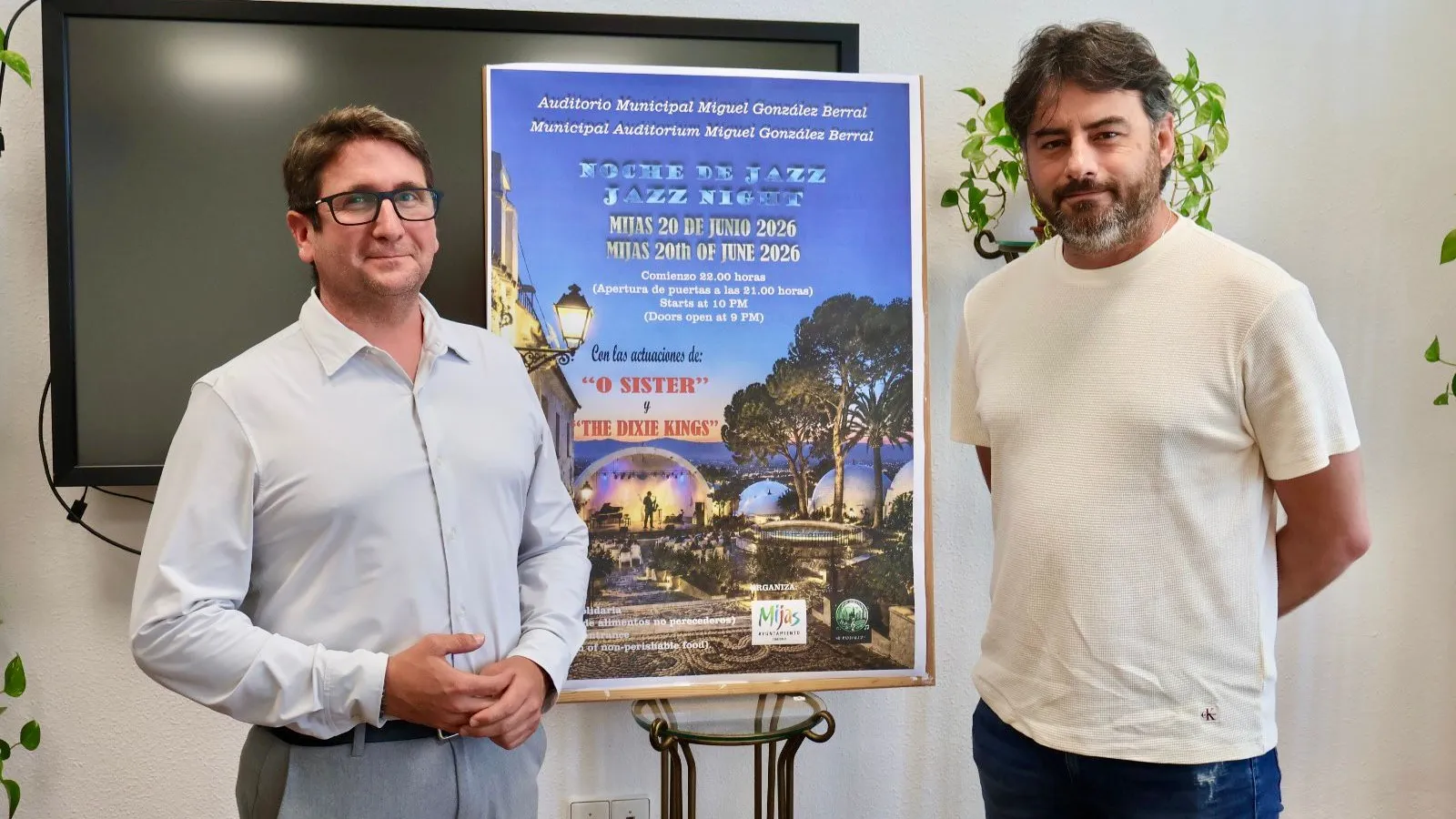
Mijas will celebrate a jazz night to benefit the Food Bank
Mijas
