


Malaga’s November 11 strike draws a huge housing protest but causes limited disruption
Around 12,000 people marched through central Malaga in heavy rain to demand affordable housing, better pay and stronger public services. Most sectors operated normally, although trade unions, public authorities and business organisations reported sharply different participation figures.
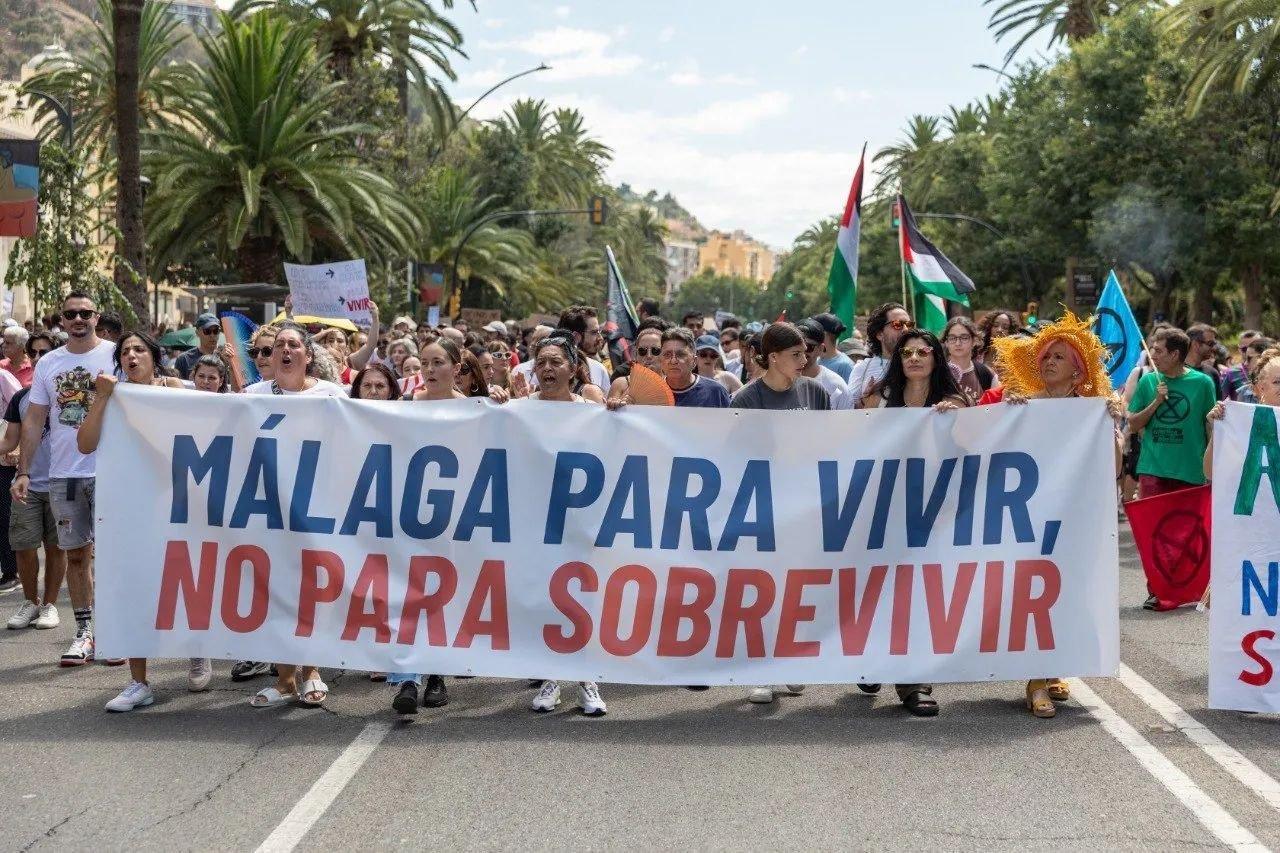

The November 11 general strike produced two very different images in Malaga. Employment activity and essential public services continued largely as normal, while thousands of people faced heavy rain and strong winds to join one of the province’s largest recent protests over housing.
Police estimated that approximately 12,000 people attended the main evening demonstration. Trade unions placed the figure at more than 50,000. Around 2,000 people also took part in an earlier mobilisation.
Affordable housing was the central demand, although protesters also called for higher wages, improved public services and measures to address the rising cost of living.
Thousands of umbrellas fill central Malaga
The main march began shortly after 6pm in Plaza del General Torrijos, next to the Fuente de las Tres Gracias.
Housing and anti-precarity groups led the demonstration along Paseo del Parque. Trade unions, education groups and other social organisations followed behind them.
Heavy rain and powerful wind gusts associated with the storm forced organisers to shorten the planned route. The march ended outside El Corte Inglés, where the organisers read their manifesto, instead of continuing to the Puente de las Américas.
Protesters repeatedly called for a Malaga where people could live rather than merely survive. Other slogans criticised the conversion of homes into short-term tourist accommodation and highlighted the pressure of housing costs on local salaries.
The evening demonstration concluded without serious incidents.
Housing dominates the protest
The mobilisation placed Malaga’s housing crisis at the centre of the debate. Participants argued that rental and purchase prices have risen much faster than wages, particularly in Malaga city and the Costa del Sol’s main tourist destinations.
Young people, families and workers called for stronger measures to ensure that residents can remain in their communities without spending most of their income on accommodation.
The demonstrators also demanded better salaries, stronger public healthcare and education services and action against insecure employment.
Trade unions and social organisations supporting the strike included CCOO, UGT, CGT, tenants’ groups and local platforms campaigning for the right to housing.
Public services operate largely as normal
According to data released by public administrations and business organisations, the strike had a limited impact on employment and public services.
Malaga Metro operated 100% of its normal service, while metropolitan buses ran at more than 98% during much of the day.
Hospitals, health centres, schools and secondary schools opened without significant disruption. Official figures placed participation below 4% in healthcare and at similarly low levels in education.
Road transport operated well above the established 60% minimum service. Most shops, hotels, bars and restaurants also remained open.
Malaga City Council reports 5.31% participation
Malaga City Council reported that 5.31% of staff employed by the authority, its autonomous agencies and municipal companies joined the strike.
A total of 428 employees participated out of a combined workforce of 8,048. Excluding Local Police officers, who are not legally permitted to strike, the percentage rose to 5.98%.
Participation varied between organisations. The public agency managing the Picasso Birthplace Museum and other cultural venues recorded 23.25%, while the Urban Planning Department reported 12.29%.
Across municipal companies, average participation stood at 4.56%. The figure was 0.63% at the EMT bus company, 12.23% during Emasa’s morning shift and 4.9% at the municipal cleaning company Limasam.
Unions and authorities report conflicting figures
CCOO and UGT estimated overall participation in Malaga at more than 60%. The unions claimed that support was particularly strong in hospitality and education.
They also criticised the minimum-service requirements imposed on transport and other essential sectors, arguing that they prevented many workers from exercising their right to strike.
Their figures contrasted sharply with those published by the Junta de Andalucía, Malaga City Council and the Confederation of Malaga Businesses, which described the strike’s employment impact as limited.
The business confederation reported that electricity consumption had fallen by 6.5% compared with the previous Wednesday but by only 0.9% compared with the day immediately before the strike. It argued that the data did not indicate a significant shutdown of economic activity.
Pickets and overnight tensions
The strike began with information pickets in Malaga’s historic centre, Mercamálaga, EMT facilities and other workplaces.
Some businesses temporarily closed during the overnight mobilisation, while moments of tension occurred between protesters, workers and police officers.
The Spanish Interior Ministry reported four arrests in Malaga connected with incidents during the strike. The alleged offences included setting fire to rubbish containers and spraying graffiti.
Trade unions accused police of using disproportionate force during some pickets. The authorities said intervention had been necessary to preserve safety and prevent blockades or damage.
Limited disruption but a large social mobilisation
The strike did not bring Malaga or the Costa del Sol’s economy to a halt and caused little disruption to essential services. However, the size of the demonstration highlighted the mobilisation generated by the housing crisis.
Thousands of people took part despite severe weather warnings and persistent rain, making affordable housing the defining issue of the day.
The November 11 strike therefore ended with disputed participation figures, services operating close to normal and a major public protest over housing, wages and the cost of living.

Latest news



Similar News

Storm Charles moves away from Málaga: rain in Ronda, rough seas in the Axarquía and temperatures reaching 24°C
Provincia de Málaga

Storm Charles puts Málaga under orange weather warnings: up to 100mm of rain and 90 km/h winds expected on Wednesday
Provincia de Málaga

Renfe strike in Malaga: three days of disruption to local, regional and high-speed trains
Provincia de Málaga
