


Málaga builds five times more homes than a decade ago, but less than 3% are affordable housing
More than 52,600 private-market homes have been completed across the province since 2016, compared with just 1,562 officially protected properties. Residential construction has surged, but access to affordable housing remains one of Málaga's biggest challenges
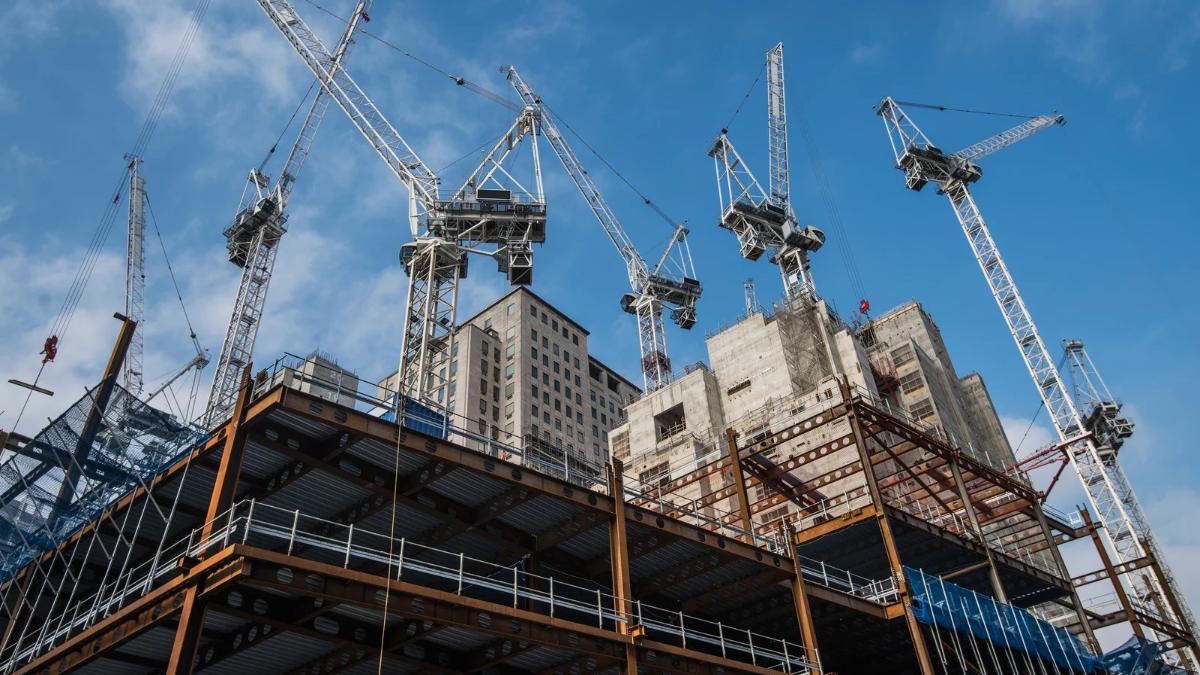

Málaga's property market has undergone a dramatic transformation over the past decade. New housing construction has multiplied, apartment blocks have become increasingly dominant, and private residential developments continue to expand. However, this growth has barely translated into an increase in officially protected housing (VPO).
Figures from the Official College of Architects of Málaga reveal that between 2016 and the third quarter of 2026, 52,628 private-market homes were completed across the province, compared with just 1,562 officially protected properties.
The difference means that approximately 34 private-market homes have been completed for every affordable home added to the housing stock.
In percentage terms, protected homes account for just 2.9% of the 54,190 properties completed during this period, a remarkably small proportion given the difficulties many Málaga residents face when trying to access housing.
The figures are particularly striking because they do not reflect a general slowdown in construction. On the contrary, residential building activity is considerably higher than it was ten years ago.
The challenge, according to the statistics and concerns raised by industry professionals, lies in the widening gap between private-market developments and properties intended for buyers with limited incomes.
From 1,235 homes in 2016 to more than 6,800 in 2025
The recovery of Málaga's residential construction sector becomes clear when comparing figures from the beginning and end of the past decade.
In 2016, a total of 1,235 homes were completed across the province. Of these, 1,218 were private-market properties and only 17 were officially protected homes.
Nine years later, the situation looked completely different.
During 2025, 6,836 homes were completed, more than five times the number recorded in 2016.
However, the distribution between the two housing categories remained heavily unbalanced: 6,694 private-market properties compared with just 142 protected homes.
This means approximately 98% of the homes completed in 2025 were intended for the open property market.
Málaga has therefore demonstrated that it can substantially increase residential construction activity, but this expansion has not produced a comparable rise in affordable housing developments.
Private-market construction has also experienced significant fluctuations.
In 2021, a total of 7,552 homes were completed across both categories, one of the highest annual figures during the period analysed.
Construction then declined to 4,103 properties in 2022 before recovering in subsequent years.
In 2024, 6,853 homes were completed, almost identical to the 6,836 recorded in 2025.
These figures demonstrate a much more active construction market than at the beginning of the decade, although one overwhelmingly focused on private-market housing.
Just 519 affordable homes completed between 2021 and 2025
The imbalance becomes even clearer when examining the most recent five complete years.
Between 2021 and 2025, Málaga recorded 29,679 completed private-market homes and only 519 officially protected properties.
This represents approximately 57 private-market homes for every affordable home, an even greater disparity than that recorded across the whole decade.
Annual protected housing figures also reveal a lack of consistency in construction and delivery.
In 2021, 220 protected homes were completed, while the number fell to 116 in 2022.
The decline became particularly severe over the following two years.
In 2023, only 15 officially protected homes were completed across the entire province, compared with 4,839 private-market properties.
The situation improved only marginally in 2024, when 26 protected homes were completed alongside 6,827 private-market properties.
In 2025, the number of protected homes increased to 142, but this recovery was insufficient to substantially change the overall imbalance.
Taken together, the figures reveal an inconsistent supply of affordable housing, with individual developments occasionally adding new properties but long periods in which very few protected homes are completed.
Apartment blocks dominate Málaga's growing housing construction market
The past decade has changed not only the number of homes being built but also the types of properties being developed.
Figures from the College of Architects show a substantial increase in multi-family residential housing, meaning apartments located within residential buildings.
In 2016, 711 private-market apartments were completed, compared with 507 detached or single-family homes.
By 2025, the number of completed private-market apartments had increased to 5,607, while single-family homes accounted for 1,087 properties.
This means apartment construction increased almost eightfold in less than ten years.
Multi-family properties went from representing approximately 58% of completed private-market homes in 2016 to accounting for around 84% in 2025.
The change reflects a growing emphasis on apartment developments, particularly in municipalities where housing demand and available land favour projects containing multiple residential units.
However, an increase in apartment construction does not necessarily mean that properties have become more affordable.
Multi-family developments can be marketed across very different price segments, ranging from conventional residential projects to higher-value housing.
As a result, the growing number of completed apartments does not automatically indicate a comparable improvement in housing access for lower-income households.
Housing construction remains strong in Málaga during 2026
Figures for the first nine months of 2026 confirm that residential construction activity remains high.
Between January and September, 5,403 private-market homes were completed, equivalent to more than 80% of the total recorded during the whole of 2025.
Of these, 4,284 were apartments in multi-family developments and 1,119 were single-family properties.
Construction activity remained relatively stable across the first three quarters.
Between January and March, 1,815 private-market homes were completed, followed by 1,871 between April and June.
A further 1,717 properties were completed during the third quarter, covering July, August and September.
These figures suggest that private residential construction continues at a significant pace, although they do not allow the full-year total for 2026 to be predicted with certainty.
Protected housing rebounds in one quarter before disappearing in the next
The pattern for officially protected housing has been very different.
During the first quarter of 2026, no protected homes were recorded as completed anywhere in Málaga province.
In the second quarter, however, 565 protected properties were completed, including 503 apartments and 62 single-family homes.
This concentrated increase significantly improved the decade's cumulative figures.
Nevertheless, not a single protected home was completed between July and September, despite 1,717 private-market properties being finished during the same period.
The contrast highlights the irregular nature of protected housing developments, where statistics can depend heavily on the completion of individual projects.
A single development containing several hundred homes can considerably increase quarterly figures without necessarily indicating sustained construction activity throughout the year.
Why are developers building so few affordable homes?
One of the main questions raised by this trend is why protected housing remains such a small part of a property market experiencing substantial construction activity.
Representatives of the development industry point to several economic and administrative factors.
The first is the rising cost of construction.
In recent years, the price of building materials, construction expenses and employment costs have increased the investment required to develop residential projects.
These pressures are compounded by difficulties recruiting certain skilled workers within the construction industry.
Protected housing developments have one significant difference from private-market properties: their selling prices are subject to limits established by public authorities.
This means developers cannot simply pass every increase in construction costs on to buyers through higher sale prices.
When the cost of developing a project approaches the maximum revenue legally permitted, the expected profitability can fall considerably.
This can discourage private investment in protected housing, particularly when conventional developments offer greater freedom to set selling prices.
Planning delays also make new housing developments more difficult
Rising construction costs are not the only obstacle identified by the industry.
The availability of suitable land and the time required to obtain planning permission also influence whether residential developments are financially viable.
Before construction can begin, projects may need to pass through several stages involving urban planning, land development, building permits and administrative authorisation.
When these processes take longer than expected, financing costs and uncertainty for developers increase.
In protected housing developments, where profit margins may already be limited, such delays can have a particularly significant impact.
The Official College of Architects of Málaga has repeatedly emphasised the need to streamline planning procedures, improve coordination between public authorities and encourage a greater supply of affordable housing.
It has also supported the renovation and refurbishment of existing housing stock as an additional way to increase accommodation options.
Addressing the imbalance between private-market and protected housing therefore requires a combination of economic, planning and administrative measures rather than a single solution.
More approved affordable housing projects do not mean homes are immediately available
An important distinction when interpreting construction statistics is the difference between homes that are planned, approved, started and completed.
An architectural project receiving its professional certification or approval represents an early stage of development. It does not mean that the property has been built or is ready for occupation.
This distinction is particularly relevant at a time when different public authorities are announcing new protected housing projects.
During the third quarter of 2026, the College of Architects recorded 548 newly certified protected homes across Málaga province.
Of these, 499 corresponded to projects in Málaga city, while another 49 formed part of a development in Algarrobo.
However, no protected homes were completed during the same three-month period.
The contrast demonstrates that bringing new housing onto the market requires a process that can take several years.
Announcements of future developments must therefore be distinguished from properties that have actually been completed.
How does the shortage of affordable housing affect Málaga residents?
The limited construction of protected housing particularly affects people who cannot afford property prices on the open market.
Those potentially most affected include young adults hoping to become independent, households with low or moderate incomes, and families needing to move to a different home.
A shortage of properties available at regulated prices can force these households to remain in their existing accommodation for longer or turn to the rental market.
When the supply of affordable homes is insufficient, competition for available properties may also increase.
However, statistics on completed housing alone cannot establish how much rents have risen or explain every factor influencing the residential property market.
Housing affordability also depends on wages, purchase prices, access to mortgages, population changes and the characteristics of local demand.
Nevertheless, the figures clearly show that the growth in residential construction has not been accompanied by a substantial increase in publicly protected homes.
Málaga's challenge: building more homes that residents can afford
The past decade's figures raise an important question about the future of Málaga's property market.
The province has gone from recording just over 1,200 completed homes in 2016 to more than 6,800 in 2025, demonstrating a substantial expansion in residential construction.
Yet protected housing continues to account for only a small fraction of total activity.
Public-private partnerships, the release of municipal land for development, adjustments to maximum selling prices for certain protected housing categories, and simpler planning procedures are among the measures being introduced or considered to encourage new projects.
Their effectiveness will ultimately depend on whether proposed developments become completed homes with prices and eligibility conditions appropriate for the households they are intended to serve.
It will also be important to monitor whether the increase in protected housing projects recorded during 2026 leads to a more consistent supply of completed properties over the coming years.
Málaga is building far more homes today than it did a decade ago, but the overwhelming majority remain destined for the open market. With 52,628 private-market homes completed compared with 1,562 protected properties between 2016 and September 2026, the figures suggest that one of the province's biggest challenges is no longer simply increasing construction, but ensuring that more new homes are affordable for the people who live there.

Latest news



Similar News
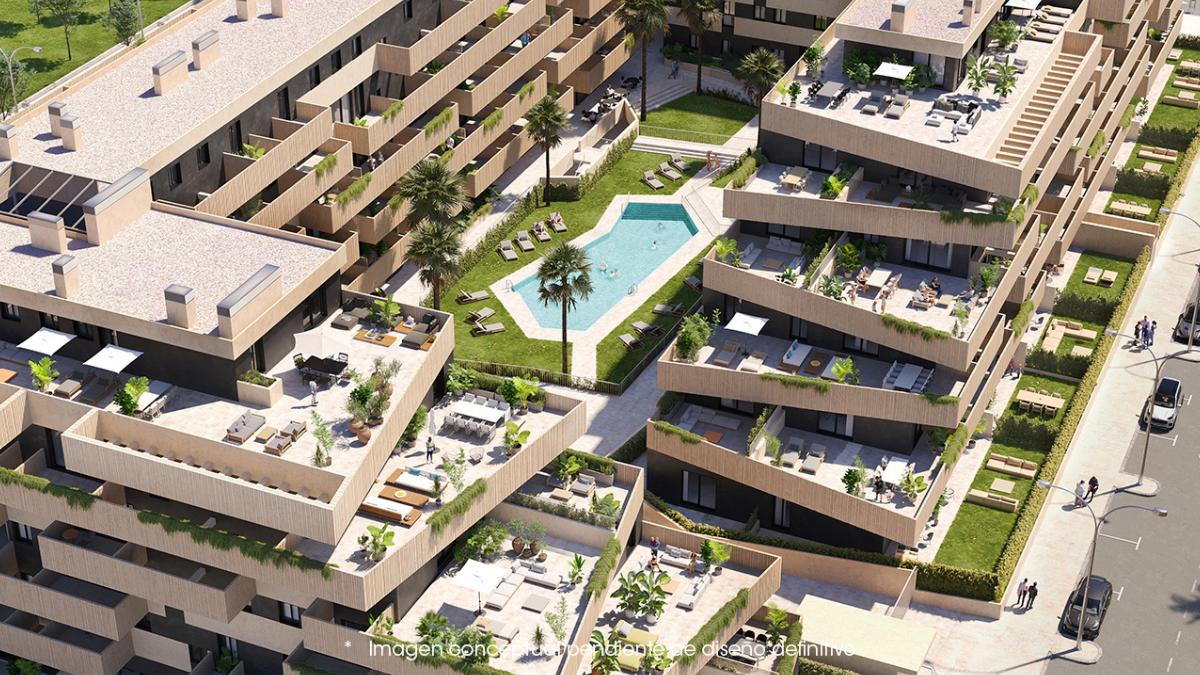
Málaga to get 429 new homes near Teatinos: inside Neinor Homes' Creative Homes Bulevar development
Málaga
Buying a home in Málaga now requires more income than the average household can afford
Málaga

Málaga approves three-year moratorium on new hotels and tourist apartments in residential areas
Málaga
