


Málaga launches a competition to find the dish that best represents its cuisine: food trail from November 12 to 29
Málaga Provincial Council is launching El Plato de Málaga, a gastronomic initiative bringing together restaurants and local producers to select a dish that represents the province. Visitors will be able to taste the creations and vote for their favourites
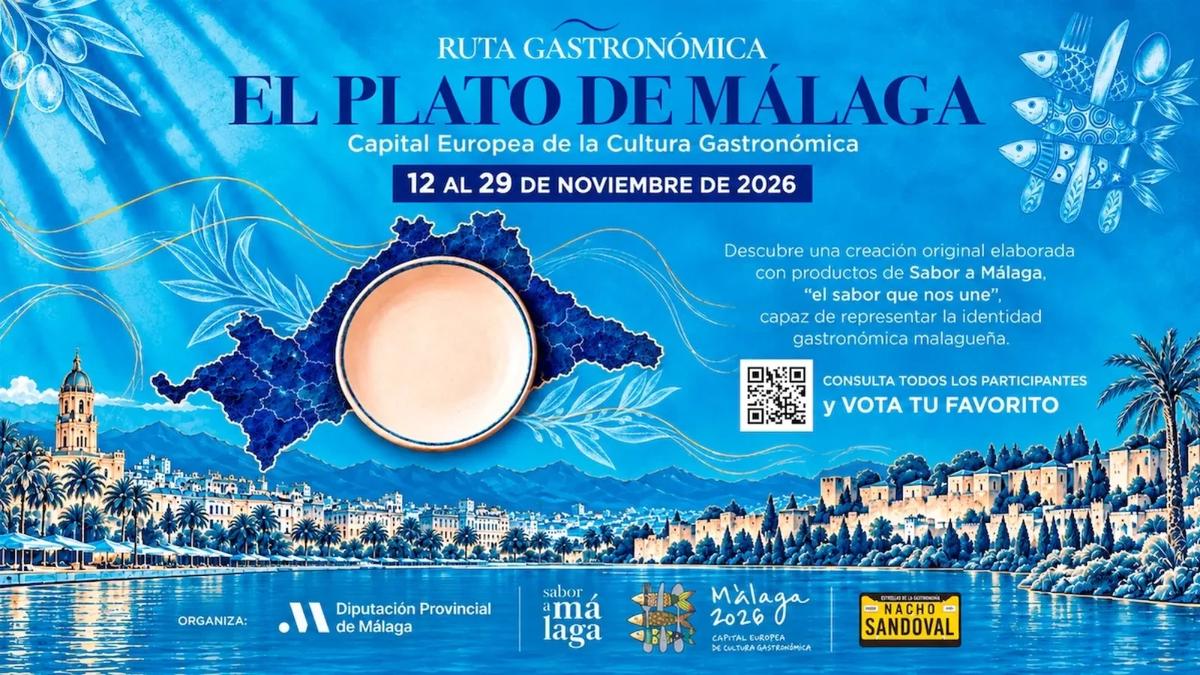

Can the culinary identity of an entire province be captured in a single dish? That is the challenge behind El Plato de Málaga 2026, a new gastronomic initiative inviting restaurants across Málaga province to create original recipes using local ingredients while recognising the people and businesses responsible for producing them.
Promoted by Málaga Provincial Council through its Sabor a Málaga brand, the initiative will include a food trail running from November 12 to 29, 2026, during which participating establishments will serve their creations to the public.
The project combines a professional cooking competition with a gastronomic experience open to residents and visitors. Its defining feature is that the judging will go beyond the finished recipe: participants must explain where their ingredients come from, who produces them and how they help represent Málaga's culinary identity.
The competition will culminate in a final scheduled for November 23, when a professional jury will select the winning dish from ten finalists.
A gastronomic trail to discover the flavours of Málaga
El Plato de Málaga aims to turn the province's culinary diversity into an experience that people can enjoy directly in its restaurants and bars.
For more than two weeks, participating establishments will add a specially created dish to their menus, designed to reflect the flavours of the region.
The food trail begins on Thursday, November 12, and finishes on Sunday, November 29, giving customers the opportunity to discover different recipes and learn about the ingredients used in each one.
The route may include restaurants in Málaga city and other municipalities, from coastal towns to inland villages.
This variety will showcase different interpretations of Málaga's cuisine, combining Mediterranean ingredients, agricultural produce, traditional recipes and contemporary cooking techniques.
Unlike competitions aimed exclusively at industry professionals, the initiative encourages customers to become involved by visiting participating restaurants and trying their dishes.
Restaurants must identify the local producers behind their ingredients
One of the most distinctive aspects of El Plato de Málaga is the importance placed on the origin of its ingredients.
Participating restaurants cannot simply submit an appealing recipe. They must also identify the Sabor a Málaga products they use, name the people or businesses that produce them and explain why their creation represents the province.
The competition therefore seeks to highlight the work of farmers, livestock producers, fishermen, cheesemakers, olive oil producers, wineries, bakers and other local food businesses.
The organisers want recognition to extend beyond chefs and restaurants to include the people whose products make each dish possible.
For example, a restaurant using olive oil from the Axarquía, goat's cheese from the Serranía de Ronda or vegetables from the Guadalhorce Valley would need to identify its suppliers and explain the role of those ingredients in the recipe.
These examples illustrate the competition's approach and do not necessarily represent dishes already entered.
The initiative also aims to strengthen relationships between restaurants and local producers.
Which ingredients best represent Málaga's cuisine?
Málaga province has a particularly varied food heritage, shaped by its coastline, mountains, agricultural areas and towns with longstanding culinary traditions.
Among its best-known products are extra virgin olive oil, Málaga wines, goat's cheese, Mediterranean fish, local goat meat, almonds, raisins, honey and seasonal fruit and vegetables.
Many of these ingredients feature in traditional dishes, although they can also be incorporated into contemporary recipes.
The competition does not require participants to reproduce a particular historic dish or follow a single established recipe.
Instead, each establishment must create an original dish expressing its own interpretation of Málaga's culinary identity.
This approach allows chefs with different cooking styles to participate in the same competition, provided their creations meet the requirements.
Málaga's gastronomic identity extends beyond familiar dishes such as gazpachuelo, grilled sardine espetos and ajoblanco. It also encompasses ingredients and regional specialities that may be less familiar outside the areas where they originate.
Who can participate in El Plato de Málaga 2026?
The competition is open to hospitality and restaurant businesses throughout Málaga province.
Eligible establishments include restaurants, beach bars, traditional roadside inns, gastrobars and hotels with kitchen facilities.
The organisers hope to bring together businesses with different culinary approaches, from restaurants specialising in traditional regional food to establishments using more contemporary techniques.
To participate, each business must submit an original dish prepared using products associated with Sabor a Málaga.
Entrants must also provide information about the ingredients, their producers and the reasons why the recipe represents the province's gastronomic identity.
Restaurant registration closes on November 8
The announced deadline for submitting entries is Sunday, November 8, 2026, at 8 pm.
Interested establishments can consult the competition information and complete the registration form provided by the organisers.
The application form is available here:
https://forms.gle/3VRcMgmAeXE53ggU9
The event is being developed and managed by Nacho Sandoval Estrategias and Marketing, in collaboration with Málaga Provincial Council and its Sabor a Málaga promotional brand.
A digital map will help visitors find participating restaurants
To make it easier for the public to take part, the organisers are preparing an interactive digital food map showing the restaurants participating in the trail.
The tool will allow visitors to locate establishments, explore their dishes and discover the products and producers associated with each recipe.
The map will be available through the competition's official website:
The aim is to help users plan their visits and choose the dishes that interest them most.
The trail will also encourage visitors to explore restaurants in different municipalities, potentially creating opportunities for food-focused trips around the province.
In this way, the initiative aims to combine gastronomy, tourism and a greater understanding of local food production.
The final list of participating establishments has not yet been published in the information consulted, so visitors should check the map once registration has closed and the details have been confirmed.
The public will be able to vote for their favourite dish
Customers will also play a part in the initiative.
During the food trail, visitors will be able to discover the different dishes and take part in a public vote to choose their favourite.
The organisers hope this will encourage residents and visitors to engage with Málaga's culinary diversity.
However, the public vote and the selection of the overall competition winner are separate processes.
The main award will be decided by a professional jury responsible for assessing the dishes selected for the final.
As a result, the dish receiving the most public votes will not necessarily be the one that wins the competition's principal prize.
Ten restaurants will compete in the final on November 23
Once the entries have been submitted, an initial jury will select the ten strongest gastronomic proposals.
These dishes will advance to the competition final, scheduled for Monday, November 23, 2026.
During the final, a professional jury will assess the shortlisted creations and select the dish to receive the title of El Plato de Málaga 2026.
The award is intended to recognise both the work of the winning establishment and the ingredients and producers featured in its recipe.
The competition forms part of activities connected with Málaga's designation as European Capital of Gastronomic Culture.
The food trail will continue after the final
One distinctive feature of the event is that the gastronomic trail will not end when the competition winner is announced.
Although the final is scheduled for November 23, participating restaurants will be able to continue serving their creations until November 29.
This will give visitors the chance to try the dishes after the winning recipe has been selected.
Participation in the food trail is also independent of reaching the final.
All accepted establishments can remain part of the gastronomic route, regardless of whether their dishes are selected among the ten finalists.
Sabor a Málaga: connecting local food with the places where it is produced
The initiative is supported by Sabor a Málaga, a promotional brand created by Málaga Provincial Council in 2012 to showcase the province's food and agricultural products.
Since its launch, the programme has organised activities designed to increase the visibility of local producers and businesses, both within Málaga and beyond.
Food fairs, gastronomic events and promotional campaigns form part of a strategy linking food quality with geographical origin.
El Plato de Málaga brings that approach directly into restaurants.
The idea is for customers not only to discover a recipe but also to understand the stories and work behind its ingredients.
This could help raise awareness of lesser-known products and strengthen commercial relationships between chefs and smaller local suppliers.
An opportunity to discover Málaga province through its restaurants
Gastronomy is one of Málaga and the Costa del Sol's most important tourist attractions.
The variety of ingredients and recipes means visitors can enjoy very different culinary experiences depending on where they travel.
Coastal towns are especially associated with fish and seafood, while inland areas have strong traditions involving cheese, meat, pulses, vegetables and olive oil.
El Plato de Málaga aims to bring these regional differences together within a single initiative.
The food trail could also introduce visitors to restaurants outside the main tourist areas, particularly those that regularly work with locally sourced ingredients.
By serving their creations directly to customers, participating restaurants will have an opportunity to showcase their interpretation of Málaga's cuisine and explain the origin of their products.
Málaga will choose its most representative dish before the end of November
The competition will combine a public food trail with a professional contest throughout November, aiming to recognise an original creation connected to the province's culinary identity.
Restaurants can submit their entries until November 8, while customers will be able to taste the dishes between November 12 and 29.
The final on November 23 will determine which of the ten shortlisted creations receives the main award.
Beyond the result, the initiative seeks to highlight an essential part of local gastronomy: the work of the people who grow, raise, catch and produce the ingredients used in Málaga's restaurants.
El Plato de Málaga 2026 offers a different way to discover the province's food culture, connecting each recipe with its origins and giving visitors the opportunity to explore Málaga through its flavours.

Latest news
Upcoming events
Similar News
Málaga launches its first vegan tapas trail: 13 venues and dishes from €3 until November 8
Málaga

Paula de Marcos: Marcos Granda’s new restaurant concept at Muelle Uno in Málaga
Málaga
Huelva langoustines take centre stage at a special food event next to Málaga Cathedral
Málaga
