


Malaga is the seventh provincial capital where the least municipal taxes per capita are paid.
The council collects 571 euros per capita in terms of local taxes and fees, compared to the Spanish average of 705 euros.
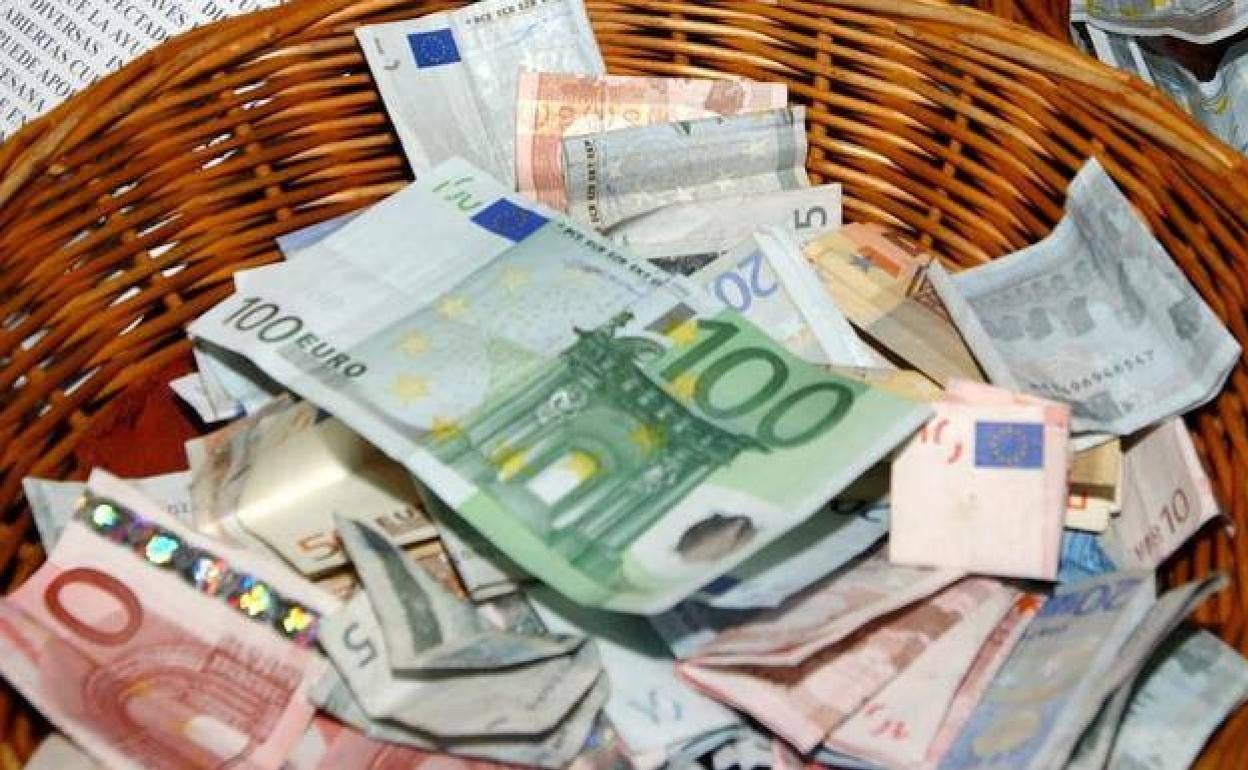

The City Council of Málaga is the seventh among the capital cities of Spain that collects the least in municipal taxes per inhabitant: a total of 571 euros per capita. These figures are from the latest report prepared by the General Council of Economists for the year 2023, and they differ slightly from those published by the IECA, which SUR used to publish information regarding local per capita income from the different municipalities in the province this Monday—for Málaga capital, the agency dependent on the Junta de Andalucía estimated 580 euros in tax revenue per capita.
Ahead of Málaga is Pamplona, with 435 euros per resident, followed by Jaén (492 euros). Next are the two capitals of Extremadura, Badajoz and Cáceres, with 508 and 522 euros, respectively. Following them are Alicante and Córdoba (531 and 563 euros, in that order). These are all cities where per capita fiscal income is below and far from the Spanish average (705 euros per inhabitant).
At the opposite extreme are Madrid and Barcelona, the former with 1,001 euros in tax revenue per inhabitant, and the latter, with 978 euros. Above 900 euros are two other Catalan capitals, Tarragona and Girona (917 and 901 euros, respectively).
In Andalusia, if the city council that collects the least per capita is that of Jaén, and also that of Córdoba collects less than that of Málaga, on the opposite side are Granada and Huelva, with 800 and 762 euros per capita, in that order.
Composition of Taxes
According to the General Council of Economists, the significant differences in local tax revenue per inhabitant are related to the powers that municipal governments have when modifying taxes.
Municipal taxation is mandatorily constituted by the Property Tax (IBI), the Economic Activities Tax (IAE), and the Mechanical Traction Vehicles Tax (IVTM). To these tax figures, municipalities, as established by the local treasuries law, can add the Tax on the Increase in Value of Urban Land (municipal capital gains) and the Tax on Construction, Installations, and Works.
The report specifies how much corresponds to each tax and also how much is paid in terms of fees. In the case of the city of Málaga, of the 571 euros per inhabitant that its city council collects in total, 412.7 euros correspond to direct taxation (IBI, IAE, IVTM, and mainly municipal capital gains), 47 euros are paid in indirect taxation, such as the Tax on Construction, Installations, and Works, to which another 111.1 euros in fees are added.
Situation Tax by Tax
Although Málaga ranks as the seventh cheapest capital in terms of per capita municipal taxes, when it comes to IBI, it is the eleventh least expensive, after Pamplona, Bilbao, Vitoria, Santa Cruz de Tenerife, Palencia, Las Palmas, Lugo, Pontevedra, Córdoba, and Teruel. For this tax in Málaga, 245.1 euros per inhabitant are paid, a figure below the Spanish average (333.6 euros per capita).
For IBI, the City Council of Málaga collected 143.7 million euros in 2023. This figure places it sixth in the national ranking, behind Madrid (1.568 billion euros); Barcelona (745.67 million); Valencia (240.42 million); Seville (176.67 million); and Zaragoza (143.7 million); and ahead of Murcia and Palma, the other two capitals with revenues above 100 million in terms of IBI (including urban and rustic tax).
143.7 million euros
were collected by the City Council of Málaga from the Property Tax (IBI) in the year 2023. It is the sixth capital that collects the most by this concept.
In the capital of Málaga, IBI represents 53.3% of the city council's fiscal income, a proportion similar to that of Seville, but in Madrid and Barcelona, IBI explains 60% of the collection.
The second most important tax for Málaga in terms of collection capacity is that on capital gains, i.e., on the increase in value of urban land after a transfer. For this tax figure, the Málaga city council received 40 million in 2023 (almost 15% of its fiscal revenue), which places it in third place in total income after Madrid (400 million) and Barcelona (almost 134 million). Per capita, this is the only tax in which the capital of Málaga is among the most expensive. It ranks sixth in what is paid per inhabitant (68.3 euros), only after Madrid (120 euros); Soria (89.8 euros); Barcelona (80.7 euros); Santander (73.1); and San Sebastián (69.8); and compared to the national average of 58.5 euros.
The third tax by which Málaga collects the most is the circulation tax: its collection approaches 27.5 million (10.2% of the income), a volume only surpassed by Madrid (145 million); Barcelona (50.57 million); Valencia (35.6 million); Seville (34 million); and Zaragoza (30.75 million). Per capita, the circulation tax yields 46.9 euros in Málaga, a figure that practically ties with the Spanish average (46.6 euros). And there are only thirteen more expensive capital city councils than that of the Costa del Sol city.
In IAE, Sevilla Leads
Regarding the Economic Activities Tax (IAE), Málaga is the sixth capital that collects the most: the almost 18.5 million it collected in 2023—7% of its total tax revenue—only surpassed by the figures from Madrid (about 138 million), Barcelona (89.5 million), Seville (almost 47 million), and Valencia (26.5 million).
Per inhabitant, for IAE, the capital of the Costa del Sol collects 31.5 euros, compared to the national average of 40.8 euros. With figures lower than Málaga, there are more than fifteen capitals, among them some Andalusian ones, such as Jaén (10.4 euros), Granada (24.3 euros) or Almería (29.9 euros). But it is another capital of the region, Seville, where the most is paid per inhabitant for IAE (68.7 euros) in all of Spain.
Meanwhile, for the Tax on Construction, Installations, and Works, Málaga collected 12.35 million in 2023, which represents 4.6% of all its fiscal income and a per capita yield of 21.1 euros (below the Spanish average, which is 26.9 euros per capita).
In terms of fees, Málaga is the tenth capital in Spain that collects the most from them (65.12 million). Madrid is the capital that makes the most money from this concept (about 700 million), while Seville is third, with 145 million. In per capita terms, Málaga is again among the cheapest capitals in this concept: the 111.1 euros per resident are only behind Badajoz (51.4 euros), Jaén (87.6), Las Palmas (92.7), and Cáceres (107.4).

Latest news





Upcoming events
12
Nov
El Desembarco, la traición de Viriato at La Caja Blanca
12
Nov
HOMER El Mero Mero at Sala Trinchera Málaga
13
Nov
Marbella Startup Lab – Innovate & Collaborate
13
Nov
Candlelight: Coldplay & Imagine Dragons at Sala Fundación Unicaja María Cristina
13
Nov
Candlelight: Tribute to Ludovico Einaudi at Anantara Villa Padierna
Similar News

Málaga Airport Makes History with More Than Three Million Passengers in One Month
Málaga

Port of Málaga looks beyond its docks to support future growth
Málaga

Guide to the Virgen del Carmen Processions in Málaga and the Province
Málaga
