


La Concepción reservoir falls below 67% despite heavy rainfall and now holds less water than last year
The main reservoir supplying the western Costa del Sol currently stores around 38.4 cubic hectometres of water, almost eight less than in August 2025. The decline contrasts sharply with the overall situation in Málaga province, where reservoirs are around 85% full.
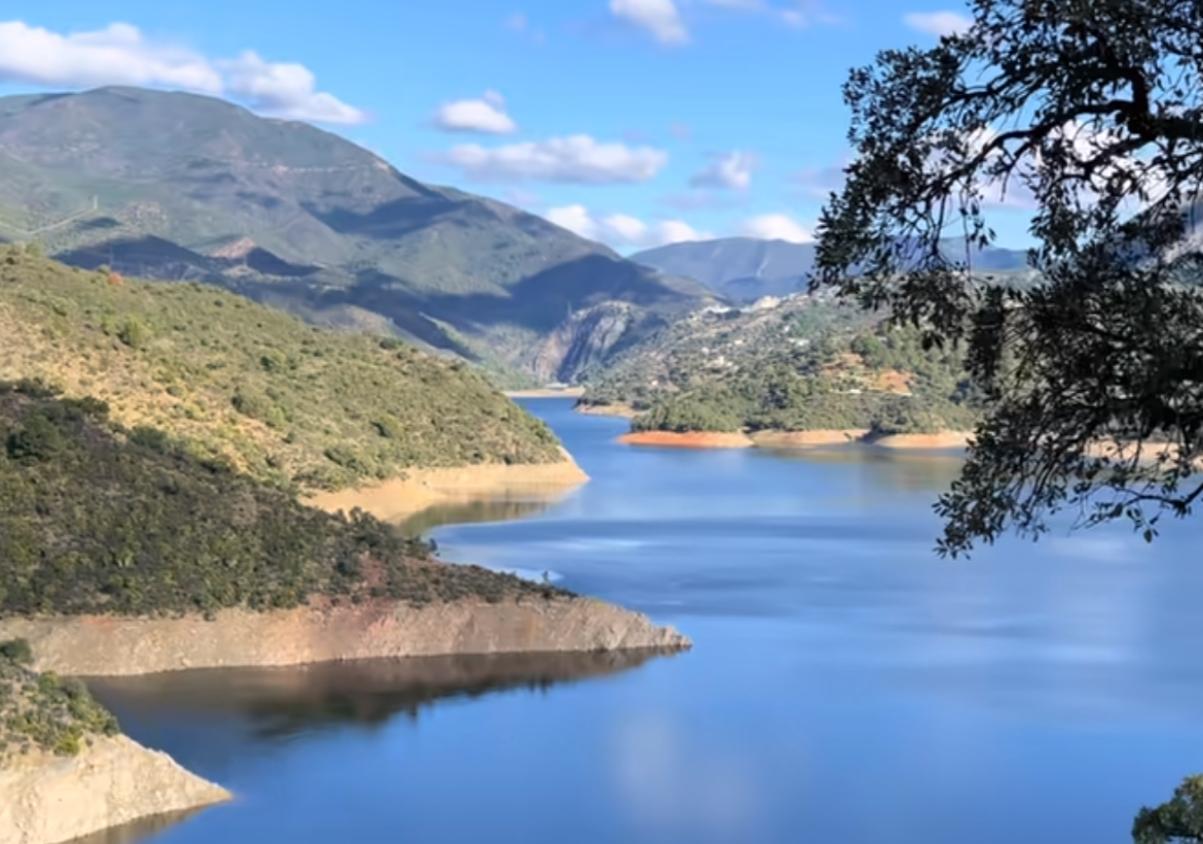

The situation of Málaga’s reservoirs has improved dramatically compared with the worst years of the drought, but one reservoir stands out for a very different reason. La Concepción reservoir, located between Marbella and Istán and essential for supplying the western Costa del Sol, has entered the second half of August with less water than at the same point last summer.
According to the latest Hidrosur figures, the reservoir is at around 66.8% of capacity, holding approximately 38.4 cubic hectometres of water. A year ago it stored more than 46 hm³ and was over 80% full.
The figures are particularly striking after a winter and spring marked by abundant rainfall, which pushed the reservoir to levels high enough to require controlled releases for safety reasons.
Why does La Concepción have less water than last summer?
The answer is not simply about how much rain has fallen. It also depends on how much water enters the reservoir and how much is taken out.
La Concepción is a relatively small reservoir, with a total capacity of around 57.5 cubic hectometres. This means its water level can rise quickly during periods of heavy rain, but it can also fall rapidly when demand increases.
During the current hydrological year, rainfall around the reservoir has accumulated to approximately 769 litres per square metre, helping replenish reserves after previous periods of drought.
However, that recovery has been followed by the time of year when water demand on the Costa del Sol is at its highest.
Summer pushes water consumption higher on the Costa del Sol
The decline becomes particularly noticeable during July and August.
The western Costa del Sol has a large permanent population, but this increases substantially during the summer. Marbella, Mijas, Fuengirola, Benalmádena, Estepona and other municipalities receive large numbers of visitors, placing additional pressure on the water supply system.
At the beginning of August, La Concepción was still holding more than 40 cubic hectometres. Since then, several cubic hectometres have been lost in just a few weeks.
The trend highlights one of the reservoir’s structural limitations: although it can refill quickly after heavy rainfall, it can also lose water rapidly when withdrawals increase.
La Concepción is not the Costa del Sol’s only water source
The fall in reservoir levels does not mean that the western Costa del Sol depends entirely on La Concepción.
The area is supplied through several different sources.
Alongside the reservoir, the system uses the Marbella desalination plant, which has increased its production capacity, as well as groundwater resources and wells.
Acosol, the public company responsible for much of the water cycle across the area, combines these different resources to reduce reliance on a single source.
This diversification is particularly important during the peak summer season and during future drought periods.
Environmental groups call for permanent water-saving measures
The decline at La Concepción has also reopened the debate over responsible water consumption.
Ecologistas en Acción Mijas argues that the improvement in reservoir levels after the rains has led to water-saving efforts being relaxed too quickly.
The organisation has called for greater caution over consumption and has highlighted the use of drinking water for certain private and recreational activities.
It is also asking authorities to increase the use of reclaimed wastewater for purposes that do not require drinking-quality water.
Its argument reflects one of the main challenges facing the Costa del Sol: a few wet months can provide relief from drought, but they do not remove the long-term vulnerability of an area where water demand rises sharply during summer.
A very different picture across the rest of Málaga province
La Concepción’s situation contrasts strongly with the overall state of Málaga’s reservoirs.
By mid-August, the province’s seven main reservoirs were storing more than 500 cubic hectometres of water, placing them at around 85% of their combined capacity.
The difference compared with summer 2025 is substantial, with provincial reserves now almost 200 cubic hectometres higher.
Some reservoirs that caused serious concern during recent drought years have experienced especially strong recoveries.
La Viñuela makes a remarkable recovery
One of the clearest examples is La Viñuela, the main reservoir serving the Axarquía area.
After several years in which drought left the reservoir at critically low levels, it is now close to 88% full, holding around 144 cubic hectometres of water.
That represents a dramatic improvement compared with the severe shortages seen only a few years ago.
Guadalteba is also above 90% capacity, as is the Guadalhorce reservoir, while Conde del Guadalhorce is holding significantly more water than during the recent drought period.
The La Concepción paradox
The situation at the reservoir between Marbella and Istán creates an apparently contradictory picture.
Málaga province has much more water than it did a year ago. La Concepción received substantial rainfall and even had to release water during particularly wet periods, yet its current reserves are lower than they were in August 2025.
The explanation lies largely in the reservoir’s relatively small size and the high level of demand in the area it supplies.
A reservoir with a capacity of less than 60 cubic hectometres has limited ability to act as a major strategic reserve when supplying one of Spain’s busiest tourist areas.
Could water restrictions return?
At current levels, there is no indication that the western Costa del Sol is facing an immediate return to the restrictions experienced during the drought.
The overall water situation is considerably better, and the area now has additional supply sources, particularly through the Marbella desalination plant.
However, La Concepción’s rapid decline is a reminder that one wet season does not guarantee long-term water security.
The outlook will depend on rainfall during the coming autumn and winter, overall water consumption and the increasing role of alternative resources such as desalination, reclaimed water and groundwater.
Málaga has plenty of water, but the Costa del Sol still faces a warning
Málaga province reaches the end of summer 2026 in a much stronger position than in previous years. La Concepción, however, shows how provincial averages can hide very different situations from one area to another.
On a Costa del Sol where the population increases significantly during the tourist season, managing existing resources is just as important as waiting for the next period of rainfall.
The fact that La Concepción went from filling rapidly and releasing water during the wet months to holding less than it did a year ago illustrates how quickly its reserves can change and reinforces the importance of combining water conservation, desalination and reuse.
Daily water levels, storage percentages and historical data for La Concepción and Málaga’s other reservoirs can be checked through the official Hidrosur hydrological information system operated by the Andalusian Regional Government.

Latest news





Upcoming events
12
Nov
El Desembarco, la traición de Viriato at La Caja Blanca
12
Nov
HOMER El Mero Mero at Sala Trinchera Málaga
13
Nov
Marbella Startup Lab – Innovate & Collaborate
13
Nov
Candlelight: Coldplay & Imagine Dragons at Sala Fundación Unicaja María Cristina
13
Nov
Candlelight: Tribute to Ludovico Einaudi at Anantara Villa Padierna
Similar News

Marbella introduces new rubbish disposal hours from November 1: updated times, recycling rules and fines
Marbella

Marbella postpones Halloween celebrations to November 1 following national mourning for Toledo train crash victims
Marbella

Marbella wins ‘Best Hub’ award at Startup OLÉ Salamanca for its innovation strategy
Marbella
