Comares: Moorish History and a 436-Metre Zip Line Above the Axarquía
Around 35 kilometres from Málaga, this whitewashed village combines Moorish streets, the remains of an ancient fortress and Mediterranean viewpoints with one of the province’s most spectacular outdoor adventures.
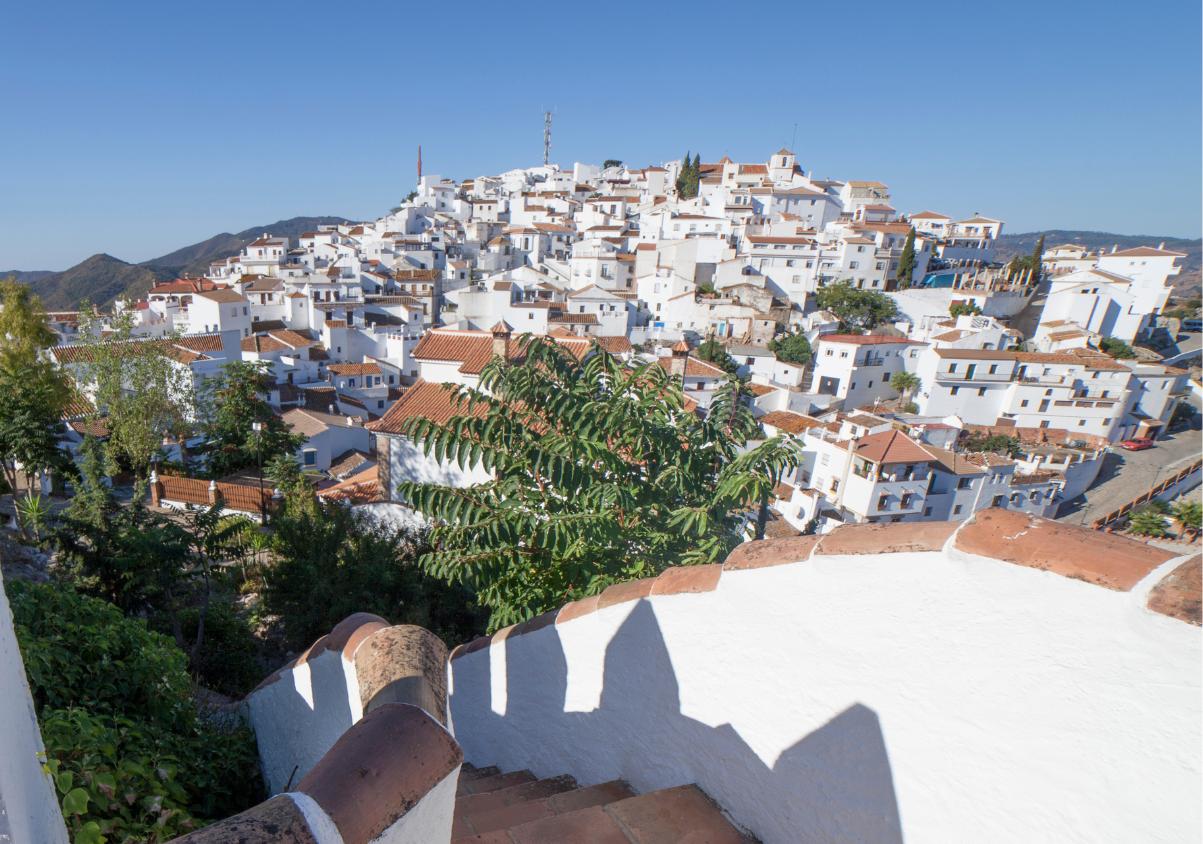

Comares rises above the Axarquía as if it were an extension of the mountain itself. Its whitewashed houses occupy a hilltop at an altitude of approximately 700 metres, offering expansive views over mountain ranges, farmland and, on clear days, the Mediterranean coastline.
Home to around 1,500 people, the village offers two very different ways to explore it. The first involves slowly wandering through its Moorish streets, discovering traces of its past and stopping at panoramic viewpoints. The second means flying above the landscape on a 436-metre zip line.
This combination of heritage, scenery and adventure has earned Comares recognition as one of Spain’s Magical Villages and made it an unusual inland escape from Málaga.
A village shaped by the mountain
Comares’ elevated setting defines both its views and its urban layout. Narrow streets, steep slopes and passages that change direction unexpectedly reflect the need to adapt buildings to the complex terrain.
Exploring the historic centre means walking between white façades, arches, small squares and unexpected openings onto the surrounding landscape. This maze-like layout preserves much of the character developed during the period of Muslim rule.
Its commanding position also explains why Comares is known as the balcony of the Axarquía. For centuries, it provided a strategic viewpoint over the surrounding territory. Today, that former defensive advantage offers some of the broadest panoramas in the region.
Traces of a Moorish fortress
Although the area has evidence of earlier settlements, Comares reached particular importance during the period of Al-Andalus. It was then known as Hisn Comarix, a name associated with a castle built on high ground.
Two towers belonging to the former fortress still survive near the highest part of the village. Medieval arches and other architectural features provide further reminders of its former defensive significance.
Another important site is the Mazmúllar Cistern, a 13th-century hydraulic structure demonstrating the engineering knowledge of the period. It was designed to store water in a landscape where controlling this essential resource was crucial.
The Church of Nuestra Señora de la Encarnación adds another layer to the village’s history. It was built on the site of the former mosque and combines Mudéjar features with decoration introduced during later periods.
La Tahona, a viewpoint across the Axarquía
La Tahona is one of the essential stops on a visit to Comares. Once part of the village’s military defences, its elevated position now serves as a natural viewpoint.
From here, visitors can look across the hillsides of the Axarquía, covered with olive trees, almond groves and vineyards. The succession of mountains and valleys makes it easy to understand why Comares was considered such an important strategic site.
When visibility is good, the Mediterranean can also be seen on the horizon, creating a striking contrast between the inland mountains and the nearby Costa del Sol.
A zip line 115 metres above the ground
The peaceful atmosphere of the whitewashed streets changes completely in the village’s outdoor adventure area. Comares has a 436-metre zip line suspended as high as 115 metres above the terrain.
The experience carries participants across the mountain landscape, offering a perspective that cannot be matched from a conventional viewpoint. Its setting and dimensions have made it one of Málaga province’s most distinctive adventure attractions.
The activity must be completed with a specialist operator and is subject to safety requirements, weather conditions and availability. Visitors should check opening times, restrictions and booking arrangements in advance.
Via ferratas, climbing and Tibetan bridges
The zip line is not the only option for travellers seeking a mountain adventure. The landscape around Comares is also suitable for hiking, rock climbing and several via ferrata routes.
Some experiences include Tibetan bridges and protected climbing sections equipped with fixed safety elements. Difficulty levels vary, making it important to choose an activity suited to each participant’s experience and physical condition.
These options have established Comares as an active tourism destination where a cultural visit can be combined with a full day of outdoor adventure.
A landscape shaped by raisins and sweet wine
Comares forms part of the Raisin Route, an itinerary through some of the Axarquía’s most characteristic agricultural landscapes. Vineyards and traditional grape-drying beds reflect a way of life closely connected to the identity of the region.
Local cuisine maintains the same relationship with the land. Typical dishes include ajoblanco, gazpachuelo, migas and the hearty plato de los Montes.
Raisins, mangoes and Málaga sweet wine complete the experience with flavours closely associated with the province.
Planning a visit to Comares
Comares lies approximately 35 kilometres from Málaga. It can be reached from the A-7 before continuing along the regional roads leading inland through the Axarquía.
The mountainous terrain means the final approach follows winding roads, so extra travelling time should be allowed. A full-day visit provides enough time to explore the historic centre, see the remains of the fortifications, enjoy the viewpoints and take part in an outdoor activity.
Comares ultimately brings together two experiences rarely found in the same place: the calm of a small whitewashed village filled with history and the thrill of flying over the mountains on a zip line.

Latest news




Upcoming events
17
Sep
La Pequeña Cuba Gastro-Cultural Festival in San Pedro Alcántara 2026
18
Sep
World Wellness Weekend Marbella 2026
18
Sep
Candlelight: Queen vs. ABBA in Málaga
18
Sep
Candlelight: Coldplay and Imagine Dragons in Málaga
18
Sep
3 de Corazones – Pancho Céspedes, Enrique Ramil and José Luis Jaén in Málaga
Similar News
Estepona to Give Away 350 Kilos of Sardines at La Gran Espetada

Canela Party 2026 Turns Torremolinos into a Celebration of Music and Costumes
Caminito del Rey Named One of the World’s 20 Most Beautiful Hiking Trails