Falling branches in Marbella reignite debate over the management of urban trees
A large branch fell onto two vehicles on Avenida Ramón y Cajal, adding to a series of recent incidents as residents and local groups question both tree safety and the removal of mature specimens across the municipality.
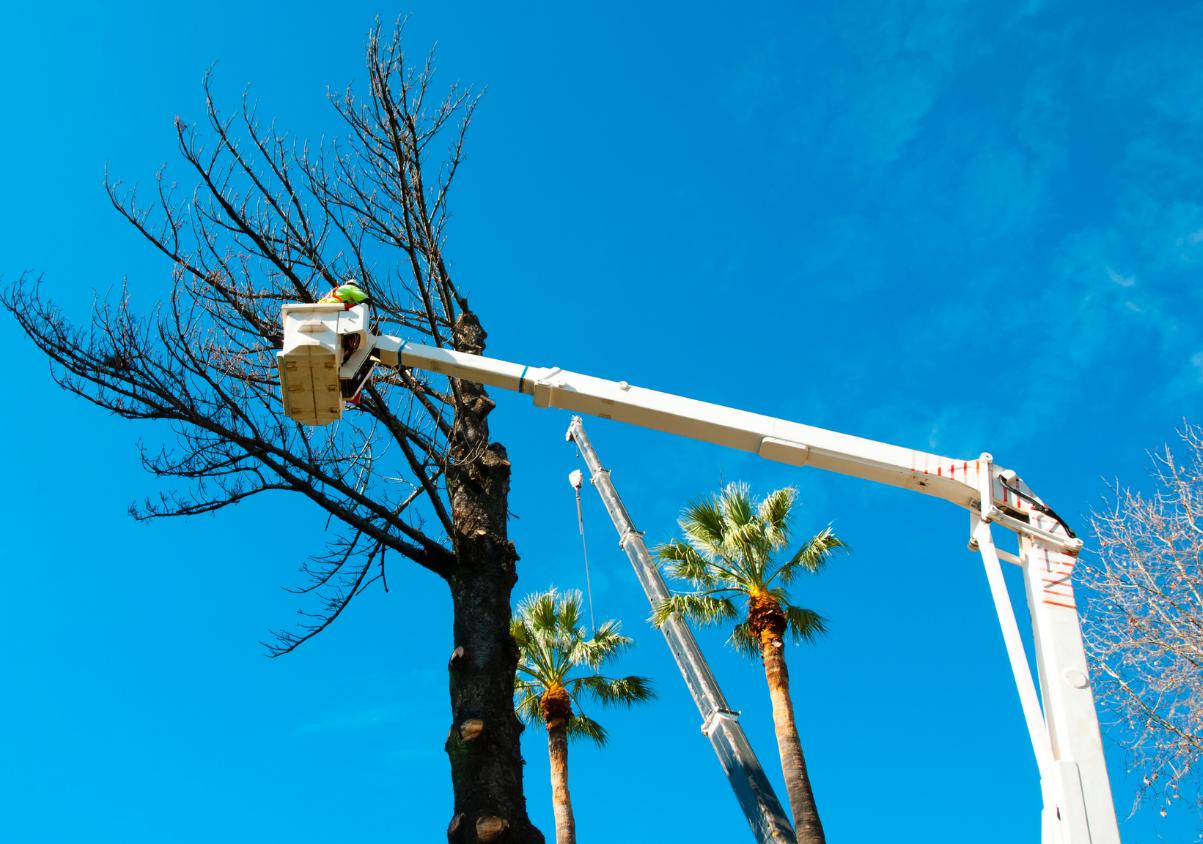

The management of Marbella’s urban trees is once again under scrutiny following a new incident in one of the city’s busiest areas.
A large branch fell onto Avenida Ramón y Cajal on Tuesday, 11 August, in central Marbella, damaging two vehicles and forcing emergency teams to clear one of the municipality’s main roads.
The incident has revived a wider concern that residents, social groups and political representatives have been raising for months: how to keep urban trees safe without reducing the canopy and shade provided by mature specimens, particularly during a summer marked by high temperatures.
The issue is especially relevant in Marbella, where trees are part of both the city’s appearance and the effort to create more comfortable streets during the hottest months of the year.
A large branch falls on Avenida Ramón y Cajal
The latest incident took place on Avenida Ramón y Cajal, close to Marbella town centre.
A large branch broke away and fell onto the road, striking two vehicles.
Emergency teams were required to cut and remove the fallen branches and restore traffic on a road that is particularly busy in August, when both visitor numbers and traffic increase significantly.
Although this incident mainly resulted in material damage, it follows other cases involving falling branches and trees in different parts of the municipality over recent months.
It is this repetition that has once again raised questions about the inspection, maintenance and renewal of Marbella’s urban trees.
Other trees and large branches have fallen in recent months
Ramón y Cajal is not the only area to have been affected.
Similar incidents have been recorded in several parts of Marbella and San Pedro Alcántara during recent months.
In central Marbella, another large tree reportedly fell onto a moving vehicle, while in July sizeable branches came down on Avenida Severo Ochoa.
There have also been incidents in the Plaza de Toros neighbourhood, where a tree fell onto several parked vehicles, and in different parts of San Pedro Alcántara, including the area around El Arquillo sports centre and Plaza Juan Macías.
The reasons can differ from one tree to another — including health problems, age, structural weakness, leaning or weather conditions — but the succession of incidents has increased concern among some residents.
The Santa Marta case marked a turning point
The most serious incident in recent years occurred in March 2025 in the Santa Marta neighbourhood.
A large tree fell on Calle Juan XXIII and struck a woman, as well as damaging several vehicles.
The woman was taken to Hospital Costa del Sol and died several days later. The circumstances surrounding her death and the extent to which it was linked to the injuries sustained remained subject to investigation at the time.
The case generated significant controversy because residents and opposition representatives had reportedly raised concerns beforehand about the tree’s lean and had requested an assessment of its condition.
Since then, every new case involving a large fallen tree or branch has inevitably brought the question of prevention back into focus.
The other side of the debate: removing mature trees
At the same time, while some criticism calls for tighter controls on potentially dangerous trees, another concern points in the opposite direction: the removal of mature specimens.
In recent weeks, residents and local groups have questioned work carried out in areas including Avenida Antonio Belón and El Capricho, in Marbella West.
In Antonio Belón, residents have criticised the removal of several mature trees during the summer, while in Avenida de Ceuta, in the El Capricho area, complaints have focused on the loss of trees that provided shade along the street.
For those questioning these interventions, the issue is not simply whether replacement trees are planted afterwards.
Is replacing a mature tree with a young one enough?
From an urban perspective, the difference is especially noticeable in summer.
A mature tree can provide a large canopy capable of shading pavements, façades and resting areas. When it is replaced by a young tree, that level of cover can take years to recover.
That is why much of the criticism is not necessarily opposed to all tree removal, but instead argues that felling should be the last resort when there are safety or health concerns.
Residents who have questioned recent works are also calling for clearer information about the technical criteria used to decide when a tree must be removed and how its replacement is planned.
This is particularly important in a city such as Marbella, where much of everyday life takes place outdoors and summer temperatures make shade an essential part of the public realm.
Safety and shade: the challenge of managing urban trees
The controversy highlights the two main priorities any urban tree strategy must balance.
The first is safety. Trees are living organisms that age, develop disease, lose branches and can suffer structural damage. Identifying specimens at risk of falling is essential, particularly along avenues, in parks, near schools and in areas with heavy pedestrian traffic.
The second is the need to preserve tree cover.
Trees provide shade, reduce direct exposure to the sun, create more comfortable public spaces and form part of the identity of many neighbourhoods.
In Marbella, both priorities are especially important: mature trees need to be preserved whenever possible, while those that may pose a genuine danger must be identified in time.
Marbella says it wants to increase its tree canopy
The public debate comes as Marbella Town Hall continues to promote an official strategy aimed at increasing the number of trees across the municipality.
At the beginning of 2026, the council announced the arrival of more than 350 new trees for planting in different public areas, mainly to replace lost specimens and fill new tree pits.
The municipality’s stated target for the current council term is to exceed 4,000 new plantings across Marbella.
According to the local authority, species are selected based on factors including their ability to adapt to the local climate, resistance to heat and suitability for urban environments.
The strategy also includes replacing trees affected by age, weather events or conservation problems.
The key challenge, however, is ensuring that new planting genuinely compensates for the loss of mature trees and does not leave certain streets with significantly less shade for years.
Trees as protection against summer heat
The importance of urban tree cover has grown in many Mediterranean cities in recent years.
Tree-lined streets provide shaded areas for walking, waiting for public transport and resting, while also reducing the amount of direct solar radiation hitting pavements and building façades.
In a tourist destination such as Marbella, trees also contribute to the appearance and comfort of promenades, avenues and commercial areas used daily by thousands of residents and visitors.
That is why work involving large mature trees increasingly attracts public attention from people who believe urban vegetation should be treated as essential infrastructure rather than simply decoration.
What do Marbella’s rules say about tree protection?
The municipality has an Ordinance regulating the use and protection of green areas and trees, setting out conditions for conservation and intervention.
The regulations cover both the protection of green spaces and work involving trees, including procedures relating to certain pruning, felling and other interventions.
Their existence reflects the fact that managing an urban tree is not simply a choice between keeping it or removing it. Its condition, potential risks, surrounding environment and replacement options all need to be considered.
The challenge becomes even greater with large trees located in densely developed streets, where roots, pavements, buildings, utilities and traffic all compete for limited space.
Residents call for greater planning and transparency
The combination of falling trees and recent removals has led to calls for more systematic management.
Among the main demands are regular inspections that can identify potentially dangerous trees before a collapse occurs.
At the same time, groups critical of tree removals want the technical reasons to be explained publicly when mature specimens are felled and for there to be a clear replacement strategy.
There are also calls to prioritise shade in areas with less tree cover, particularly neighbourhoods and avenues heavily exposed during heatwaves.
Ultimately, the discussion is no longer simply about whether Marbella should prune, remove or plant more trees.
The wider question is how to ensure that all of these decisions form part of a coherent strategy combining safety, tree health, shade and the quality of public space.
A debate likely to continue beyond the summer
The fall of the large branch on Ramón y Cajal has once again shown how directly urban tree management can affect everyday life.
In just a few months, criticism in Marbella has moved in two apparently contradictory directions: concern about trees and branches falling, and opposition to the removal of mature specimens.
Both concerns, however, point towards the same goal: ensuring Marbella has an urban forest that is safe, healthy and sufficiently extensive.
With high summer temperatures and a city that continues to grow, maintaining mature trees where possible, identifying risks early and planning replacements capable of providing long-term shade are likely to remain central issues for Marbella’s streets.
The municipality’s tree management criteria and planting strategy can be consulted in the official information published by Marbella Town Hall on its urban tree programme.

Latest news


Upcoming events
17
Sep
La Pequeña Cuba Gastro-Cultural Festival in San Pedro Alcántara 2026
18
Sep
World Wellness Weekend Marbella 2026
18
Sep
Candlelight: Queen vs. ABBA in Málaga
18
Sep
Candlelight: Coldplay and Imagine Dragons in Málaga
18
Sep
3 de Corazones – Pancho Céspedes, Enrique Ramil and José Luis Jaén in Málaga
Similar News
Marbella Offers 27 Free Guided Walks Through Its Old Town
Marbella
Circuito Albatros Arrives in Marbella with Over 100 Golfers and Four Grand Final Places at Stake
Marbella

La Bajadilla marina to transform Marbella’s waterfront with more than €200 million investment
Marbella