The Sophisticated (and Surprising) Immune System of the Mussel
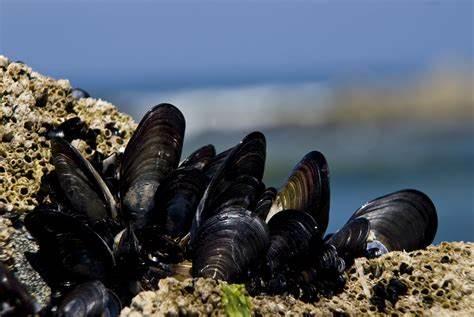

Mussels and other bivalves have the largest and most diverse number of sensors to detect pathogens in the entire animal kingdom. They act as true natural "alarms" against possible infections.
These are toll-like receptors (TLRs), essential components of the innate immune system of almost all animals.
The name comes from the German toll, which means incredible or fantastic. It was coined by biologist Christiane Nüsslein-Volhard in the 1980s when she discovered a key gene in the embryonic development of the fly Drosophila melanogaster. Later, Jules Hoffmann found that this gene was also crucial for the fly's immune defense. When similar proteins were identified in mammals, responsible for pathogen recognition, they were called Toll-like receptors because of their similarity to the Toll gene.
Se trata de los receptores tipo Toll (TLR, siglas en inglés de toll-like receptors), componentes esenciales del sistema inmune innato de casi todos los animales.
El nombre proviene del alemán toll, que significa increíble o fantástico. Fue acuñado por la bióloga Christiane Nüsslein-Volhard en la década de 1980 al descubrir un gen clave en el desarrollo embrionario de la mosca Drosophila melanogaster. Más tarde, Jules Hoffmann encontró que este gen también era crucial para la defensa inmune de la mosca. Cuando se identificaron proteínas similares en mamíferos, responsables del reconocimiento de patógenos, se les llamó Toll-like receptors por su similitud con el gen Toll.
These are toll-like receptors (TLRs), essential components of the innate immune system of almost all animals.
The name comes from the German toll, which means incredible or fantastic. It was coined by biologist Christiane Nüsslein-Volhard in the 1980s when she discovered a key gene in the embryonic development of the fly Drosophila melanogaster. Later, Jules Hoffmann found that this gene was also crucial for the fly's immune defense. When similar proteins were identified in mammals, responsible for pathogen recognition, they were called Toll-like receptors because of their similarity to the Toll gene.
Invertebrates defend themselves against infections
Hoffmann's discovery was a milestone in biology. It broke with the traditional idea that invertebrates lacked advanced immune mechanisms. In recognition of this pioneering work, Hoffmann was awarded the Nobel Prize in Physiology or Medicine in 2011, shared with Bruce Beutler, who discovered the role of TLRs in mammalian innate immunity.
Their findings opened a new era in the study of immunology, revealing that the basic defense mechanisms against pathogens are deeply conserved in the animal kingdom.
Defensive arsenal of the bivalves
In vertebrates, including humans, the immune system could be grouped into two: the innate and the adaptive, which are constantly communicating. The innate one – in which TLRs are found – is a rapid but non-specific response, while the adaptive one is more specialized and produces specific antibodies for each pathogen.
TLR receptors are present in most metazoans (multicellular animals) and play a crucial role in immunity. Its role is to identify pathogens – such as bacteria or viruses – and trigger the body's immune response to fight infection. However, not all animals have the same arsenal.
Bivalves, such as mussels – which depend solely on their innate immune system and do not generate antibodies – possess approximately 260 TLR genes. More than any other animal species. This allows them to recognize a large number of pathogens. By comparison, humans have 10 TLRs – but, in return, we have antibodies and other specific immune tools.
This difference is very striking. Especially when we compare them with other invertebrates that share the same ecosystem and the same exposure to potential infections. Sea urchins have many of these genes, but in much smaller numbers.
The above were some of the conclusions obtained by our Immunology and Genomics Group, at the Marine Research Institute-CSIC, and published in 2023 in a study in Molecular Biology and Evolution on the evolution of TLR genes in 85 species of the animal kingdom.
Surprising genetic diversity
In other animals, including many invertebrates such as insects, TLR genes are concentrated in a single evolutionary group or clade. However, in mussels, their 260 TLR genes are distributed in three main clades. This shows an unprecedented level of diversity in the animal kingdom.
In addition, when comparing mussels with other metazoan species, such as cnidarians (a group that includes jellyfish and corals), it was found that these animals have much lower TLRs. This places bivalves in a unique evolutionary position.
Mussels vs. vertebrates
In vertebrates, the adaptive immune system allows them to create specific antibodies to fight specific pathogens. This facilitates specific long-term resistance. But bivalves, which lack this ability, have evolved an incredibly diverse innate immune response. This allows them to react quickly and efficiently to a wide range of threats, showing an impressive evolutionary strategy.
This fact is crucial, as mussels and other bivalves live in marine environments where they continuously filter water laden with microorganisms, including pathogens. It is estimated that, in just one milliliter of seawater, around 10 million viruses and 1 million bacteria can be found. Not all of these microorganisms are harmful, but many are.
According to our findings, this diversity of TLR sensors is not only in number, but also in functionality: they are specially designed to recognize different types of viruses, bacteria, and protozoa.
Pangenome, ideal for group protection
A companion discovery made by our team of researchers in 2020 revealed something equally fascinating: the mussel genome is an open pangenome. This means that new genes continue to be discovered as more individuals of the species are sequenced.
As a result, genetic diversity is not yet fully known and each new sample may add more unique genes to the species' genome. In a closed pangenome (such as that of humans), all the possible genes of a species are already known and new ones are not expected.
Unlike vertebrates, where variability between individual genomes is relatively low, in mussels it was observed that a high percentage of genes, especially those related to immunity, vary between individuals.
This means that different individuals in a colony may have different immune defenses, allowing the colony as a whole to be more resistant to environmental changes and pathogens.
In animals with adaptive immune systems, such as humans, variability between individuals is not as crucial, as the production of specific antibodies adapts to the pathogens they encounter. However, in bivalves, this genetic diversity is key for the species to thrive in such diverse and challenging marine environments.
This genetic uniqueness not only makes them more resistant to marine pathogens, but also opens up new questions about the evolution of immunity in different animal species. Bivalves, with their highly sophisticated innate immune systems, prove that there are multiple ways to survive in a world full of microbial threats.
Profesor de investigación del Consejo Superior de Investigaciones Científicas, Instituto de Investigaciones Marinas (IIM-CSIC)

Latest news





Upcoming events
12
Nov
El Desembarco, la traición de Viriato at La Caja Blanca
12
Nov
HOMER El Mero Mero at Sala Trinchera Málaga
13
Nov
Marbella Startup Lab – Innovate & Collaborate
13
Nov
Candlelight: Coldplay & Imagine Dragons at Sala Fundación Unicaja María Cristina
13
Nov
Candlelight: Tribute to Ludovico Einaudi at Anantara Villa Padierna