Málaga’s Huevo Toro tomato returns with a historic 1.5-million-kilo harvest
The 2026 season for the Guadalhorce Valley’s most emblematic crop begins with around 230,000 plants, improved water reserves and a full programme of gastronomic activities in Alhaurín el Grande, Coín and other municipalities across Málaga province.
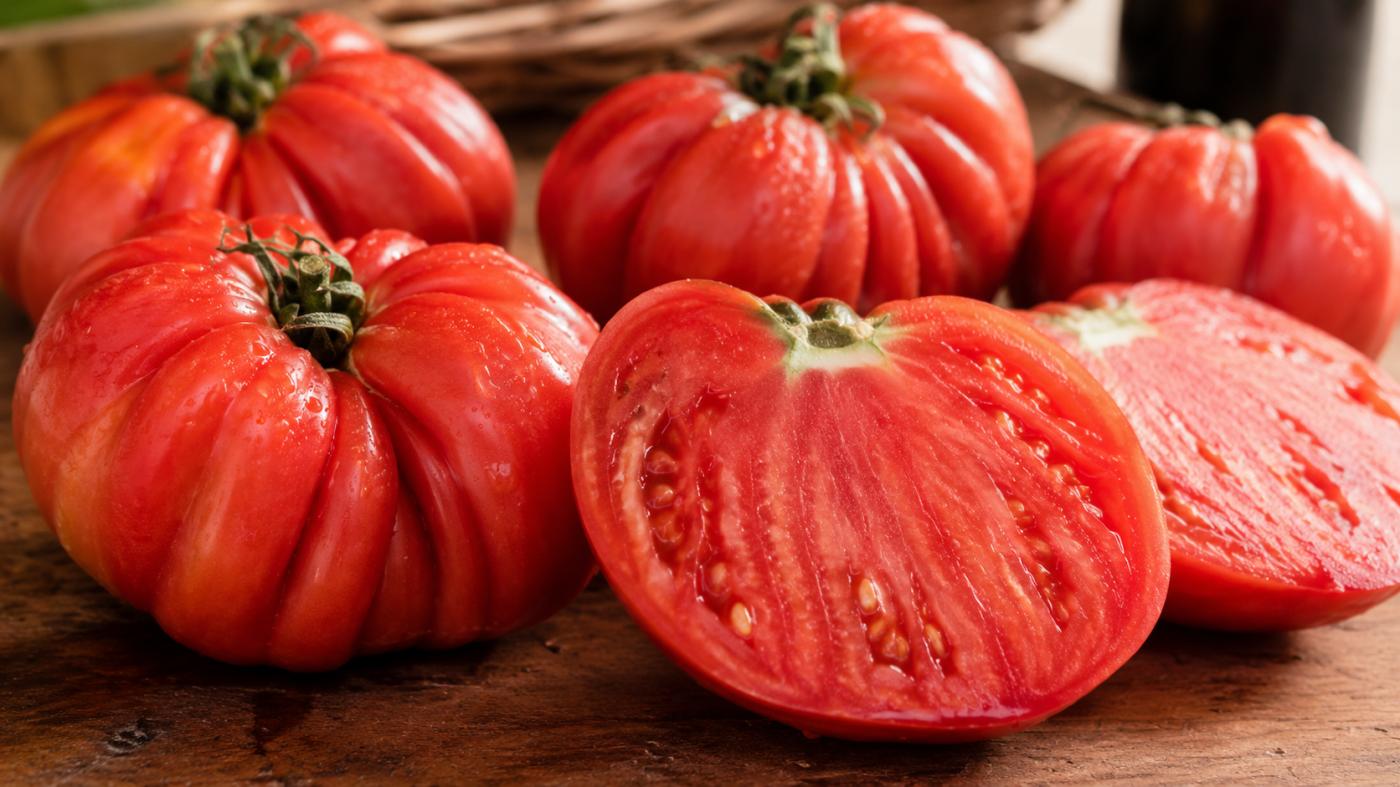

One of Málaga summer’s most distinctive flavours is back. The Huevo Toro tomato from the Guadalhorce Valley has officially begun its 2026 season with particularly favourable forecasts following several years affected by water shortages.
Farmers estimate that the approximately 230,000 plants cultivated this season will produce around 1.5 million kilos, confirming the recovery of a crop that has become a symbol of traditional agriculture in Málaga.
The start of the season was celebrated at a farm in Alhaurín el Grande and at the Guadalhorce Agri-Food Market in Coín. Producers, chefs and institutional representatives took part in an event dedicated to the traditional cane-supported cultivation system and to several dishes made with this distinctive tomato.
Although harvesting began slightly later than in previous years because of weather conditions, the first tomatoes are already available and expectations for the coming weeks are positive.
The 2026 season begins with 230,000 plants
The Huevo Toro Tomato, Fruit and Vegetable Producers’ Association of the Guadalhorce estimates that around 230,000 plants have been cultivated this season.
Production is expected to reach close to 1.5 million kilos, provided weather conditions remain favourable throughout the harvest.
Huevo Toro tomatoes are grown entirely outdoors and are directly exposed to changing temperatures, wind, pests and water availability. Final production may therefore vary as the summer progresses.
The season begins with renewed optimism thanks to the improved water situation in the Guadalhorce Valley. Greater irrigation availability offers relief to farms that have been particularly affected by drought.
The later appearance of the first tomatoes has not caused concern among producers, who expect a long season with good-quality fruit.
The return of the Guadalhorce’s “king of the vegetable garden”
The mayor of Alhaurín el Grande, Anthony Bermúdez, once again referred to the Huevo Toro tomato as the “king of the vegetable garden”, an expression that reflects the importance this variety has gained both within and beyond the region.
Its significance goes far beyond production figures. The tomato has become one of the defining symbols of the region.
Its significance goes far beyond production figures. The tomato has become one Guadalhorce Valley and one of Málaga province’s best-known agricultural products.
Every summer, the season brings together farmers, markets, restaurants, distributors and visitors attracted by its flavour and traditional growing methods.
The tomato is also part of Sabor a Málaga, the promotional brand created by Málaga Provincial Council to showcase food grown and produced across the province.
Its presence in fine-dining restaurants has helped increase its recognition, although it remains closely linked to family farms, local markets and traditional cuisine.
What makes the Huevo Toro tomato different?
The Huevo Toro tomato is known for its large size and irregular appearance, which clearly distinguishes it from varieties produced through intensive farming.
Individual tomatoes generally weigh between 300 and 600 grams, although some can exceed one kilo. Their shape may be flattened or slightly heart-shaped, with small ridges around the stem.
Inside, they contain very few seeds and a large amount of fleshy pulp. This gives them a soft, moist and creamy texture.
Their flavour offers a balance between sweetness and acidity, accompanied by subtle vegetal notes. For this reason, they can be enjoyed simply with extra virgin olive oil and salt, without the need for many additional ingredients.
They are also particularly suitable for salads, porras, gazpachos, cold soups and sauces.
Their skin is extremely thin and delicate, so the fruit must be harvested, transported and handled carefully. This fragility makes industrial packaging more difficult and explains why the tomatoes are mainly sold close to their growing area.
A traditional crop requiring extensive manual work
The quality of the Huevo Toro tomato is closely connected to the way it is grown.
The plants develop outdoors and are supported using traditional canes. Farmers must guide them as they grow, prune them and remove secondary shoots to encourage fruit production.
The plant grows continuously and requires attention throughout its productive life. Pruning, removing side shoots and tying the stems make cultivation highly labour-intensive.
More than 100 days can pass between planting and the appearance of the first tomatoes. Its yield is also lower than that of many modern hybrid varieties.
Each plant may produce approximately five to six kilos, although the result depends on the soil, water supply, weather and farming techniques used.
The plant’s large leaves protect the fruit from direct sunlight and allow it to ripen slowly in the shade. This gradual development helps intensify its aroma, texture and balanced flavour.
Water brings renewed optimism to Málaga’s farms
Drought had created considerable uncertainty during recent seasons because of the tomato crop’s high water requirements.
The Guadalhorce Valley has a long agricultural tradition linked to the river, springs in the Río Grande and Fahala basins, and the area’s reservoirs.
The combination of irrigation water, fertile soil and maritime influence creates particularly favourable conditions for growing fruit and vegetables.
Improved reserves mean farmers can approach the 2026 season with greater confidence, although they continue to defend efficient water use and the adaptation of farms to increasingly irregular weather patterns.
The recovery does not benefit the tomato alone. It also helps preserve the agricultural landscape and the wide variety of fruit and vegetables grown in the Guadalhorce Valley.
A crop that supports the rural economy
The Huevo Toro tomato represents far more than a gastronomic speciality.
During the season’s presentation, organisers highlighted that more than 2,000 families are connected to its production, either directly or indirectly. The crop generates economic activity on farms, in markets, through transport, in restaurants and in local retail.
Its growth over the past 15 years has been particularly significant. Coín Town Council recalled that just over a decade ago only around 3,000 plants were cultivated, mainly for household consumption.
Today, growing interest among consumers and restaurants has turned this variety into an economic opportunity for many farmers.
Its development shows how promoting a local product can support a region’s economy without abandoning traditional techniques or the identity of the land.
It also helps keep people living in rural areas and ensures that agricultural knowledge continues to pass from one generation to the next.
Creative gazpachos launch the new season
The official presentation ended at the Guadalhorce Agri-Food Market with a tasting focused on gazpacho and other summer dishes.
José Carlos García Farfán prepared a rustic-style gazpacho served with fruit, while Sarai Aragón, from Casa Palma restaurant in El Morche, created a version featuring several different textures.
Her dish combined roasted tomato, Huevo Toro tartare, shallots, gherkins, crispbread, black salt and dehydrated tomato skin.
Ana Rollán and Guadalupe Peñalver, from Juana Paloma restaurant in Málaga, prepared a gazpacho with Málaga lettuce and rocket, accompanied by diced tomato, extra virgin olive oil and Iberian ham.
Daniel Nebro, from La Algarbía restaurant in Pizarra, added strawberries, basil and goat’s cheese to his recipe. Fouad Amine, from El Patio in Coín, opted for a combination of tomato and peach.
Eme de Mariano restaurant completed the tasting with a traditional porra prepared with ham, extra virgin olive oil, sourdough bread and a subtle touch of garlic. The event ended with a paella in which the tomato once again played a leading role.
Málaga Huevo Toro tomato calendar for 2026
The season will be accompanied by gastronomic, cultural and educational activities throughout July and August.
The main announced events include:
- “Huevo Toro del Guadalhorce: the tomato that inspires” poetry competition, with the winners to be announced soon.
- Huevo Toro Tomato Gastronomic Discussion, on 23 July at the Antonio Gala House Museum, La Baltasara, in Alhaurín el Grande.
- Fifth Huevo Toro Tomato Golf Tournament, on the final Saturday of July at Alhaurín Golf.
- Huevo Toro Tomato Gastronomic Route, from 31 July to 31 August at restaurants across Málaga province.
- Verbena Tomatera summer festival, on 13 and 14 August in Plaza de la Alameda in Coín.
- Huevo Toro Tomato Competition and Auction, on 15 August in Parque de San Agustín in Coín.
The programme aims to introduce the product to new audiences and demonstrate its versatility, from traditional recipes to contemporary cuisine.
The Gastronomic Route returns throughout August
The Huevo Toro Tomato Gastronomic Route will once again bring together restaurants from different municipalities across Málaga.
From 31 July to 31 August, participating establishments will offer special dishes prepared with outdoor-grown tomatoes from the Guadalhorce Valley.
The product will feature in salads, gazpachos, cold soups, tartares, rice dishes, stews, fish recipes and signature creations.
In addition to promoting local restaurants, the route helps connect producers directly with chefs and consumers.
The complete list of participating establishments and dishes will be announced as part of the official programme.
The traditional auction will close the season on 15 August
One of the most eagerly awaited events will be the Huevo Toro Tomato Competition and Auction, scheduled for 15 August in Coín.
The competition selects the best examples of the season according to characteristics such as size, shape, texture, aroma and flavour.
After the jury tasting, the winning batch is sold through a public auction that traditionally includes a charitable purpose.
The event has become one of the most representative occasions of summer in the Guadalhorce Valley, bringing together farmers, chefs, visitors and local residents each year.
It celebrates the quality of the tomatoes, but also the months of work carried out by those who continue to preserve this agricultural system.
Where to buy Huevo Toro tomatoes in Málaga
Outdoor-grown Huevo Toro tomatoes are seasonal and can mainly be found between July and the beginning of autumn.
One of the principal sales points is the Guadalhorce Agri-Food Market, located in the La Trocha industrial estate in Coín.
They can also be purchased directly from farms in Coín, Alhaurín el Grande and Pizarra, usually by prior arrangement.
Markets organised by Guadalhorce Ecológico and several independent greengrocers also sell the tomatoes during the season.
Because of their thin skin and limited resistance to transport, they are not always available in major supermarkets. Buying directly from producers or trusted shops helps guarantee their origin and correct handling.
Consumers should choose fruit that is ripe but still firm and keep it outside the refrigerator when it will be eaten shortly. Excessive cold can reduce its aroma and alter its texture.
The most eagerly awaited flavour of the Málaga summer
The start of the season brings back to markets, restaurants and homes a product that represents much of the agricultural identity of the Guadalhorce Valley.
The forecast of 1.5 million kilos allows the region to approach the season with optimism after years of water scarcity. However, the true value of the Huevo Toro tomato lies in far more than quantity.
Behind every tomato is a slow growing process, predominantly manual labour and agricultural knowledge passed down through generations.
Its return represents the recovery of a traditional flavour, as well as the continuity of a productive landscape that creates employment, attracts visitors and keeps Málaga’s farms alive.
The harvest figures, producers’ statements and complete event calendar come from information published by the Huevo Toro Tomato, Fruit and Vegetable Producers’ Association of the Guadalhorce.

Latest news




Similar News

MálagaCrea 2026 Announces Its Young Writing Prize Winners

Where to eat during Málaga Fair 2026: a tapas, rebujito and atmosphere route through the Historic Centre

Costa del Sol strengthens its appeal for international MICE tourism