Barranco Blanco: The Natural Pool Near Málaga Becoming a Favourite Summer Escape
Less than an hour from the city, this beauty spot between Coín and Alhaurín el Grande combines clear water, waterfalls, limestone rock and abundant Mediterranean vegetation.
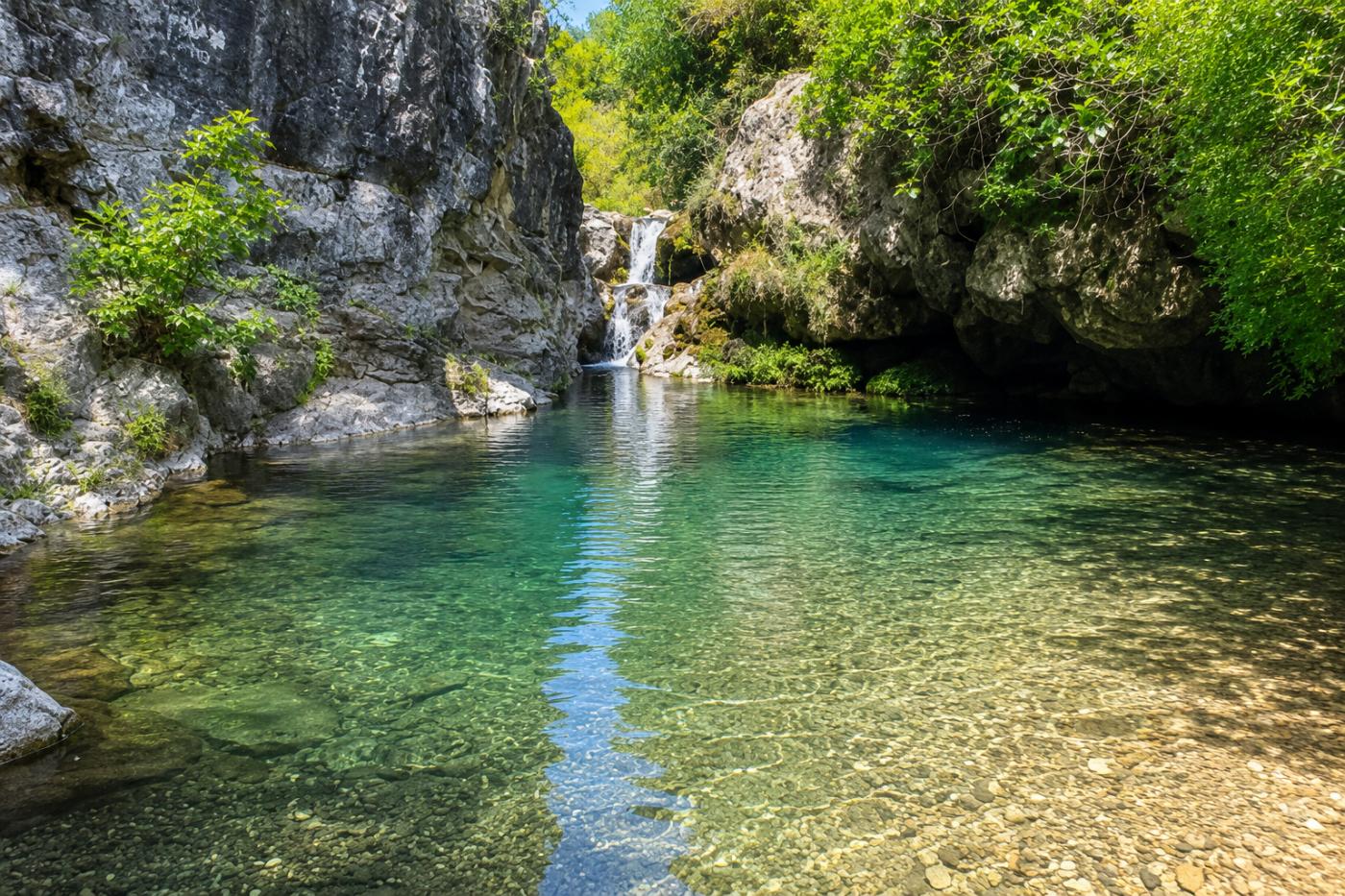

Málaga’s beaches become increasingly crowded as temperatures rise and the summer holidays begin. However, the coast is not the only option for those looking to cool down and spend a day outdoors.
The inland areas of the province are home to rivers, pools and natural swimming spots surrounded by vegetation. Some are already widely known, while others are beginning to attract visitors as quieter alternatives to the busiest beaches.
One of these places is Barranco Blanco, a natural area located between the municipalities of Coín and Alhaurín el Grande. Its transparent water, pale stones and Mediterranean landscape have made it an increasingly popular summer destination.
The site is approximately 50 minutes by car from Málaga city and offers the chance to combine hiking, nature and freshwater pools in an environment shaped by limestone rock.
Where Is Barranco Blanco?
Barranco Blanco lies between the Sierra Negra and Sierra de Mijas, within a natural area connected to the Alaminos River, which is also known as the River Pasadas in some sections.
The site has been designated a Site of Community Importance and forms part of an area with considerable scenic and environmental value.
Its water comes from the Sierra de Mijas aquifer system and flows between rocky walls, riverside vegetation, small waterfalls and natural pools.
The watercourse is one of the main tributaries of the Fuengirola River, which it joins before reaching the Mediterranean.
Despite being relatively close to several towns on the Costa del Sol and in the Guadalhorce Valley, the landscape retains a distinctly natural character.
Why Is It Called Barranco Blanco?
The area takes its name from the light colour of the limestone rocks that form the riverbed and the walls of the ravine.
The continuous flow of water has shaped these formations over time, creating small drops, waterfalls and natural pools. The pale stone contrasts with the green vegetation growing alongside the river.
Pine trees, carob trees, willows and junipers can be found in the area, together with oleander, mastic, rosemary, heather, wild vines and climbing honeysuckle.
This combination of water, rock and vegetation provides a habitat for a wide variety of wildlife. Fish and amphibians live in the river, while reptiles, birds, dragonflies and butterflies can be spotted nearby.
Otters are also associated with these waters, although their secretive nature means visitors are unlikely to see them.
A Route Through Waterfalls and Natural Pools
The route through Barranco Blanco follows the Alaminos River and passes several pools and small waterfalls.
One of the main attractions is the pool commonly known as Charco de Barranco Blanco, which is fed by a waterfall flowing between the limestone walls.
The route combines forest tracks with sections close to the river. Depending on the chosen path and the water level, hikers may need to cross the river several times.
The opening section is not particularly difficult, but the terrain becomes more challenging near some of the pools. Certain descents are steep, while damp stones can be extremely slippery.
For this reason, the excursion should not be approached as a simple urban walk. Visitors should wear footwear with a good grip, move carefully and consider the physical ability of everyone in the group.
Families with children should maintain constant supervision, particularly near waterfalls, drops and deeper sections of water.
How to Reach Barranco Blanco from Málaga
The journey from Málaga city takes approximately 50 minutes, although travel time may vary according to traffic and the starting point.
One of the most common routes is to leave the city on the A-357 motorway towards the Guadalhorce Valley before continuing in the direction of Coín.
From there, visitors can join the MA-3303 road, which connects Coín with the Puerto de los Pescadores area. The turn-off for Barranco Blanco is located between kilometres four and five, closer to kilometre four.
A forest track begins at this point and leads towards the Alaminos River.
It is advisable to check the route and location before travelling, as mobile phone coverage may be limited in parts of the area.
Summer Restrictions on Vehicle Access
Visitors travelling to Barranco Blanco during the period of highest wildfire risk should be aware of the restrictions affecting motor vehicles.
From June 1 to October 15, vehicles are not permitted to drive down to the area closest to the river. The measure is intended to reduce the risk of forest fires and protect the natural environment.
Visitors must therefore park outside the restricted area and complete the remaining distance on foot.
The walking distance will depend on where legal parking is available. Arriving early is recommended, as is avoiding unauthorised parking or blocking tracks used by emergency services.
Before travelling, visitors should also check for additional restrictions, municipal warnings or temporary closures caused by wildfire risk, weather conditions or the state of the path.
Safety Advice Before Entering the Pools
The clear water at Barranco Blanco may look inviting, but this is a natural environment without the surveillance and safety measures provided at a public swimming pool or urban beach.
Stones in the riverbed may move or be covered in vegetation, increasing the risk of slipping. The depth of the pools can also vary and may not always be visible from the surface.
Jumping from rocks is not recommended, particularly when the depth and possible underwater obstacles are unknown.
Visitors should also check whether any temporary bathing restrictions are in place and avoid entering the river after heavy rainfall or when the current is strong.
Closed water shoes or trainers with non-slip soles provide more protection than flip-flops. It is also advisable to bring drinking water, sunscreen, a hat, light food and dry clothes.
A Natural Area That Needs Protection
Barranco Blanco’s growing popularity makes responsible tourism increasingly important.
Visitors should take all rubbish away with them, avoid leaving food or packaging behind and respect the vegetation. Plants should not be picked, the riverbed should not be altered and wildlife should not be disturbed.
Loud music, overcrowding and excessive noise can affect both animals and other visitors seeking to enjoy the surroundings.
The use of fire is particularly restricted during summer. Barbecues and open fires are prohibited, as are activities that could generate sparks.
Preserving Barranco Blanco largely depends on visitors behaving responsibly and keeping their environmental impact to a minimum.
Other Natural Pools in Inland Málaga
Barranco Blanco is not the only freshwater swimming spot in the province.
Tolox is home to Charco de la Virgen, a natural pool in the Sierra de las Nieves area and one of the municipality’s best-known hiking destinations.
Benahavís has the Charca de las Mozas, while the Genal Valley includes places such as Charco Azul, Charca de la Escribana and Charco Moclón.
Each location has different access conditions, levels of difficulty and conservation rules. Before organising an excursion, visitors should check for closures, bathing restrictions or traffic limitations.
A Natural Alternative to Málaga’s Crowded Beaches
Barranco Blanco offers a different way to enjoy the summer in Málaga. Its proximity to the city, transparent water and limestone landscape make it an attractive destination for those seeking an outdoor escape.
However, its popularity must be matched by responsible behaviour. The summer vehicle restrictions, slippery terrain and lack of urban bathing facilities mean the trip should be planned carefully.
Arriving early, wearing suitable footwear, respecting the restrictions and leaving the area exactly as it was found are essential measures for enjoying this natural beauty spot without damaging it.
Information source: El Mundo
Official information consulted: Málaga Provincial Council and Coín Tourism

Latest news

Upcoming events
17
Sep
La Pequeña Cuba Gastro-Cultural Festival in San Pedro Alcántara 2026
18
Sep
World Wellness Weekend Marbella 2026
18
Sep
Candlelight: Queen vs. ABBA in Málaga
18
Sep
Candlelight: Coldplay and Imagine Dragons in Málaga
18
Sep
3 de Corazones – Pancho Céspedes, Enrique Ramil and José Luis Jaén in Málaga
Similar News
La Noche al Raso transforms Coín into an open-air celebration of concerts, markets and culture
Coín