Pepe Alarcón, the Boy from the Farmhouse Who Managed the Luxury Clinic Hotel in Marbella
Agustín Picazo is claimed as the creator of Incosol. He missed the inauguration, which was presided over by Franco, due to lacking credentials. He exchanged stays with Cela for the use of his name and the presentation of a book.

I started working at Incosol in May 1973, weeks after its opening. By that day, all workers had a badge; mine didn't arrive, and I couldn't be there. I used to joke that I was thrown out because Franco was coming. I stayed at Incosol for over thirty-three years and had the privilege of managing it for eight years. I was fortunate in both respects and in everything that has happened in my life, which in one way or another is related to Incosol, says Pepe Alarcón.
I have no formal education. I am a farmer's son; we lived at the Martinez farmstead until the owners sold the land. I was eight years old, the Civil Guard put our furniture, well, the water jug and little else, on the street. They ruthlessly evicted us to make way for the El Rosario urbanization. We went to live with my grandparents at a neighboring farmstead, Ricmar, until we bought a house in Santa Marta and moved here. I was raised in the countryside; I went to school in Marbella and stayed at an aunt's house. I started at the Technical Institute of Marbella (Río Verde) and before I was fourteen, I had to quit and start working because my family needed it, we were struggling.
I had an uncle, José Alarcón Moreno, who was treated as a hero until his last days. He was awarded the highest decoration from France during World War II. While serving in the military, his regiment declared loyalty to the Second Republic, he went to France and enlisted in the Foreign Legion. He served under Marshal Bernard Montgomery in the first army corps of Free France. He participated in the battles of North Africa; in the landing on Sicily and was seriously wounded in the capture of Montecassino (Italy). He was one of the five soldiers who survived from his Spanish regiment. He visited occasionally, although he chose to die in the France that had honored him so greatly.
I worked at the Sport Club, a small hotel in the maritime club, managed by Ignacio Coca's family, through Los Monteros. At Incosol, I started in the accounting department as an administrative assistant, I was a biller for the restaurant and the polyclinic. At 17, I was already handling the analytical accounting of Incosol, I was very good at it. Later, I managed the payment control of suppliers. By the end of 1983, computers and IT came to the hotels. In administration, a test was conducted to see who was the most qualified and they chose me. I continued in administration, while I dedicated myself to computerizing the entire center, payroll, accounting, reception, reservations, polyclinic. I understood that Incosol was very peculiar, it was neither a hotel nor a clinic, but both.
Cristóbal Martínez-Bordiú, the Marquis of Villaverde, was the clinic's frontman; a public relations figure. Having Franco's son-in-law helped the clinic attract many investors, small shareholders among Spanish doctors at Incosol. The investment turned sour, only yielding its fruits many years later. I saw the Marquis two or three times, he came with his story and that was it. Christiaan Barnard [the South African doctor who performed the first heart transplant] came once invited by Martínez-Bordiú. More frequent was the presence of Augusto Gianoli, a Swiss doctor who back then was treating with sheep cells. [With a Chivas Regal glass in hand, he claimed to delay aging through the injection of live lamb embryo cells]. And there were also several visits from the Romanian doctor Ana Aslam, who brought the Gerovital treatment [H3 to renew aged cells, and made procaine—a multi-therapeutic anesthetic—her ally in combating aging].
The Incosol project by Ignacio Coca was made by a great unknown, my mentor Agustín Picazo. What this man did in hospitality has never been recognized. In 1969 he conceived Incosol, a center that did not exist. There were health clinics in the Black Forest of Germany and in Switzerland. I had the privilege of seeing his first draft, in which he described in great detail how all the facilities of the Incosol clinic would be. Those of us who call ourselves experts in health tourism are merely apprentices of what this man envisioned and accomplished.
In 1969, when he presented the dossier to Coca, there were no clinics or hospitals in Marbella. Los Monteros was a grand hotel with a golf course and he thought of complementing it with a luxury clinic. Picazo traveled around the world and realized that just the clinic would not work. Hence the clinic had a hotel, he knew the Finnish school of massages and incorporated spa and physiotherapy. He toured the spas in California, the water massages, and thus Incosol was born. The project involved an investment of 23 million pesetas in land and another 200 million in a monumental construction, all well equipped under Picazo's supervision.
The project conceived a five-star hotel with a highly specialized clinic, hand in hand with Dr. Gianoli and Finnish massage techniques. With X-ray rooms, clinical analysis laboratories; we had the first ICU in the area, in room 705. Doctors from Granada introduced the Mediterranean diet, which led to Incosol's low-calorie school, with genuine professionals in gastronomy. It also led to obesity treatments; we were pioneers in health tourism.
We had 192 rooms that we occupied without a reservations department, tour operators, or travel agencies. The clients were very good and loyal; they would call and ask: “Is my room available?”. They repeated because we offered them absolute privacy, a silence pact among the employees. The first was the actor James Stewart Granger from King Solomon's Mines. The Princes of Monaco, Grace and Rainier; King Fahd; Salvador Dalí; Paquirri; Lola Flores; heads of state; members of royalty, the Spanish, English, and European aristocracy were there.
Until the crises of the nineties and beyond swept us away. The clinic had many problems because it was born without financing, undercapitalized, with a social capital that was only one hundred million. While Ignacio Coca was there, his bank gave loans to his companies. Incosol started to pick up, but it had a tremendous burden behind it. Then came the merger with Banesto and Coca's death; the auction of the companies began and then we started to struggle. The Coca family had the establishment as collateral, it was seized and we were battling. Banesto sold us, the crisis began and so did the strikes.
In 1996 we only had the option to resurge or die. We launched a medical program called Renaissance; it was aimed at the staff, the client, and the company. It worked. I was then the head of accounting, we devised it with the doctor; the one acting as head of reception and the concierge. The role of the latter two was important because they listened to what the clients said; the doctor Guijarro to provide it with content that worked and I to put numbers on it.
In 1997, Incosol was bought by a Basque company and I was appointed deputy director of the hotel, I held this position for two years. In 2000 I took over the management of the hotel, without the polyclinic, which was managed by Dr. Guijarro. For me, it was a golden era; I worked with full freedom and creativity. Then came the renovation of Incosol, from top to bottom. We had a staff of almost 400 people. We aimed to obtain the fifth star for Incosol, which had four, and we achieved it, I feel like a promoter of it. We were the only establishment, hotel, clinic, and spa to obtain the ISO 9001:2000 quality certificate. Until 2006, we were posting good numbers. The owners wanted a family member in management and I was superfluous, I left. Seven months later, a group bought the hotel and I returned as the general manager of operations.
Camilo José Cela was one of the clients I dealt with the most and with whom I reached an agreement. We provided his stays in exchange for letting us use his name. The main hall at Incosol was named Camilo José Cela; the exchange included the presentation of a book, a somewhat odd one: Cuaderno de El Espinar, twelve women with flowers on their heads. It featured thirteen stories of women, accompanied by thirteen sculptures of ladies' heads. [Cela died in January 2002. His wife, Marina Castaño, was in charge of presenting at Incosol in July of that year the unpublished book and the bronze sculptures that Cela recreated, to fulfill the agreement].
In 1978, in the halls of Incosol Alfonso de Hohenlohe chatted with Prince Fahd of Saudi Arabia, on his first visit to Marbella. He rented more than half of the hotel's rooms, the Spanish Royal House sent members of the Royal Guard as escorts and security for the prince. During one of the night security rounds, a Civil Guard agent lost his footing and fell into the pool. The billing from that visit, for years, remained as the record figure for Incosol's production. Incosol's connection with the Saudi royal house continued over time during all the visits made by King Fahd to Marbella.
In August of 2002 was the last; 160 rooms of the hotel were reserved, carpets and all the decor on one floor were changed overnight. Fahd's successor, Prince Salman, stayed with his entourage in room 911, the royal suite, for over a month. It was a frenzy, 24 hours with all services open and operating: the kitchen, restaurants, massage rooms, everything. The Arab's life in summer was much more nocturnal, they slept late and were active at night. They paid, the employee earned money, they were very well attended; everyone was happy. We created a team of four people dedicated to their care, we worked tirelessly. A lot of money was involved, the bills were tremendous.
The health and beauty professionals of Incosol attended to Queen Luna at the Marbella Palace, where the same equipment we had at Incosol was installed. A doctor, a masseuse, an aesthetic specialist, and a sports instructor traveled daily to the palace. Three Incosol technicians installed in Riyadh (Saudi Arabia) four exclusive hydro-massage tubs from the clinic.
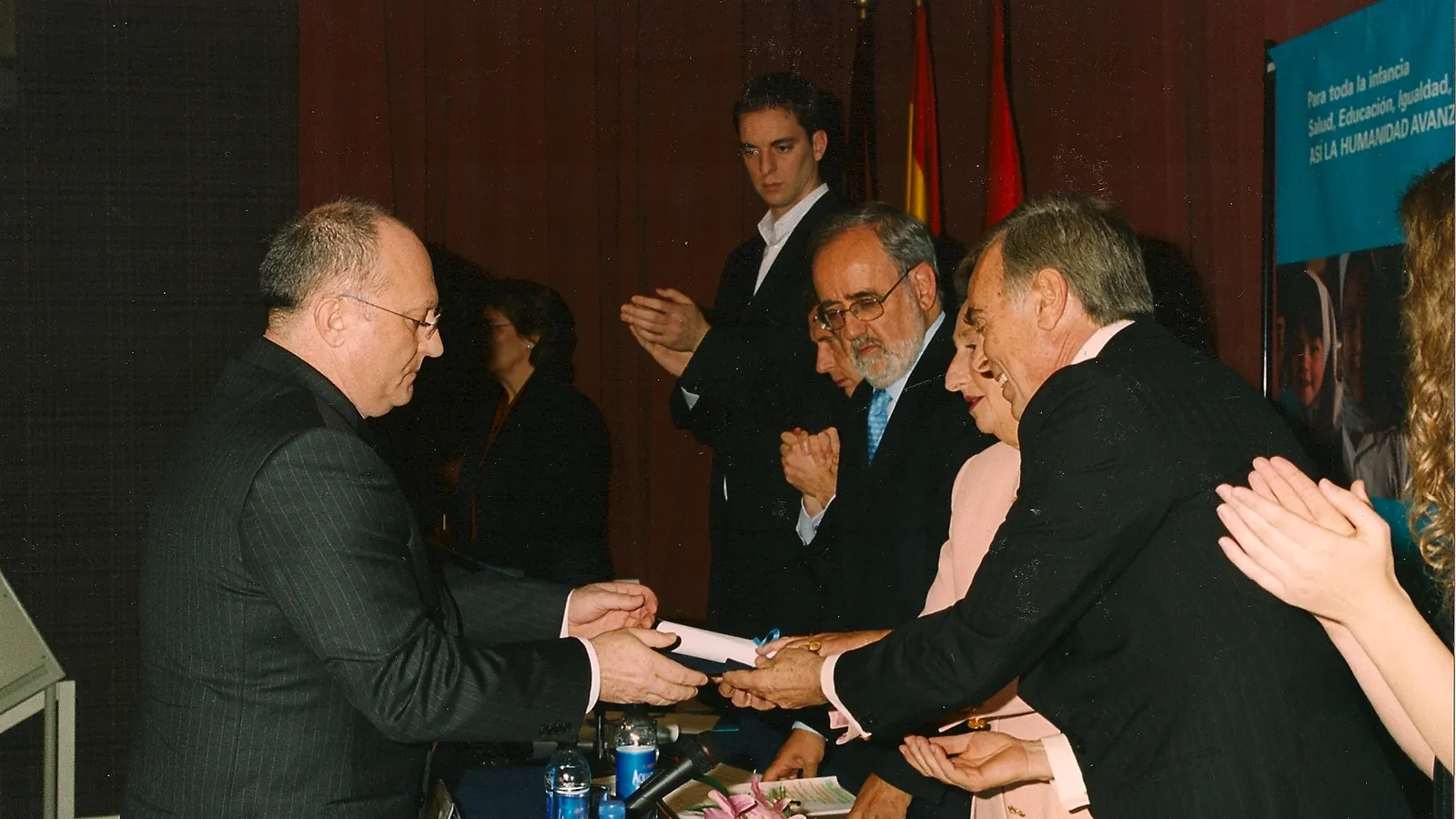
One day I learned about the campaign One Euro for a Life, which was conducted by UNICEF to deliver polio vaccine doses to Africa. American companies were already collaborating with a dollar per stay and I thought of doing it. One euro a day for UNICEF; 99% of clients gladly accepted it. Between 2001 and 2007 we held six charity galas with good fundraising for UNICEF. The organization awarded Incosol the medal of honor for the campaign and the following year the Andalusian branch gave it to the 30 volunteer staff who worked that night for the gala and to me. During this time, I have been a member of the board of directors of Aehcos and the Andalusian Tourism Council of the Andalusian Regional Government, four years that were not very useful, nobody paid attention to us. Currently, I am the treasurer of the Brotherhood of the Pilgrims of San Bernabé, which has 360 members, and which also collaborates with Caritas and food collection campaigns.
Latest news

Upcoming events
17
Sep
La Pequeña Cuba Gastro-Cultural Festival in San Pedro Alcántara 2026
18
Sep
World Wellness Weekend Marbella 2026
18
Sep
Candlelight: Queen vs. ABBA in Málaga
18
Sep
Candlelight: Coldplay and Imagine Dragons in Málaga
18
Sep
3 de Corazones – Pancho Céspedes, Enrique Ramil and José Luis Jaén in Málaga
Similar News
Marbella Launches ‘Summer Youth’ Programme with 2,500 Free Places
Marbella
Premium Tourism Drives Marbella’s Hotel Profitability to Record Levels as Overnight Stays Exceed 291,000
Marbella
‘Machos Alfa’ seeks extras in Marbella for filming of its sixth and final season
Marbella