


This is the new five-star in Malaga: the Áurea Palacio de la Tinta

Málaga
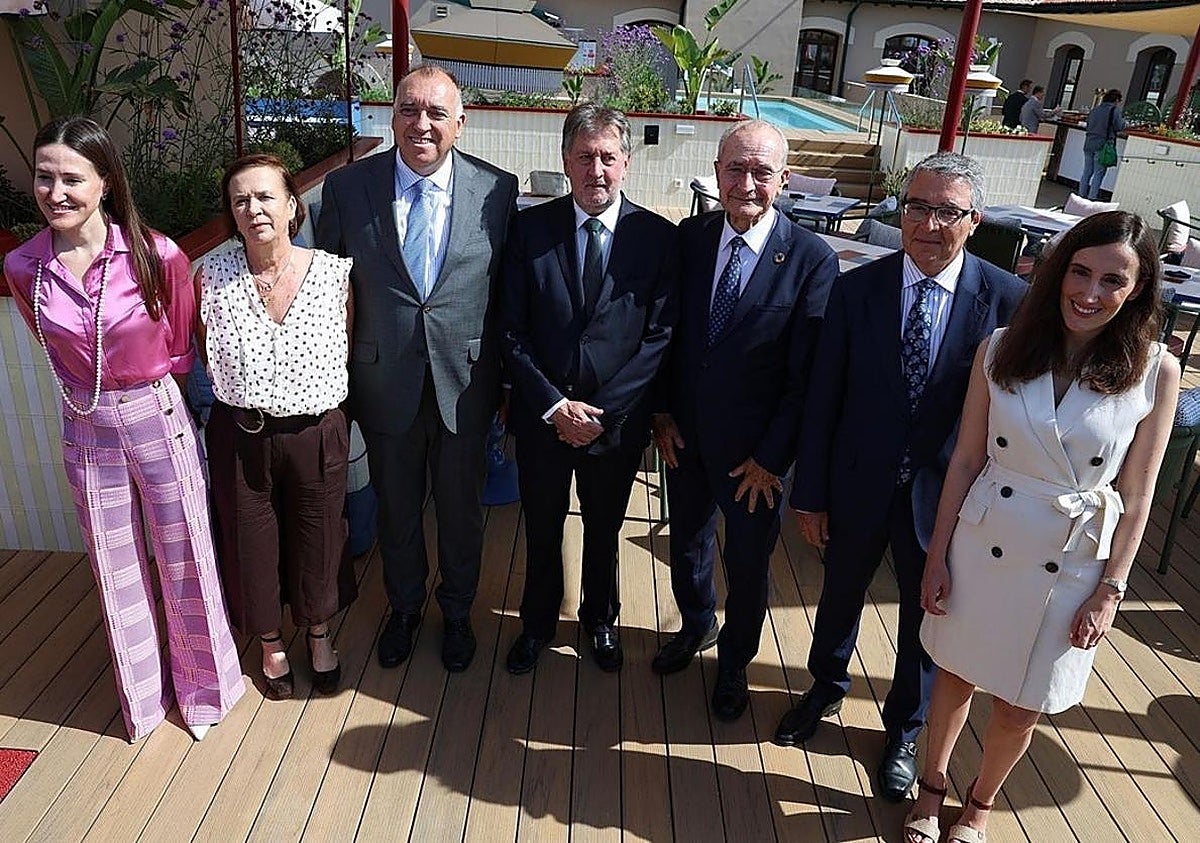
12/06/2026 Updated at 16:32.The opening of Málaga's sixth five-star hotel, the Áurea Palacio de la Tinta, has generated great excitement among residents and a strong demand response, with significant international interest, all agreeing that the establishment achieves that 'wow' effect. This reaction was shared by the Tourism Councilor of the Junta, Arturo Bernal, after visiting the hotel with the president of the Hotusa group, Amancio López Seijas, as host, and with the presence of the Mayor of Málaga, Francisco de la Torre, and the president of Turismo Costa del Sol, Francisco Salado.
After the tour, López Seijas highlighted the transformation of the city, which he described as "a legendary case" and expressed the commitment made in this project where 55 million euros have been invested to achieve a hotel that surprises with an "interior design in line with the history of a building from 1908 that reflects the philosophy of the Áurea brand, which are unique and signature hotels with which we recover buildings of great historical value to return them to the city transformed into spaces capable of generating economic activity, attracting visitors, and contributing to the international positioning of the destination."
The president of Hotusa showed great enthusiasm for this project, which he commented is performing "very well" and has a high foreign demand, praising the high connectivity of the city with strategic markets for the group. Recalling his beginnings in this city helping to manage some of the few hotels there were, he mentioned that he keeps his focus on this city "although now the possibilities are scarce. If there is an opportunity, we will be there."
After three years of construction, the first to want to know the Áurea Palacio de la Tinta, managed by Daniel Sau, were the local residents of La Malagueta as well as former workers from previous stages of the building. As the reception buzzed with some of the first tourists who claim to be captivated by the building, where none of the 141 rooms are the same due to the need to respect the structure of the building. The hotel has seven suites, which have a central lounge with murals with a clear nod to the famous Malaga painter Pablo Picasso that impresses the traveler and two rooms with spectacular bathrooms.
The pastel tones, woods, and marbles make up an interior in which all authorities agreed during the visit that "it is surprising how much the building has yielded," which has on the fourth floor the crown jewel, with a large terrace with a swimming pool, piano bar, and a restaurant with vaulted wooden ceilings and porthole windows, and with a particular view of the mountain crowned by Gibralfaro and edged by the Alcazaba.
It is on the lowest floor where another of the hotel's jewels is located: the first documented elevator in Málaga, which was the one that originally served and has now been restored and converted into a place that no guest wants to miss and, of course, one of the most photographed in the hotel. A bench at the end of the wooden cabin sets it apart from current elevators. It is a detail that the chain has wanted to maintain in the panoramic elevator that accesses the four floors of the Palacio de la Tinta, where a large stained glass window again surprises as the central element, the backbone of the building. A building in which the central courtyard of orange trees has also been recovered, converted into a place for events from which access is also gained to five meeting rooms that add up to 240 square meters and can be divided with panels.
240
square meters
available in the area of five meeting and event rooms.
In what was the historic headquarters of the Confederación de Ferrocarriles Andaluces, in a building designed by the engineer Julio Aublin Cala and an example of eclectic style with a marked French flavor, with 10,500 square meters, the new project also incorporates a spa area, with an indoor pool, sauna, Turkish bath, and massage area. Next to this space is the gym. Both integrated into an action in which elements of great patrimonial value have been preserved, highlighting the facade, the courtyard, and the main staircase.
The Tourism Councilor highlighted the transformation carried out and the project of "excellence" achieved, which, he assured, fits with the Community's strategy to advance "towards quality and sustainable tourism. It's a great day to thank the great effort made with which this group now has 49 hotels in Andalusia and is the chain with the most establishments in the region."
In the same vein, the Mayor of Málaga considered that the opening of this five-star hotel, which opened last May 22, "is a reason for joy because Málaga wants to grow in excellence and not in quantity." He also celebrated "the great respect for history" that has been carried out in the conversion to a hotel.
For his part, the president of Turismo Costa del Sol has valued the commitment to position the destination as a reference for quality tourism and stated that in the last five years the offer of five-star hotels has grown by 35% in the province and now represents 10% of the total. "This hotel is an example of how an abandoned building has been recovered, respecting the traditional architecture with the history of the building and with a nod to Picasso. This is the line," he said.
It is worth remembering that the building was constructed to house the central offices of the Confederación de Ferrocarriles Andaluces. Over the years, it has also been the headquarters of various services of the provincial delegation of the Ministry of Agriculture, Livestock, Fisheries, and Sustainable Development in Málaga or of the Confederación Hidrográfica del Sur, its last use. The building had been closed since 2019, when the Junta de Andalucía put it up for auction and Hotusa paid 21 million for it.
It is also important to remember the history of the name of the building: Palacio de la Tinta. It dates back to its stage as a railway administration, when large quantities of ink had to be transported daily for the manual issuance of tickets.
comments Report an error
Latest news





Upcoming events
12
Nov
El Desembarco, la traición de Viriato at La Caja Blanca
12
Nov
HOMER El Mero Mero at Sala Trinchera Málaga
13
Nov
Marbella Startup Lab – Innovate & Collaborate
13
Nov
Candlelight: Coldplay & Imagine Dragons at Sala Fundación Unicaja María Cristina
13
Nov
Candlelight: Tribute to Ludovico Einaudi at Anantara Villa Padierna
Similar News

Málaga Airport Makes History with More Than Three Million Passengers in One Month
Málaga

Port of Málaga looks beyond its docks to support future growth
Málaga

Guide to the Virgen del Carmen Processions in Málaga and the Province
Málaga
