Sponges: How the Oldest Animals on the Planet Deal with Plastic Pollution in the Oceans
Sponges and Microplastics
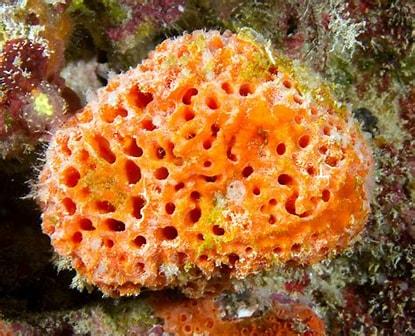

Marine sponges are the oldest animals inhabiting the Earth. For millions of years, they have been adapting to changes in the environment, but now they face a new and powerful enemy: plastic.
If you have ever walked along the beaches at low tide or have dived near the rocks, you might have missed them. In various shapes and sizes, they are exclusively aquatic and are responsible for filtering thousands of liters of water per day.
Water freely passes through the sponges, and this process is essential for their feeding, as the food particles are captured and digested by their cells as the water moves through their body. The expelled water will carry away wastes that are essential for other organisms. However, by allowing free passage of water, sponges are exposed to undesirable particles such as grains of sand or, currently, microplastics.
Among various protection mechanisms, the sponge has developed the ability to synchronize the contraction of its cells, rapidly changing its body volume and thus expelling water more effectively from its body. And it is this capability that may be compromised by microplastics.
Science and Microplastics
Although we are aware of their presence in the oceans, the study of the impacts of microplastics on organisms is relatively new. It has only been about 15 years since science began to take an interest in understanding this issue, and the first evidence of their ingestion and subsequent changes in the health of marine animals occurred in economically valuable organisms, such as mussels, oysters, and fish. After all, who would want to eat food contaminated by microplastics?
But a second line of these studies began to emerge when results showed that large animals at the top of the marine food chain, such as whales and dolphins, were contaminated with phthalates, a chemical used in plastic production to make it more pliable. The only possible source of phthalates in the oceans is plastics.
Upon closer examination, it was discovered that these additives dissociated from the polymers and dispersed freely in the water column, without the presence of plastic in the region. These chemicals, already known by science for mimicking the actions of different hormones in vertebrate models (called endocrine disruptors), then became the focus of research into what we call the chemical impacts of plastics.

Latest news





Upcoming events
12
Nov
El Desembarco, la traición de Viriato at La Caja Blanca
12
Nov
HOMER El Mero Mero at Sala Trinchera Málaga
13
Nov
Marbella Startup Lab – Innovate & Collaborate
13
Nov
Candlelight: Coldplay & Imagine Dragons at Sala Fundación Unicaja María Cristina
13
Nov
Candlelight: Tribute to Ludovico Einaudi at Anantara Villa Padierna