Music enters the neurological consultation
New evidence shows therapeutic potential against stroke, Parkinson's, or Alzheimer's

Music—that language capable of crossing cultures, times, and memories—is finding an increasingly solid place within clinical neurology. And not just as emotional support, but as a therapeutic tool backed by scientific evidence.
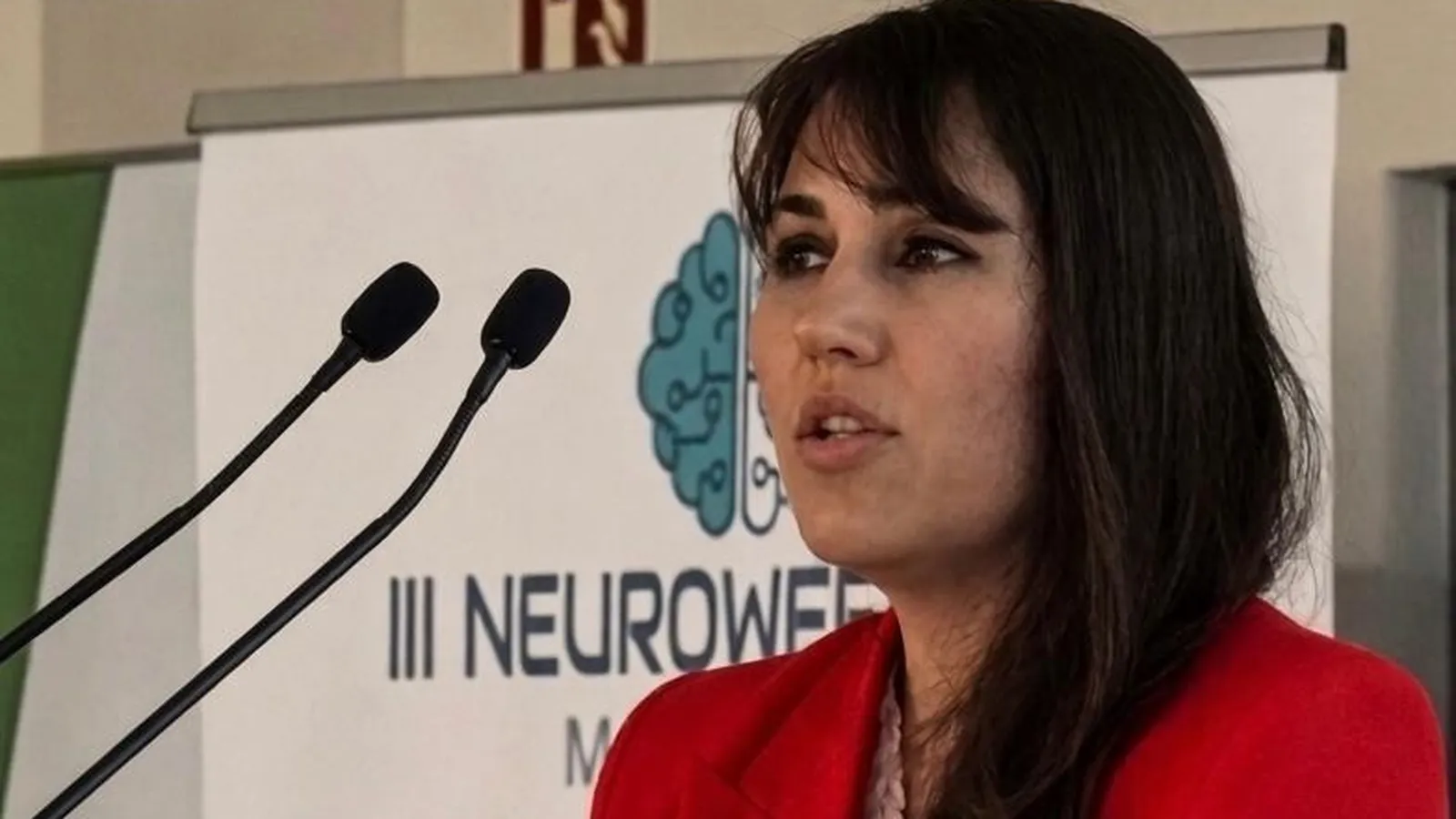
This was one of the major insights from the keynote lecture 'Neurology and music, a therapeutic opportunity', given by Dr. Natalia García Casares, professor at the Department of Medicine, University of Málaga, neurologist and researcher at IBIMA-Plataforma BIONAND and the Center for Medical-Sanitary Research, during the III Neuroweekend in Malaga held at the University Hospital Virgen de la Victoria.
“Music is so intertwined with human beings that even if we wanted to, we couldn't rid ourselves of it,” the specialist recalled, revisiting a reflection from Boethius included in her presentation. Because music is not only heard: the brain inhabits it. Various studies show that it simultaneously activates networks related to verbal memory, executive functions, auditory processing, language, motor coordination, and visuospatial ability.
This multiple activation underlies a discipline that is gaining ground in clinical practice: Neurological Music Therapy (NMT), which already has more than twenty validated techniques for motor rehabilitation, language, and cognition.
One of the most striking examples presented during the conference was the work with patients who had suffered a stroke and developed aphasia. Through Melodic Intonation Therapy, language stops traveling through damaged routes and seeks new paths by relying on rhythm and melody. A review published by García Casares' team describes chronic post-stroke patients, a year into their condition, who showed significant language recovery improvements after six weeks of intensive intervention compared to the control group. In a way, music acts as an alternative route when words are left without a road.
The lecture also addressed the therapeutic potential in Parkinson's disease. When the basal ganglia fail and movement becomes less fluid, the brain can resort to other circuits. The external rhythm recruits structures such as the cerebellum or premotor areas, helping to reorganize walking, improve coordination, and promote greater stability in movement.
But perhaps one of the most striking findings came from neuroimaging. García Casares mentioned a study from McGill University (Canada) that showed significant changes in dopamine release associated with listening to binary and emotionally relevant rhythms, observed through PET and the radiopharmaceutical [11C] raclopride. Music, literally, is capable of altering brain chemistry.
Among all the clinical scenarios addressed, probably none was as moving as that of Alzheimer's disease. Although the pathology erases names, places, and faces, certain structures related to emotional and musical memory show a surprising resistance to neurodegenerative deterioration. The amygdala, the primary auditory cortex, or various regions linked to the hippocampus maintain functional capacity when stimulated by music, which opens a promising path to maintain the connection with the memories, emotions, and identity of patients.
The curious effect of a Mozart sonata on epilepsy
The conference also revealed one of the most striking data of the day: studies in refractory epilepsy showed that 84% of patients experienced a decrease in interictal discharges after musical exposure to a Mozart sonata, with reductions observed both during and after listening. Sometimes just seconds of listening can trigger measurable changes in the electroencephalogram. Specialists highlighted that these results illustrate the capacity of certain musical stimuli to modulate brain activity and generate responses that can be objectively measured using neurophysiological tools. The overarching conclusion of the session was clear: music has moved beyond just emotion or aesthetics to become a neurobiological tool with specific clinical applications. The available evidence suggests that it can play a complementary role in various areas of neurology and rehabilitation. It does not replace treatments. It does not replace drugs. But it is beginning to establish itself as a therapeutic ally capable of activating brain plasticity, improving functions, and supporting recovery processes.

Latest news




Upcoming events
17
Sep
La Pequeña Cuba Gastro-Cultural Festival in San Pedro Alcántara 2026
18
Sep
World Wellness Weekend Marbella 2026
18
Sep
Candlelight: Queen vs. ABBA in Málaga
18
Sep
Candlelight: Coldplay and Imagine Dragons in Málaga
18
Sep
3 de Corazones – Pancho Céspedes, Enrique Ramil and José Luis Jaén in Málaga
Similar News
Marbella Launches ‘Summer Youth’ Programme with 2,500 Free Places
Marbella

Premium Tourism Drives Marbella’s Hotel Profitability to Record Levels as Overnight Stays Exceed 291,000
Marbella

‘Machos Alfa’ seeks extras in Marbella for filming of its sixth and final season
Marbella