


The thousand-year-old olive tree by Carnicero creek has become one of Andalusia's great natural secrets. The refreshing trail that few know in Málaga with walkways over the river that captivates families and hikers.
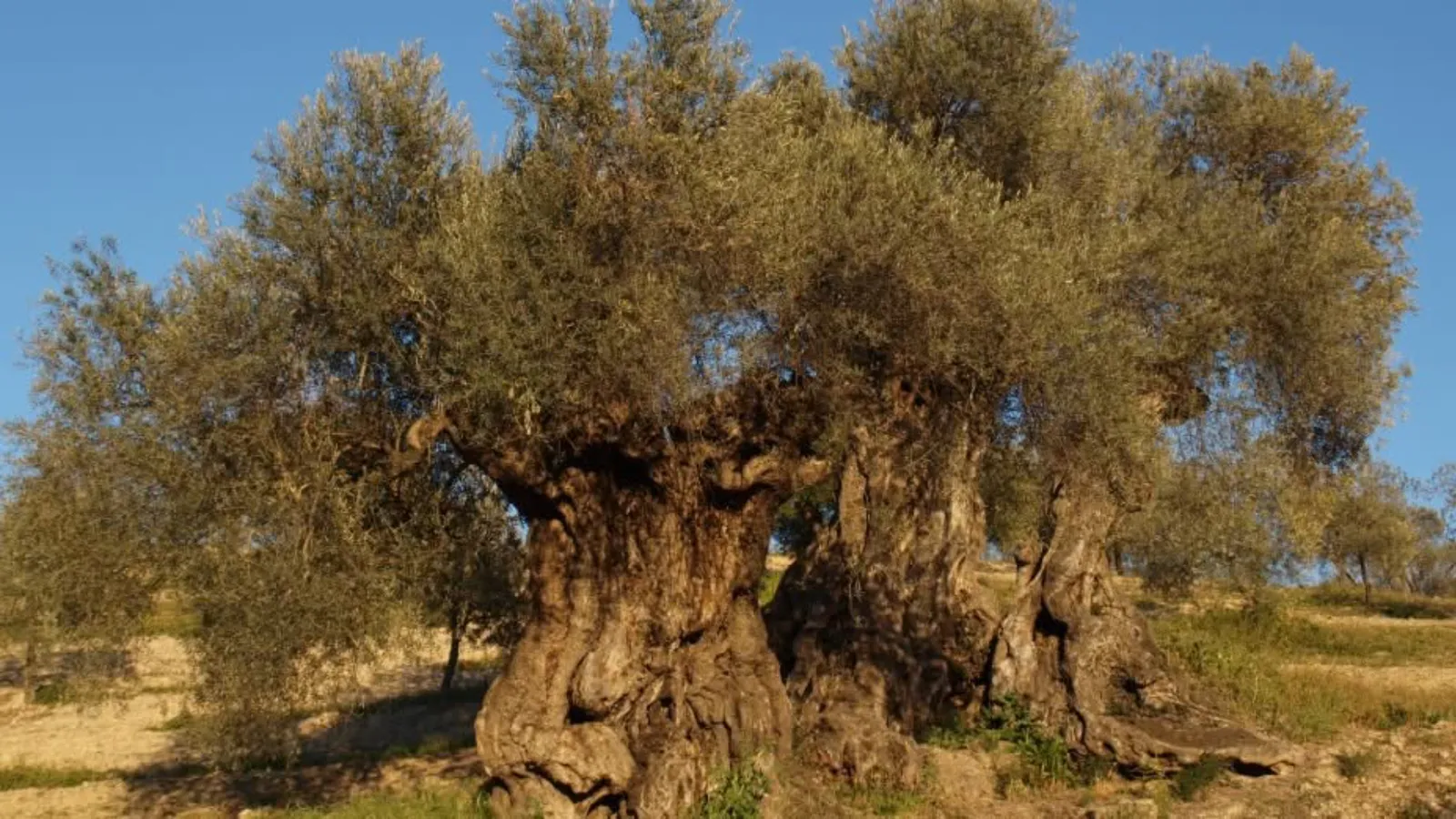

In an agricultural plain where the landscape is organized among crops, dirt roads, and Andalusian memory, a living being emerges that breaks any human scale: an olive tree that seems to have grown on the margins of time and today stands as one of the most unique natural jewels of the province of Málaga. Its presence, silent and monumental, dominates the surroundings of the stream Carnicero, in the municipality of Casabermeja, just 20 kilometers from the capital of Málaga.
Known as the millennial olive of the Carnicero stream, this tree is a benchmark within the natural heritage of the province of Málaga. Its recognition as the Best Monumental Olive of Spain in 2013 by the Spanish Association of Olive Municipalities (AEMO) placed this tree on the national map of historic olive groves.
Located in the area of Campo de Cámara, a region traditionally linked to olive cultivation and considered in the Andalusian period as the "granary of Málaga," this specimen is integrated into an agricultural landscape where olive cultivation has been a structural activity for centuries. In its vicinity, especially in areas near the Coche stream, other centenary specimens are preserved, although none reach the magnitude of the olive of Carnicero stream.
A millennial tree with a monumental structure
The uniqueness of this olive tree lies both in its age and its biological structure. Scientific studies conducted by the University of Córdoba have accredited its longevity, estimated at over a thousand years, placing it as a living witness to agricultural development in the Andalusian Mediterranean.
The tree is formed by three large trunks, each with a circumference of more than seven meters, that originate from the same root. This configuration has been confirmed through genetic analysis and botanical studies, which have determined that it is a single specimen grafted onto a wild olive, probably during the Middle Ages in the period of Al-Andalus.
The ensemble presents an extraordinary size. Its crown exceeds 80 meters in diameter and the total perimeter of its three trunks approaches 40 meters. This magnitude has led it to be described, at the municipal level, as a true "cathedral of living wood," reflecting its status as a unique element within the agricultural landscape of Málaga.
Embracing a giant: dimensions of the monumental olive
The dimensions of the millennial olive of the Carnicero stream have generated a very graphic popular reference: the tree is so wide that it would require about 30 people to surround its trunk simultaneously. This image summarizes the exceptional scale of the specimen within the set of monumental olives of the Iberian peninsula.
Thus shines the millennial olive of Málaga. / City Council of CasabermejaBotanically, the tree belongs to an ancient olive variety not yet cataloged, which adds additional scientific value to its historical importance. Its existence is also linked to the early processes of grafting in Mediterranean coastal olive cultivation, especially documented in the provinces of Málaga and Almería.
Olive oil production and agricultural continuity
Despite its millennial age, the olive tree continues in production. Its olives are part of a limited edition of olive oil produced at the Molino del Hortelano mill. This fact reinforces its status as an active tree within the agricultural cycle, maintaining its link with the rural economy of the area.
The state of conservation of the specimen has been possible thanks to the combination of the region's climate and the care received over time, factors that have allowed its survival to the present day.
Access route to the millennial olive of Casabermeja
Access to the millennial olive of the Carnicero stream is via the MA-3404 road, which connects Casabermeja with Villanueva de la Concepción. About one kilometer from Venta Pedro, there is a dirt road turnoff to the right of the main road.
From that point, a dirt lane leads in a few meters to the location of the specimen, where a descriptive sign identifies the olive and contextualizes its importance. Although the tree is located on private property, access is possible by following this route, without the need for major additional detours.

Latest news





Upcoming events
12
Nov
El Desembarco, la traición de Viriato at La Caja Blanca
12
Nov
HOMER El Mero Mero at Sala Trinchera Málaga
13
Nov
Marbella Startup Lab – Innovate & Collaborate
13
Nov
Candlelight: Coldplay & Imagine Dragons at Sala Fundación Unicaja María Cristina
13
Nov
Candlelight: Tribute to Ludovico Einaudi at Anantara Villa Padierna
Similar News

Málaga Airport Makes History with More Than Three Million Passengers in One Month
Málaga

Port of Málaga looks beyond its docks to support future growth
Málaga

Guide to the Virgen del Carmen Processions in Málaga and the Province
Málaga
